






By Emmanuel Adeleke
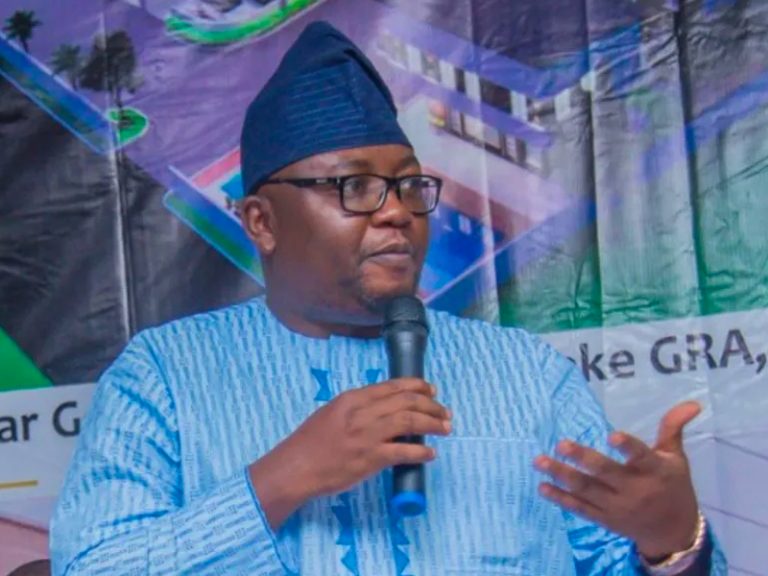
Mr Bolaji Tunji, the Special Adviser on Strategic Communication and Media Relations to Minister of Power, Chief Adebayo Adelabu, has disclosed that the increasing vandalisation of critical power transmission equipment hindered government’s goal of generating 6,000 megawatts of electricity by December 2024.
Tunji stated this in an interview with The PUNCH on Sunday.
He explained that government had implemented measures to reach the milestone and was on track until multiple incidents of vandalism to electricity towers disrupted the plan.
Earlier in the year, Adelabu had pledged that power generation in Nigeria would reach 6,000MW by the end of 2024, citing improvements in the sector over the past year.
However, the frequent collapse of the nation’s electricity grid and the vandalisation of towers ultimately affected the stability of electricity supply, hindering efforts to raise the country’s power generation.
Tunji, who had expressed optimism about reaching the target during a press conference in November, stated that approximately 1,000 megawatts had been added since the administration of President Bola Tinubu came on board.
“If you look at the situation when the current administration took over, the generation was just about 4,000 megawatts. However, within a year, about 1,000 megawatts were added. By November 27, we again reached a target of 5,231 megawatts. Indeed, a promise of 6,000 megawatts was made, and with what we were doing, we felt it was achievable. Unfortunately, the work of vandals set us back a bit. We are not resting on our oars to ensure additional supply to the grid,� he said.
As of November 2024, the Transmission Company of Nigeria (TCN) stated that it had spent N8.8 billion to repair and restore 128 vandalised transmission towers across the country.
The minister’s aide also identified cash backing for subsidy payments as one of the factors affecting power generation, noting that only N450 billion was budgeted for 2024, while the debt incurred for subsidy payments was N2.3 trillion.
“One of the key issues has been the cash backing of the subsidy, which relates to debt owed to generation companies and gas companies. This year’s subsidy will be approximately N2.3 trillion, but only N450 billion was budgeted.
“Another issue has been the fragility of the transmission grid due to the level of vandalism,” Bolaji added.
On possible solutions to improve generation in 2025, the media adviser said: “Firstly, the government will make improved provision in the budget for subsidies to ensure payments are made on time. We will continue to push to ensure the market continues to pay for the electricity consumed.
“The committee on revamping ageing equipment is also in place. The Federal Government has increased the budgetary allocation to the Ministry of Power and its agencies to ensure increased infrastructure investment.
“The minister continues to ensure a conducive environment for private sector participation, as this is the only way to provide the capital required for infrastructure improvements in the power sector.�
In the proposed 2025 budget, the power ministry budgeted a sum of N269.74 billion for special intervention power projects, N47.35 billion for the construction of transformers and substations, and N36.82 billion as counterpart funding for earmarked transmission lines and substation projects.
Nigeria’s power generation currently ranges between 4,000 MW and 4,900 MW from 19 power generation plants, serving a population of about 200 million people.
The latest operational report showed that the country’s power generation was 4,363.79MW as of 6 a.m.on Saturday.