





The Federal Government has approved the construction of a five-megawatt solar farm for the University College Hospital (UCH), Ibadan, as part of efforts to address the persistent electricity challenges facing the tertiary healthcare institution.
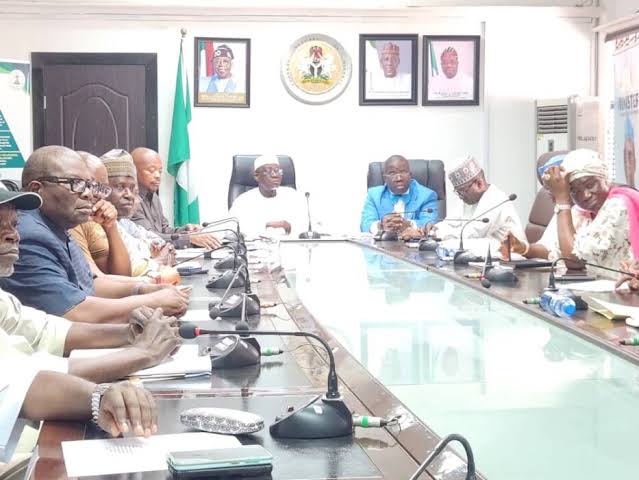
The Chief Medical Director (CMD), Prof. Jesse Otegbayo, disclosed this on Friday during a press briefing to mark UCH鈥檚 69th anniversary.
He said the proposed facility would generate more electricity than the hospital鈥檚 estimated requirement of 2.5 megawatts.
Flanked by the representative of the Provost of the College of Medicine, Prof. Taiwo Lawal; the Chairman of the Medical Advisory Committee, Prof. Bukola Adesina; and the hospital鈥檚 Director of Administration, Mrs Oluseyi Eze, Otegbayo said contractors had visited the proposed project site.
He explained that the site included the hospital鈥檚 football field and an adjoining orchard.
The CMD said UCH had invested about N1.15 billion in two electricity substations to improve power supply to the hospital.
According to him, the digital 11kV substation was commissioned at a cost of approximately N650 million, while the 33kV substation was completed in 2023 at a cost of more than N500 million.
He added that the hospital had cleared its outstanding electricity debts to the Ibadan Electricity Distribution Company following disconnections in 2020 and 2024, after which the distribution company granted UCH a N5 million rebate.
Speaking on the pressure on the hospital’s facilities, Otegbayo disclosed that its Accident and Emergency Department, which has about 37 couches, sometimes receives between 40 and 50 patients at a time.
He said the situation occasionally forced medical personnel to attend to patients in vehicles and on the floor because the available spaces could not accommodate the influx.
The CMD attributed the pressure partly to weaknesses in the primary and secondary healthcare systems, noting that patients who should ordinarily receive treatment at primary healthcare centres and general hospitals often end up at UCH.
He also identified staff shortages as a major challenge, citing inadequate recruitment and the departure of trained health professionals in search of better opportunities abroad.
Otegbayo further disclosed that UCH was expected to take over the management of about four hospitals established by the Federal Government under its Sustainable Development Goals initiative.
He said discussions were ongoing and expressed optimism that the arrangement would be concluded in the coming months.
On efforts to improve specialist healthcare services, the CMD said the hospital had commissioned a new radio-diagnostic centre and cardiac catheterisation laboratory equipped with a 1.5 Tesla helium MRI machine, ultrasound equipment and a 125-slice CT scanner.
He also announced a partnership with Tanix Engineering for the installation of a medical linear accelerator (LINAC) in the Radiation Oncology Department to enhance cancer treatment.
According to him, work is ongoing on the specialised bunker required to house the equipment.
The hospital, he added, had also entered into a partnership with Medbury Pharmaceutical Company to improve drug procurement and distribution and reduce instances of stock-outs.
On the hospital’s water supply challenges, Otegbayo said construction activities around an estate had allegedly disrupted the natural flow of water from the Dandaru River into UCH’s reservoir.
He explained that the hospital now rents pumping equipment to draw water, describing the arrangement as unsustainable.
Otegbayo said UCH was exploring alternatives, including drilling boreholes and replacing ageing water pipes.
On training, the CMD disclosed that the hospital’s School of Nursing had secured affiliation with the University of Ibadan to run a five-year Bachelor of Nursing Science programme, with the first cohort already admitted.
He added that the hospital’s School of Biomedical Engineering had also secured approval from the National Board for Technical Education (NBTE).
Otegbayo urged alumni, retired staff, corporate organisations and well-meaning Nigerians to support the institution, stressing that government funding alone could not meet all its needs.