





President Bola Tinubu emerged from the APC primaries with an overwhelming mandate and a party that appeared firmly under his control. Yet beneath the celebrations lay bruised ambitions, displaced political heavyweights and simmering grievances. As the ruling party embarks on an extensive reconciliation drive, the bigger question is whether unity secured after the primaries can survive the pressures of the 2027 general elections
By Pelumi Martins
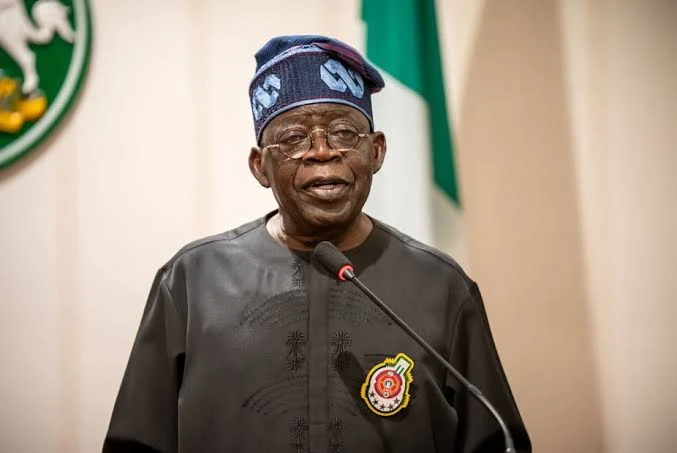
The applause inside the All Progressives Congress (APC) convention arena had barely faded when party leaders began confronting a far more difficult assignment than conducting the primaries themselves. The presidential contest had delivered the outcome almost everyone expected. President Bola Ahmed Tinubu swept aside his lone challenger, businessman Stanley Osifo, polling more than 10.9 million votes in the direct primary to secure the party’s ticket for the 2027 presidential election. Governors, ministers, lawmakers and party faithful queued to congratulate him, presenting the exercise as proof that the APC remained Nigeria’s most formidable political machine. From Abuja, where the victory was declared, the message was unmistakable: the ruling party had spoken with one voice.
Away from the television cameras, however, another conversation was unfolding. Across several states, defeated aspirants rejected the results. Serving senators lost tickets they had considered secure. Former ministers watched carefully cultivated ambitions collapse within hours. Governors succeeded in installing preferred successors in some states, while elsewhere powerful political figures discovered that national prominence no longer guaranteed influence over local party structures. What was marketed as a demonstration of overwhelming unity had also produced a long list of casualties whose political futures suddenly became uncertain.
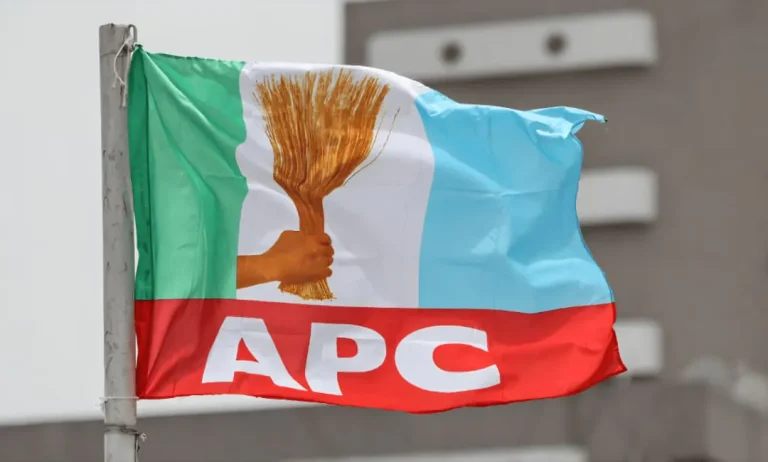
That reality explains why, within days of concluding the primaries, the APC leadership shifted its attention from celebrating victory to preventing internal rebellion. The National Working Committee, backed by President Tinubu and members of the Progressive Governors’ Forum, activated reconciliation mechanisms across the federation, dispatching respected party elders to persuade aggrieved aspirants not to abandon the party or work against its candidates during the general election.
For the APC, the primaries were never the final destination. They merely marked the beginning of another contest, one that could ultimately determine whether the ruling party enters the 2027 elections as a united political force or as a coalition weakened by its own internal contradictions.
Strength without certainty
Viewed from a distance, the APC has every reason to approach the next election with confidence. It controls the presidency, enjoys the backing of an unprecedented number of governors, commands overwhelming legislative influence and continues to attract prominent defectors from opposition parties. Since the 2023 elections, several influential political actors have migrated into the ruling party, reinforcing perceptions that the APC remains the country’s dominant electoral platform.
Besides, the primaries appeared to reinforce that dominance. Tinubu’s overwhelming victory was less a competitive election than a public affirmation of his authority within the party. Governors closed ranks behind him. State structures mobilised extensively. By the time votes were counted, the outcome merely confirmed what had long been evident – that there was no meaningful internal challenge to the president’s bid for a second term.
The presidential contest also demonstrated another reality that has increasingly defined Nigerian politics: incumbency remains one of the most powerful political assets available to any party in government.
Yet, the presidential primaries tell only part of the story. The governorship, senatorial and House of Representatives contests revealed a far more complicated political landscape, exposing rivalries that had been carefully concealed beneath repeated declarations of party unity. Throughout the federation, consensus arrangements became the APC’s preferred instrument for managing potentially divisive contests. Officially, consensus reflected maturity, consultation and sacrifice for collective interest. In practice, however, many aspirants viewed it differently. For some, consensus simply became another name for elite imposition.
The politics of consensus
Consensus has never been unique to the APC. Virtually every major Nigerian political party has embraced it at different times as a mechanism for avoiding expensive and potentially destructive primaries.
This year’s APC exercise, however, elevated consensus to an unprecedented level. In several states, governors effectively determined who emerged as candidates for governorship, Senate and House of Representatives seats. Negotiated withdrawals replaced competitive voting. Aspirants who had spent months building campaign structures suddenly announced that they were stepping down “in the interest of party unity.” Some undoubtedly did so voluntarily. Others appeared to have little practical alternative.
For party strategists, the calculation was straightforward. Bitter primary contests often leave lasting scars. Consensus, by contrast, reduces campaign expenses, limits litigation and projects stability before the general election. The strategy succeeded in many places. But it also produced resentment that would become increasingly visible after the exercises concluded.
From Gombe to Abuja, party secretariats witnessed protests by supporters insisting that genuine contests had been replaced by predetermined outcomes. Allegations of parallel congresses, manipulated delegate lists and pre-written results resurfaced in several states, reviving criticisms that internal democracy remains one of the weakest aspects of Nigerian party politics. For APC leaders, these grievances represented more than ordinary post-election disappointment.
History offers uncomfortable lessons in the nation鈥檚 political history. Since Nigeria’s return to democratic rule in 1999, ruling parties have repeatedly discovered that unresolved disputes after primaries frequently prove more damaging than attacks mounted by opposition parties. Aggrieved aspirants sometimes finance rival candidates, quietly sabotage official campaigns or simply refuse to mobilise supporters during elections. Winning primaries, therefore, does not necessarily guarantee victory at the polls.
South-West: Protecting the political heartland
Nowhere did the APC exercise greater caution than in the South-West, President Tinubu’s political base and the ideological birthplace of the party. Maintaining cohesion in the region was never simply desirable; it was politically indispensable.
Lagos provided perhaps the clearest demonstration of continuity. Deputy Governor Obafemi Hamzat emerged as the party’s governorship candidate, reinforcing the enduring influence of the political establishment that has dominated the state for more than two decades.
To supporters, Hamzat’s emergence represented stability and continuity. To critics, it illustrated the enormous influence still exercised by the political machinery associated with President Tinubu. Either way, the outcome removed uncertainty in Nigeria’s commercial capital and ensured that the party entered the general election with minimal internal turbulence.
Neighbouring Ogun State produced another strategically significant outcome. Senator Solomon Olamilekan Adeola, popularly known as Yayi, secured the governorship ticket in a victory that further consolidated the influence of Governor Dapo Abiodun. Abiodun himself transitioned smoothly into the Senate race, reflecting a familiar pattern in Nigerian politics where outgoing governors seek continued relevance through legislative office.
The Ogun contest also underlined another recurring feature of the APC’s expansion strategy. Recent defectors discovered that crossing into the ruling party does not automatically translate into political advantage. Former Governor Gbenga Daniel’s inability to secure the expected senatorial ticket illustrated that established party structures continue to exercise considerable influence over newcomers, regardless of their previous political stature.
Oyo State presented a different challenge altogether. Unlike Lagos and Ogun, where the APC currently controls government, Oyo remains governed by the Peoples Democratic Party. Senator Sharafadeen Alli’s emergence as governorship candidate immediately transformed him into the party’s principal challenger to Governor Seyi Makinde’s political legacy.
For APC strategists, Oyo represents one of the most important battlegrounds of 2027. Winning the state will require more than producing a popular candidate. It will demand a united opposition capable of convincing voters that the party has overcome the internal divisions that undermined previous campaigns. That explains why reconciliation efforts in Oyo commenced almost immediately after the primaries, with party leaders engaging unsuccessful aspirants and influential stakeholders in a determined effort to prevent defections and anti-party activities before campaigning formally begins.
Across the South-West, therefore, the APC largely achieved its immediate objective: preserving organisational stability in its strongest political base. Whether that stability survives the pressures of a fiercely contested general election remains another question entirely.
If the South-West reflected discipline, the South-South exposed the difficult balancing act that accompanies rapid political expansion. No region better illustrates the opportunities and contradictions confronting the APC than a zone where governors and political heavyweights have crossed over from opposition parties in unprecedented numbers.
For the ruling party, the wave of defections represented a strategic breakthrough. Every new governor or influential politician joining the APC potentially weakened the opposition while strengthening the party’s electoral map. Yet every defection also altered the internal balance of power, creating fresh rivalries between long-standing loyalists and newcomers eager to claim leadership positions. That tension became unmistakable during the primaries.
In Rivers State, one of the country’s most politically volatile arenas, Governor Siminalayi Fubara’s inability to secure the APC governorship ticket became one of the defining stories of the exercise. Having defected from the Peoples Democratic Party after months of political confrontation with his predecessor, Nyesom Wike, many expected Fubara to enjoy the natural advantages usually accorded to defecting governors. Instead, the party opted for Kingsley Chinda after withdrawals by other aspirants, signalling that political migration alone would not guarantee nomination. The outcome demonstrated that local party structures remain powerful enough to frustrate even nationally prominent figures.
Delta State produced a different outcome. Governor Sheriff Oborevwori successfully secured the APC ticket after his own defection from the PDP, highlighting the flexible and often state-specific calculations driving the party’s expansion strategy. In Akwa Ibom and Cross River, incumbent governors also emerged through consensus arrangements, reinforcing the dominance of sitting governors over internal party processes.
Yet beneath those victories lingered concerns among party faithful who feared that years of political investment could be overshadowed by the arrival of influential defectors. For many long-serving APC members, the challenge is no longer defeating opposition parties but protecting their own political relevance within a rapidly expanding organisation.
The South-East’s cautious consolidation
In the South-East, the APC approached the primaries with modest ambitions but strategic intent. The party has struggled for years to establish deep electoral roots in a region traditionally sceptical of its national appeal. Rather than seeking sweeping dominance, it has increasingly relied on alliances with influential political actors and incumbent office holders. The primaries reflected that approach.
Governor Francis Nwifuru consolidated his position in Ebonyi, while competitive contests in Abia and Imo illustrated the continuing struggle for influence within the party’s regional structures. Senator Orji Uzor Kalu once again demonstrated his enduring political relevance in Abia, while Governor Hope Uzodinma’s machinery remained decisive in determining outcomes in Imo.
Several serving lawmakers lost their return tickets, underlining another lesson from the primaries: longevity within the APC no longer guarantees political survival.
Control of state structures has become the new currency of influence. Former ministers, ranking legislators and nationally recognised politicians discovered that grassroots control and the backing of governors increasingly outweigh prominence in Abuja.
The North and the burden of incumbency
The APC continues to view the North as indispensable to its electoral arithmetic. In the North-West, consensus arrangements helped governors in Kaduna, Katsina, Kebbi and Jigawa secure nominations with minimal disruption, reflecting the party’s determination to avoid internal conflicts in a region that has historically delivered substantial electoral support.
Yet beneath the organisational stability lies an uncomfortable political reality. The North-West has also borne the brunt of banditry, economic hardship and rising living costs. Public frustration has deepened in many communities, making electoral mobilisation considerably more challenging than it was four years ago.
For APC strategists, maintaining internal cohesion has therefore become only one aspect of a broader challenge. The party must also convince voters that it possesses credible answers to the economic and security concerns dominating public discourse.
The North-East produced more competitive contests, particularly in Gombe, where former Communications Minister Isa Pantami and former Transportation Minister Saidu Alkali suffered unexpected defeats. Their losses reflected a changing political order within the APC.
National recognition, cabinet experience and close relationships with federal power centres increasingly matter less than control of local party structures and grassroots mobilisation.
In Borno, meanwhile, the emergence of Mustapha Gubio underscored the continuing influence of the political alliance built by Governor Babagana Zulum and Vice-President Kashim Shettima.
Across much of the North-Central, consensus again became the preferred instrument for conflict management. Kwara’s carefully negotiated succession arrangement illustrated both the strengths and weaknesses of elite compromise. While the exercise prevented open confrontation, it also left lingering dissatisfaction among aspirants who believed genuine competition had been sacrificed for predetermined political outcomes.
The casualties of victory
Every primary election creates winners and losers. Few, however, have produced as many high-profile casualties as the APC’s 2026 exercise. Among the most prominent was Governor Fubara, whose political calculations unravelled in Rivers despite his dramatic defection to the ruling party.
Isa Pantami’s defeat in Gombe also resonated nationally because of his stature within conservative northern politics and his years in the Federal Executive Council. Former Minister Henry Ikoh in Abia, Lanre Jim-Kamal in Lagos and several prominent aspirants in Kwara similarly found themselves displaced by changing political alliances and evolving state power structures.
Perhaps even more significant were the dozens of serving National Assembly members who failed to secure renomination. For politicians who had expected incumbency to provide insulation from internal competition, the primaries offered a harsh reminder that influence within the APC has become increasingly decentralised. Governors, rather than federal office holders, now exercise considerable authority over candidate selection in many states.
The peace offensive
Recognising the risks inherent in such sweeping political displacement, the APC leadership moved quickly after the primaries to contain internal discontent. The National Working Committee constituted reconciliation committees and mobilised senior party figures to engage aggrieved aspirants across the federation. Similar initiatives were replicated in several state chapters, where governors, party chairmen and respected elders held meetings aimed at persuading defeated aspirants to remain committed to the party.
In states such as Oyo, Kwara, Ondo and Jigawa, consultations intensified as party leaders sought to prevent defections, litigation and anti-party activities that have historically undermined ruling parties after contentious primaries.
The reconciliation campaign represents more than routine political housekeeping. It is an acknowledgement that modern Nigerian elections are often determined as much by what happens within political parties as by the contests between them.
History provides ample justification for such caution. Since 1999, several parties have entered general elections weakened not by opposition attacks but by unresolved grievances among their own members. Disgruntled aspirants have financed rival candidates, withheld campaign structures, encouraged voter apathy or openly defected after feeling excluded from internal processes.
The APC leadership appears determined not to repeat those mistakes. Whether the reconciliation effort ultimately succeeds will depend less on public appeals for unity than on the willingness of party leaders to accommodate competing interests and reassure those who believe they were unfairly treated during the primaries.
The road to 2027
As campaigning gradually begins, the APC enters the next phase of Nigeria’s electoral cycle with undeniable advantages.
No other political party currently matches its combination of incumbency, geographical spread, financial resources, gubernatorial influence and institutional reach. President Tinubu remains firmly in command of the party, while the continuing influx of opposition figures has further expanded its national footprint.
Yet political dominance has rarely guaranteed electoral certainty in Nigeria. The ruling party must still navigate the consequences of its own internal contests while confronting an electorate increasingly preoccupied with inflation, unemployment, insecurity and the rising cost of living. Those realities may ultimately prove more consequential than the outcome of any primary election.
The opposition, despite its organisational challenges, will almost certainly seek to exploit lingering grievances within the APC while presenting itself as an alternative to a government facing growing public scrutiny. Whether such efforts succeed will depend partly on how effectively the APC transforms post-primary reconciliation into genuine party cohesion.