





The Yoruba Historical Conversation (YHC) marks a milestone birthday with a lecture on leadership, legacy, and the Yoruba soul
By Kehinde Adebayo
When the Dawn Commission, the institution managing the regional integration agenda of Nigeria鈥檚 six Southwest states, held a special edition of its Yoruba Historical Conversation (YHC) series on Tuesday, 5th of May 2026, at Carlton Gate Xclusive Hotel, Agodi, Ibadan, the event was more than a birthday celebration. It was a moment of reflection. People gathered to think about where they had come from, who they had been, and what they still owed themselves at this important point in Nigeria鈥檚 history.
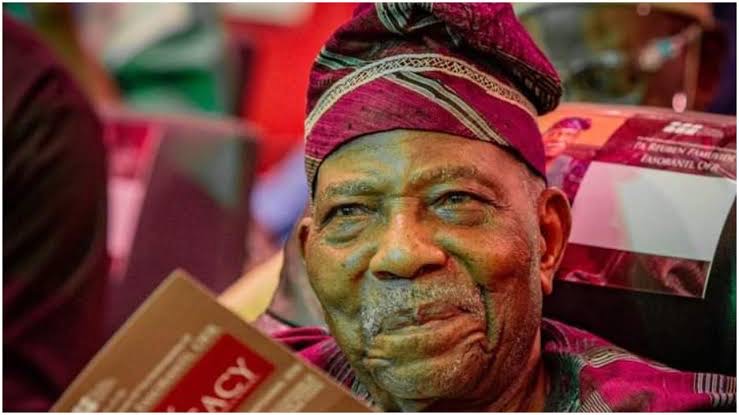
The man at the centre of it all, Chief Reuben Fasoranti, OFR, CFR, leader of Afenifere and one of the last living statesmen of Nigeria鈥檚 First Republic, could not attend in person because of his age and the long journey from Akure. But his grandchildren were there to represent him and take his birthday cake home to the centenarian. By every account in the hall, his presence was deeply felt.
First held in 2016, the Yoruba Historical Conversation is one of the Dawn Commission鈥檚 major intellectual platforms. According to the programme鈥檚 host, Aditayo Adilokun, it is dedicated to 鈥渢he preservation, promotion, and dissemination of Yoruba history, culture, and civilization鈥�. Over the years, the series has featured respected scholars such as Professor Bolanle Awe, Professor Anthony Asiwaju, and Professor Akinjide Osuntokun. But this edition, organised to mark Pa Fasoranti鈥檚 100th birthday, carried both personal and political importance.
The Director General of the DAWN Commission, Dr. Seye Oyeleye, set the tone with a speech that was both direct and emotional. Linking the failure to teach history with the country鈥檚 growing insecurity, he said the children neglected after 1999 had now become 鈥渢wenty-six, twenty-seven-year-olds occupying our forests, carrying AK-47s鈥�. According to him, 鈥淎 time bomb means it was time to explode. It has exploded鈥�.
Goodwill messages from Afenifere and the Afenifere Renewal Group repeated the same concern. Senator Olufemi Okuromu, speaking on behalf of the Afenifere leader, called for a Southwest Security Summit and urged the six governors in the region to organise it quickly. Honourable Wale Oshun of the Afenifere Renewal Group (ARG) compared Fasoranti鈥檚 generation, which he described as committed to 鈥減rogressive welfarism of the ordinary citizen,鈥� with today鈥檚 political class. He asked the audience rhetorically: Public service is now being taken as a call to the table to partake in a feast. What happened?
The Vice Chancellor of the University of Ibadan, Professor Kayode Oyebode Adebowale, also delivered a tribute that deeply moved many people in the hall. Describing Pa Fasoranti as one of the university鈥檚 鈥渕ost luminous products,鈥� he praised his 鈥渁nalytical vigour, moral clarity, and an unflinching commitment to truth.鈥� He added: A tree that grows for twenty years knows where to lean against the wind. Fasoranti has grown for a hundred years. He has leaned against the winds of change, the storms of tyranny, and the wild winds of division. He still stands upright, unbowed, and dignified.
The highlight of the event was the centenary lecture delivered by Professor Ayodeji Oladimeji Olukoju, Distinguished Professor of History at the University of Lagos, former Vice Chancellor of Caleb University, and a leading scholar of Nigerian maritime and economic history. Speaking on leadership and service through 鈥渁 keyhole view of political leadership in Western Nigeria from the 1950s to 1983,鈥� Professor Olukoju gave a lecture that combined personal memories, historical scholarship, and powerful storytelling.
He began with a personal story. His father, Honourable Israel Adeniyi Olukoju, represented Owo South in the Western Region legislature between 1960 and 1965. He was among the twenty-seven Action Group lawmakers who refused to join the emerging NNDP during the political crisis of 1962. Professor Olukoju recalled how, as a child, he saw his father鈥檚 home threatened, watched party members imprisoned on false charges, and later witnessed them return from prison as heroes. 鈥淭hose people went to jail happy,鈥� he said. 鈥淭hey were ready to die for their political beliefs. That was how committed people were to their ideals.鈥�
Using both personal experience and years of academic research, Professor Olukoju described important features of Yoruba political culture. He spoke about its strong communal identity rooted in the Oriki tradition, its highly oppositional style of mobilisation, and its tendency to gather around strong personalities. He also noted how mockery, sharp language, and proverbs have often been used as political weapons. At the same time, he explained that social relationships, especially the influence of women, mothers, family ties, and business relationships, have often helped to calm political tensions and prevent conflicts from becoming worse.
He paid special tribute to Chief Obafemi Awolowo, whose success, he said, came from 鈥減ractical good sense, reliance on local government as a base, and the leadership of a sterling cabinet of gifted and committed ministers.鈥�
But the central focus of the lecture was Chief Reuben Fasoranti himself. Professor Olukoju described him as a man who had witnessed and shaped many major moments in post-colonial Yoruba political history, including the formation of Afenifere, resistance against the Babangida and Abacha regimes, the Ajasin-Omoboriowo crisis of 1982 to 1983, and the political tensions before the 2023 elections. In each case, he said, Fasoranti remained committed to his principles. 鈥淏aba was vindicated in each of those instances,鈥� he noted.
Quoting Fasoranti from a 2025 speech, the professor allowed the centenarian鈥檚 words to speak directly to the audience: 鈥淚 served my society sincerely, gave my own leadership, and lived a clean life. My advice to younger leaders is to be less self-centred, shun corruption, and pursue wealth less passionately.鈥�
The lecture ended with what Professor Olukoju described as the two true tests of leadership: impact and legacy. 鈥淟eadership is nothing if it leaves no legacy,鈥� he said. 鈥淟eaders are remembered by what they did in office, which affected the lives of the majority of the people鈥�. By that standard, he argued, Fasoranti鈥檚 generation had earned its place in history. The real question was whether today鈥檚 leaders were ready to be judged by the same measure.
The question-and-answer session reflected many of the concerns raised throughout the day. A retired United States Army officer, Abiodun Ladepo, challenged the intellectuals and political figures in the hall. 鈥淵ou yourself are not in a political party,鈥� he said. 鈥淗ow many of the people here are registered voters?鈥� He also urged the two Afenifere factions present at the event to publicly commit to reconciliation.
That call for unity was taken further by Otunba Deji Osibogun, who delivered one of the most passionate interventions of the afternoon. Reflecting on the legacy of Chief Obafemi Awolowo and the generation that followed him, he described leaders such as Chief Michael Ajasin and Chief Bisi Onabanjo as 鈥渢rue adherents鈥� of Awolowo鈥檚 politics, which he defined as 鈥渁 politics that does not betray.鈥�
Speaking directly to the divisions within the Yoruba sociopolitical space, Osibogun appealed to the Afenifere factions in attendance to reunite. 鈥淲ithout unity, the progress of Yorubaland cannot be guaranteed,鈥� he warned. He lamented that those years of organising through the Yoruba Koya movement had been weakened by internal divisions, despite efforts to build a stronger sense of Yoruba territorial and political identity across the Southwest.
Referring to President Bola Ahmed Tinubu, Osibogun argued that the Yoruba now has a historic responsibility not to squander political influence at the centre. Quoting a Yoruba proverb, he said: 峄宮峄� 岷筺i kii se’ di bebere k谩 f’ileke sidi 峄峬峄� 岷筶貌m铆r脿n. In other words, one does not abandon one鈥檚 own child while decorating another person鈥檚 child with beads. 鈥淲e have the ileke on our own waist now,鈥� he said. 鈥淵oruba people must not let Tinubu鈥檚 ileke snap鈥�.
He also warned about growing insecurity across the region, pointing to what he described as the occupation of forests and ungoverned spaces by undocumented groups. For him, the solution lay in a united Yoruba political voice capable of mobilising both rural and urban communities around a shared future. 鈥淭he best birthday present we can give to Pa Fasoranti,鈥� he concluded, 鈥渋s the unification of all Yoruba groups for the sake of our progress.鈥�
A representative of the youth movement Think Yoruba First also called on those present to support efforts toward building 鈥渁 united Yoruba front.鈥� By the time Baba Fasoranti鈥檚 granddaughter, Dami, came forward to speak for the family, the hall had become noticeably quiet, the kind of silence that follows a meaningful moment. 鈥淲e always knew he was going to live long,鈥� she said softly. 鈥淎nd I鈥檓 glad that he really, really did it.鈥�
The Yoruba Historical Conversation series organised by the DAWN Commission has always aimed to do more than simply preserve history. As Dr. Seye Oyeleye explained, its purpose is to 鈥渃onnect our past with our present in order to own our future.鈥� This special edition, held in honour of a man who turned one hundred at a difficult moment in Nigeria鈥檚 history, achieved that goal powerfully.
The birthday cake was cut, akara and palm wine were served, and guests slowly left the venue into the Ibadan afternoon. As promised, part of the cake was taken back to Akure for a man who has survived political rivals, military dictators, and many difficult seasons in Nigeria鈥檚 history.
At 100, Pa Reuben Fasoranti remains, in Professor Olukoju鈥檚 words, 鈥�the conscience of a nation.鈥�