





The sun was scorching as I threaded the narrow, leg-paved pathway from the under-construction central mosque of the Obafemi Awolowo University (OAU) towards the sports complex.
We had just observed Friday prayer, and I was hurrying to the Hezekiah Oluwasanmi Library, where I spent most of my days as an undergraduate at Ife. But a life-changing encounter slowed my hurried steps.
鈥淢r Kemi, what kind of journalism are you interested in?鈥� a steady voice asked after we exchanged greetings.
For the next hour or thereabouts, we talked about my interest in journalism, my frustration at not being able to join OAU鈥檚 Great FM to fulfill my big dream of becoming a radio presenter, and my burning passion for journalism.
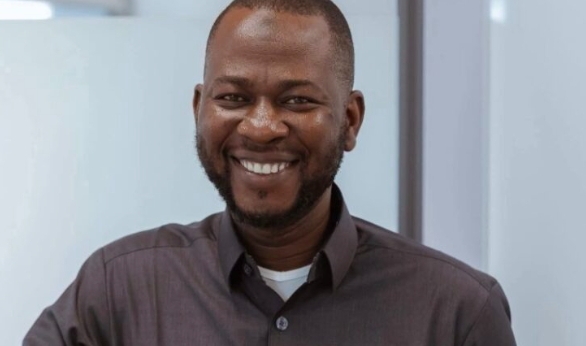
That distinctive voice belonged to Sikiru Akinola, one of the most complete human beings I have ever met. Gentle, generous, kind, always willing to help, influential and seemingly connected to everyone who mattered in journalism. The young adult I met that Friday afternoon in 2010 turns 40 this week, and none of the qualities we know him for seem to have diminished.
Despite the unfavourable weather that afternoon, he took his time to listen to my dreams. Before he let me return to my never-ending reading routine, he asked me to write about anything that concerned me about the university.
鈥淭he Nation鈥�, as he was fondly called at that time, was a popular figure on campus. He regularly wrote for the Nation Newspaper鈥檚 Campus Life page, National Mirror, New Telegraph, and many other national dailies. He was doing what I wished to do, so I had to take his assignment seriously.
Excitedly, I returned to my Awo Hall residence to start work. I had just been elected deputy editor of my departmental editorial board, a rare feat for a 100-level student, so I was fairly confident in my writing.
I ended up producing what I would rather consider 鈥渞ubbish鈥�: a largely opinionated piece that, at best, failed to take into consideration some of the most basic principles of journalistic writing.
In retrospect, I have often wondered why Oranmiyan, as Sikiru was also fondly called, did not scold me for writing that rubbish. Instead, he told me he would help me work on the copy.
He did not stop there. The next few years witnessed the reign of 鈥淪ikiru Akinola and Kemi Busari鈥� as a consistent byline in virtually every national daily that accepted copies from campus reporters in Nigeria.
THE BEAUTIFUL CAMPUS DAYS
鈥淢r Kemi, let鈥檚 go and cover this event鈥� became a familiar phrase in our conversations in the months that followed.
From university matriculation ceremonies and convocations to inaugural lectures, protests, student union reinstatement issues and students鈥� affairs matters, SK 鈥� my preferred version of his many aliases 鈥� introduced me to the world of professional journalism.
At first, he would write the entire story himself and simply slap the 鈥淪ikiru Akinola and Kemi Busari鈥� byline on it. But as I started contributing to our joint stories, he did something that still strikes me as remarkable: he began putting my name first. 鈥淜emi Busari and Sikiru Akinola.鈥� I did little to make my name appear first, but he put it there anyway. What a generous man!
We covered the visit of Bukola Saraki, then governor of Kwara state, who delivered a distinguished lecture series hosted by our department, political science. Every year, from 2011 to 2014, we wrote what was perhaps the most detailed story on the unfortunate death of George Iwilade, who was killed by cultists on the OAU campus in 1999. We covered the 2012 convocation of OAU graduates, graced by the then minister of agriculture and rural development, Akinwumi Adesina. We covered the entire OAU at 50 events, protests, etc. Together, we covered virtually everything that happened on the OAU campus between 2011 and our delayed graduation in 2014.
Those experiences took my journalism career exponentially beyond mere dreams and wishes and into reality. But that was not even the biggest thing. The way SK took me through the basics was remarkable.
He painstakingly taught me the basics of news writing without ever making it feel like a formal mentor-mentee relationship, even though that was precisely what it was. By working alongside him, I learned the kinds of questions to ask to make a report stronger. He taught me how to interview dignitaries and, perhaps more importantly, built in me the confidence to do it. With his guidance, I quickly became a famous name on OAU campus.
SK, you probably didn鈥檛 realise it then, but everything you said, did, and modelled created a foundation for what is now known as the Kemi Busari brand.
And yet, I would say even those things don鈥檛 come close to how he used his sources and connections to elevate my work.
MASTER OF SOURCES
鈥淢r Kemi, Mojeed Alabi said he likes your work. You should send more stories to him,鈥� Sikiru told me one day after we covered an event on campus.
Who was Mojeed Alabi, I wondered.
I would later discover that he was then the campus pages editor at National Mirror. The newspaper had fewer pages devoted to campus news than many of its competitors, so getting a story published there was a big deal. Getting a commendation from the editor was even a bigger deal.
Soon, I was on the phone with Mojeed Alabi, who has since taken me under his mentoring wing. Sikiru had, perhaps, introduced me to more than a thousand people in the media industry and on the OAU campus.
There was Tunbosun Ogundare of National Mirror, Esther Bakare of New Telegraph, Wale Ajetumobi of The Nation, Tope Templer of The Guardian, and several others.
On campus, he introduced me to Mr Abiodun Olarewaju, OAU鈥檚 public relations officer. That connection gave me access to major campus events and made it easier for me to report them.
On the student side, he seemed to know鈥攁nd introduced me to鈥攁lmost every other campus journalist: Femi Ogunjobi, Remi Ojekunle, Hannah Ojo, Taiwo Adebulu, Taofeeq Adebayo, now the big brain behind Science in Yoruba, and many others.
You might wonder what SK wanted in return. Nothing.
He was simply happy helping someone grow. I have since watched him do the same for countless others, without any expectation. It was, and still is, his nature.
Those connections helped build my career. In 2013, at my second The Nation CampusLife Workshop, I was named the winner in the entertainment category. The winning story was about a rather unusual student of Awolowo Hall who ate six super packs of noodles in one sitting. A viral story on campus.
That award meant everything to me. When I returned to campus, it gave me a new level of recognition and, more importantly, fired me up to do more consequential journalism.
But one detail about that story can鈥檛 be left out: I saw someone eating six packs of noodles and thought, 鈥楾his is a story,鈥� because Sikiru had trained me to think that way.
Two years earlier, I probably would have walked past it. Sikiru gave me the opportunities, the eyes to see journalism everywhere, and the people to push my work to the limelight.
Even beyond OAU campus, Sikiru continued to support my career. In 2016, when I needed a home for my Otodo Gbame story, my first investigative report as a professional journalist, he happily published it in his newspaper, The Vendor. That story won me the Promasidor Quill Award in 2016, along with other awards.
WHAT ABOUT HIS BAD HABITS?
Since our paths crossed, we connected in many ways. We both studied political science and attended the same classes. We both support Arsenal, the best club in the world. We both lived in Awo Hall and occasionally engaged in Aroism (many OAU graduates would understand this). But we were different in many ways.
Sikiru never cooked, and he often wondered how I survived cooking 鈥渁ll the time鈥�. He introduced me to eating at Forks and Fingers and New Buka鈥攐ne of the many bad habits I picked up from him. As a student living on a very modest budget, I could barely afford to eat out and had never really considered it until I met SK.
He also wondered how I managed to spend all my time virtually on campus reading. 鈥淢e, I can鈥檛 read like you; I鈥檓 not aiming for first class,鈥� he would fondly say.
SK would rather spend his time at the newspaper stand, arguing about everything under the sun, or at the Students鈥� Union Building (SUB), scheming with other student leaders. Then, during the free lectures week, he would come looking for 鈥渕aterials to read for exams鈥�. I always obliged.
And somehow, despite all that, he graduated pretty well. I suppose that was another one of SK鈥檚 talents: he always seemed to find a way to make things work.
THE GREAT MAN AT 40
He once told our friends publicly that I was one of the people he trusted most. The truth, however, is the reverse. Sikiru was trusted with my career and the careers of many others, and he delivered creditably well.
Sikiru, Kemi and Ogidiolu at Taiwo Adebulu鈥檚 wedding in 2018
Looking back, I realise that what makes SK special is not just that he helped me become the journalist I wanted to be. It is that he has spent much of his life helping people become better versions of themselves. He opens doors, makes introductions, shares opportunities, offers advice, and, sometimes without even realising it, gives people the confidence to believe they belong in rooms they once thought were beyond their reach.
There are people who build careers by occupying the spotlight. Sikiru has built many by standing slightly behind it and pushing others forward. That is why 鈥淥ranmiyan, the silent builder鈥� feels like an appropriate description of the man at 40.
SK, as you turn 40, I pray that the same generosity with which you have poured into other people鈥檚 lives returns to you in abundance. I pray that you will find people who will believe in you as fiercely as you have believed in me and others, open doors for you as readily as you have opened doors for me and others, and stand by you as you have stood by so many of us.
May the next 40 years bring you good health, fulfilment, peace, greater opportunities and the satisfaction of seeing the many people you have helped flourish. May you continue to have the wisdom and strength to build, to mentor, to give and to inspire.
And when you look back at the people whose lives you have touched, I hope you will remember that some of us are where we are today because, many years ago, on an ordinary Friday afternoon at OAU, you stopped a young man on his way to the library and asked him a simple question:
鈥淢r Kemi, what kind of journalism are you interested in?鈥�
Happy 40th birthday, SK. Thank you for stopping me that day.
Culled from TheCable.