





A prominent professor of History and distinguished Islamic scholar, Hakeem Olumide Danmole, on Friday traced the history of Islam in Yoruba land, debunking claims that Islam found its way into Yoruba land through contact with northerners.
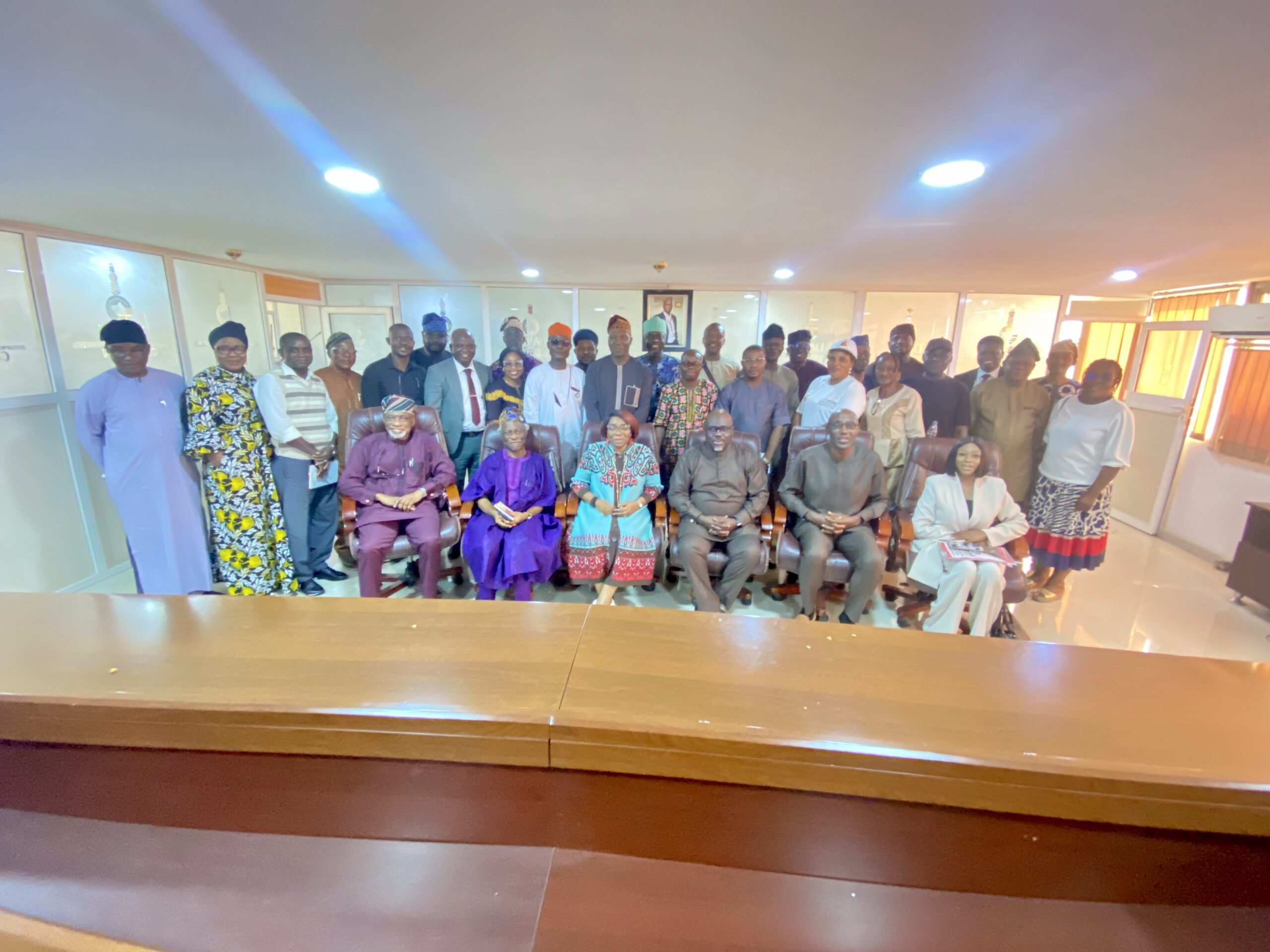
Prof. Danmole revealed this at the 10th Yoruba Historical Conversations organised by the Development Agenda for Western Nigeria (DAWN) at the House of Chief, Oyo State Secretariat Ibadan.
Danmole, who was the keynote speaker at the event spoke on the topic “Islam in Yoruba History”. He stated that there are two directional contact of Islam with Yoruba.
His words: “There is a large body of studies on Islam and the Yoruba, yet the earliest Yoruba encounter with Islam is still conjectural. Nevertheless, existing evidence suggests two directional contacts of Islam with Yorubaland: first, by traders along the coast of West Africa, and second, through contact with Muslims far north of Yorubaland. The second one has received more emphasis from scholars, clerics and historians because of availability of variety of sources.”
Danmole said that Yoruba “trading activities took place among different ethnic groups that traded not only along the coast but also with the hinterland through middlemen. Some of these traders who were from modern day Mali, Gambia, Senegal, Ghana and other coastal states were Muslims. These Muslims reportedly employed slaves and freemen in the course of their trade network along the coast.”
Prof. Danmole corrected the misconceptions about the origin of Islam in Yoruba land. According to him, the belief that Islam came into existence in Yoruba land through the Hausa is a fallacy.
He said: “Contemporary evidence indicates that Islam had already gained some ground in the coastal area of Yorubaland. Such places like Ardra, Whydah, Epe, Badagry had, within the towns, Muslims because of their coastal trade with other parts of West Africa before the Islamic revolution in early nineteenth century Hausaland. Islam had spread among the Yoruba group outside the confines of the present south-western Nigeria.
“What is now fairly certain is that, in almost every part of Yorubaland, there had been encounters with Islam before the beginning of the nineteenth century, a fact not so well known by many people. Indeed, Islam has a very long history among the Yoruba. The writings of Muhammad Masanih and Ahmad Baba of Timbuktu have clearly shown that the Yoruba contact with Islam was deep and predated the Islamic revolution in Hausaland.”
The historian also threw more light on the development of Islam in Yoruba land in the 19th century. He noted that one significant effect of the Islamic revolution was the loss of an important Yoruba town of Ilorin, which became an emirate within the Sokoto caliphate.
“In the early years of the nineteenth century, the Islamic revolution in Housaland under the leadership of Usman dan Fodiyo, led to the establishment of the Sokoto caliphate,” he said.
“This caliphate, in no small measures, affected the history and growth of Islam in Yorubaland. In specific terms, Ilorin, which had been an important outpost of the Old Oyo Kingdom, became an emirate within the Sokoto caliphate through the misadventure of Afonja.
“It then became the responsibility of Ilorin emirs to extend, not only the size of the emirate, but in doing so, extend the frontiers of Islam. In the attempt to achieve this objective, wars were launched on Yorubaland by Ilorin emirate authorities. Initially, the Ilorins were successful, as battles led to the final collapse of the Old Oyo Kingdom. However, the Ilorin army was halted at Osogbo in 1838 by Ibadan under the generalship of Balogun Oderinlo. This marked the end of Ilorin foray into Yorubaland.
“The defeat of Ilorin changed the pattern of spread of Islam in Yourba land. The spread now became the handi-work of both Ilorin and Yoruba clerics, who transversed the length and breath of Yorubaland during the century. Preaching the tenets of Islam during the nineteenth century, these clerics converted ordinary people and many members of Yoruba royalty to the extent that Islam became famous in Yoruba palaces. Apart from the works of these clerics, the fall of the Old Oyo Kingdom earlier in the century and the internecine wars that followed for almost a century, led to the migration of many Yoruba to different towns for safety. Many of these people, who had earlier converted to Islam, carried Islam to their new places of settlement.
“Towns such as Iwo, Ede, Osogbo and more importantly, Ibadan, attracted such large Muslim populations that Islamic traditions began to permeate Yoruba traditions.
The guest speaker also explained the origin of the word “Esin Imale”, with which many non-Muslims refer to Islam as a tough religion
According to the historian, “Imale” was coined from the word Malians. The Yoruba in Lagos called the Malians itinerant traders they traded with in the 14th century “Imale”. And since the religion was introduced to the traders by the Malians, they called Islam “Malian religion” and that was how the name was birthed.
The Director General of DAWN Commission, Mr .Seye Oyeleye, who also spoke at the event explained that the essence of the programme was to let the younger ones understand the histories of the Western region.
“It is called Yoruba historical conversation of our past, present and our future and this is the tenth edition,” he said. “What we decided to do when we started this programme was to connect our present with our past in other to have a future.
“Basically it is to let our younger ones understand our histories. Recently history was not taught in our school and we suddenly realised that over the years people forget who they are.
“So we bring in notable historians and people of note who can tell us our history, tell us who we are once as a people in the region.”
According to Mr. Oyeleye, “part of the challenges facing Nigeria is that we tend to ignore and relegate our history and I believe that one of the problems we have as a country is that we fail to learn from our history. And how can you learn from your history if you dont know the history.”
He said DAWN Commission would gather discourses from the first to 10th edition as a compendium which will be circulated secondary schools and higher institutions.
The DG further revealed that the choice of topics for every edition depends on the guest speakers.
He said: “When Prof. Danmole told us he wanted to teach on Islam in Yoruba land, we felt its a topic that needs to be taught.
“There is a lot of misconceptions concerning Islam as a religion in Yoruba land. I’m glad that Professor Danmole was able to illuminate our darkness in that aspect. We have another misconception about the role of Islam in Yoruba land. Is always good to understand our religion. Yorubas as a race are religious people.
“All this been explained to us goes a long way in fostering development and relationship among the major religions.”
Among hstory and religion stakeholders who attended the event were; the Executive Secretary of the Muslim Ummah of South West Nigeria (MUSWEN), Prof. Dawud Noibi; the Agba Akin Olubadan of Ibadanland, Oloye ‘Lekan Alabi; Retired Assistant Inspector General of Police, Chief Ade Ajakaiye聽and the Chairman, Muslim Community of Oyo State, Alhaji Ishaq Kunle Sanni.