









Akinwande Soji-Ojo
The Federal Government has said the renewed Digital Switch Over (DSO) project is designed to deliver up to 100 free-to-air television channels to at least 40 million households across Nigeria.
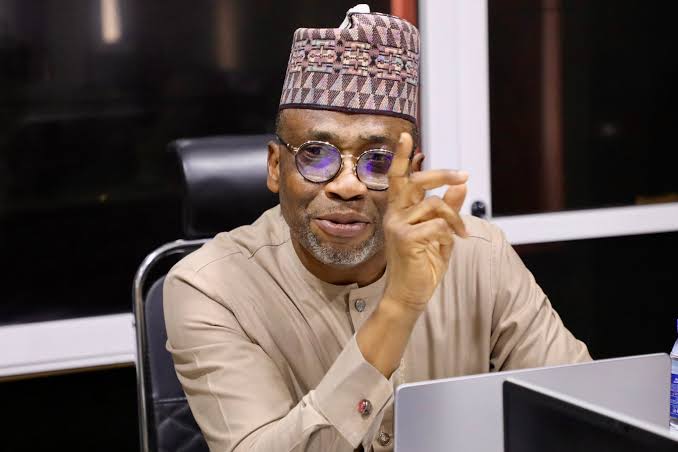
The Director-General of the National Broadcasting Commission (NBC), Charles Ebuebu, disclosed this while addressing newsmen in Abuja on Wednesday.
Ebuebu said the renewed DSO strategy replaces the previous terrestrial transmission model, which achieved only limited nationwide coverage.
According to him, the new satellite-based platform will provide wider coverage and significantly improve access to free television services across the country.
“We are gunning for 40 million TV households. Count 40 million homes at a minimum. That’s what we’re targeting,” he said.
He added that the satellite platform would eventually provide up to 100 free-to-air television channels nationwide.
Ebuebu explained that the previous DSO model, launched by the last administration in eight states, carried between 24 and 28 channels, depending on the location.
“The previous DSO plan combined terrestrial broadcasting for 75 to 80 per cent nationwide coverage with satellite services for areas where terrain, such as mountains, blocked terrestrial signals.
“After launching in eight states, it became clear that terrestrial broadcasting had covered less than a quarter of Nigeria, revealing major infrastructure and coverage limitations.
“Achieving nationwide terrestrial coverage would require about 160 transmission towers, costly imported equipment and more than three years to complete, prompting a change in the DSO implementation strategy.
“We, therefore, decided to go by satellite, which covers Nigeria completely from day one,” he said.
Ebuebu said the renewed project already broadcasts more than 73 channels nationwide and is expected to reach 100 channels in the coming months.
He explained that while the NBC remains the country’s broadcasting regulator, Nigerian Communications Satellite Limited provides the satellite and ground services for the DSO project.
“We are the regulator of broadcast media in Nigeria, whether radio, TV, online and all of that.
“NIGCOMSAT, on the other hand, is providing satellite services and ground services for the DSO.
“They are using their satellite capacity, which covers not just Nigeria but the whole of sub-Saharan Africa, to provide carriage for the DSO,” he said.
The NBC boss said the satellite platform allows viewers to access television channels from every part of the country, regardless of their location.
He noted that satellite transmission offers immediate nationwide coverage, unlike terrestrial broadcasting, which depends on transmission towers.
Describing the renewed DSO project as “a better proposition,” Ebuebu said it would provide more channels, clearer picture quality and wider access to Nigerian content.
He added that the initiative would also strengthen national integration by making regional television channels accessible across the country.
(NAN)