









By Emmanuel Adeleke
In a major development aimed at ending recurrent strikes in Nigeria鈥檚 public universities, the Federal Government has signed a renegotiated agreement with the Academic Staff Union of Universities (ASUU).
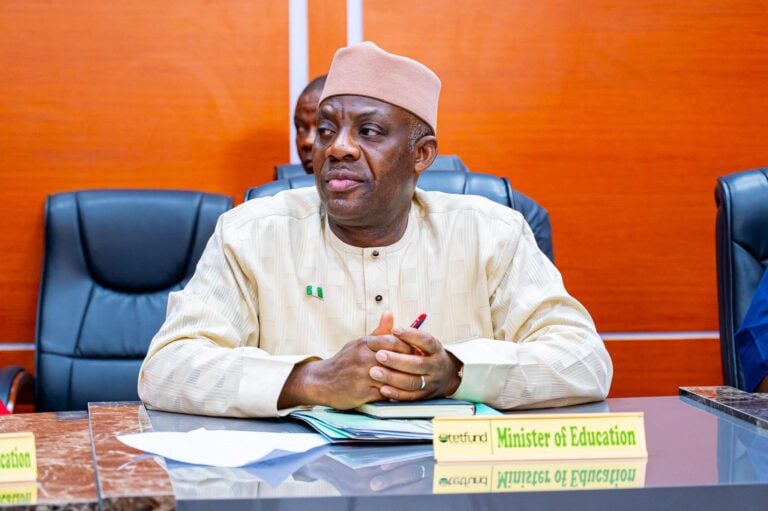
The agreement was unveiled at a ceremony held at the Tertiary Education Trust Fund (TETFund) headquarters in Abuja, presided over by Minister of Education, Dr. Tunji Alausa, and Minister of State for Education, Prof. Suwaiba Sa鈥檌d Ahmad.
The new agreement follows renegotiations between a federal government committee and ASUU concluded in 2025. It effectively ends a 16-year implementation stalemate surrounding the 2009 FG-ASUU pact on the service conditions of lecturers in public tertiary institutions.
Speaking, Alausa described the renegotiated agreement as a 鈥渄ecisive turning point鈥� in the history of Nigeria鈥檚 tertiary education system.
He commended President Bola Tinubu for his commitment to quality education and an uninterrupted academic calendar.
鈥淭his occasion represents far more than the presentation of a document; it symbolises renewed trust, restored confidence, and a decisive turning point in the history of Nigeria鈥檚 tertiary education system,鈥� the minister said.
ASUU President, Prof. Chris Piwuna, expressed cautious optimism about the government鈥檚 commitment.
鈥淲e are optimistic that the government will implement this agreement in totality, but pessimism still exists because of our history. It is our belief that Dr. Tunji Alausa will be different, and that our union will not need to issue a strike threat before any part of this agreement is implemented. As you always say, you are open and accessible; ASUU is also open and accessible,鈥� Piwuna said.
Nigeria鈥檚 public university system has long been affected by strikes over funding, infrastructure, staff welfare, and the preferred payment platforms for lecturers.
While an agreement was initially signed between ASUU and the government in 2009 following negotiations aimed at reversing the decay in Nigeria鈥檚 public university system, full implementation was stalled due to financial constraints and disagreements on university autonomy.
The agreement required renegotiation after its original 2009 provisions became obsolete due to inflation and the emergence of new disputes, among other reasons.