






By Emmanuel Adeleke
The Federal Government has advocated for the scrapping of Junior Secondary School (JSS) and Senior Secondary School (SSS) system, replacing it with a compulsory 12-year uninterrupted basic education.
This will abolish the 6-3-3-4 education system and introduce a 12-4 model of education in the country.
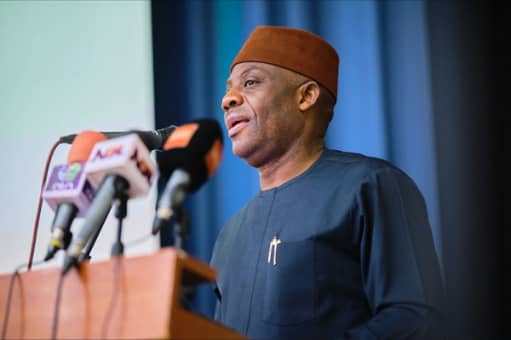
The Minister of Education, Dr. Tunji Alausa, disclosed this at the 2025 extraordinary National Council on Education (NCE) meeting in Abuja on Thursday.
He also sought the approval of the NCE to officially adopt 16 years as the minimum entry age requirement into the country鈥檚 tertiary institutions.
The minister stressed that, besides being in line with global best practices, subsuming secondary education into basic education would allow students to benefit from uninterrupted learning up to the age of 16, after which they could aspire to higher education.
According to him, the new policy would also reduce dropout rates by eliminating financial and systemic barriers that currently prevent students from completing secondary education.
鈥淓xtending basic education to 12 years will ensure a standardised curriculum that is uniformly implemented across the nation. This will also facilitate early exposure to vocational and entrepreneurial skills, preparing students for both higher education and employment.
鈥淢any developed nations have implemented similar systems where basic education spans 12 years, ensuring that students acquire foundational knowledge before specialising at tertiary levels. This reform also aligns Nigeria鈥檚 education system with international standards, fostering better educational outcomes and global competitiveness.
鈥淓ducated youth contribute significantly to national development. When students receive an extended period of compulsory education, they are better equipped to join the workforce with relevant skills. This reform will also reduce child labour and other social vices resulting from premature school dropouts,” he said.
The minister highlighted the implementation strategies to successfully integrate secondary education into basic education, including: policy reforms, infrastructure expansion, teacher training and recruitment, funding and partnerships, and curriculum enhancement.
鈥淚ncorporating technical, vocational, and digital literacy education will equip students with 21st-century skills from their early stage of education.
鈥淭he future of Nigeria鈥檚 education system depends on bold and strategic decisions. There is a need for radical change in our educational system if it is to remain a veritable tool for socio-economic growth and development.
鈥淧rimary and secondary school management is the exclusive preserve of the sub-national governments, while the Federal Government provides technical and funding support.
鈥淓veryone鈥檚 attention needs to be drawn to the fact that we do have a problem in the sector, and we need to understand the nature of the problem and consider our capacity and ability to effect the necessary changes based on the magnitude of what needs to be done. We must then devise a structure that will ensure the sustainability of improving our educational system.
鈥淪ubsuming secondary education into basic education to span 12 years is a necessary step towards creating a more inclusive, equitable, and globally competitive system. It is time for us to embrace this reform to secure the future of our children and, ultimately, the prosperity of our nation,” he added