





Akinwande Soji-Ojo
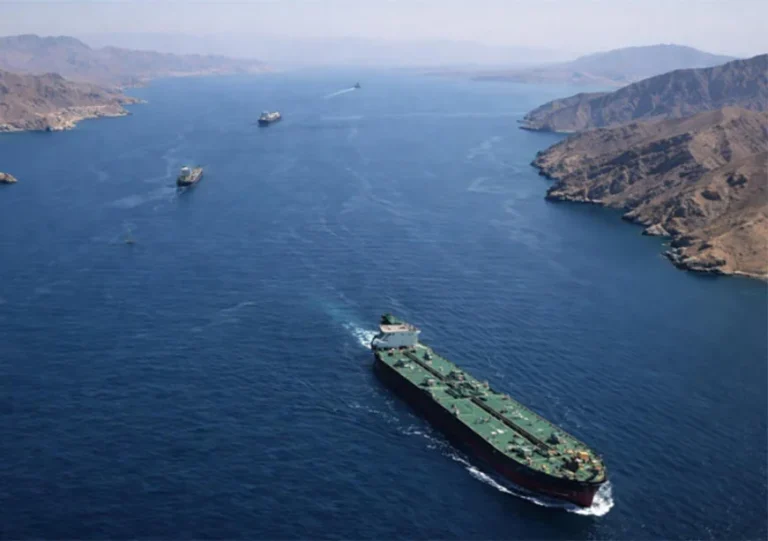
The United States and Iran have reached a peace agreement aimed at ending hostilities across the Middle East, including in Lebanon, while paving the way for the reopening of the strategic Strait of Hormuz.
Although both sides announced that the agreement would be signed in Switzerland on Friday, they provided few details on one of the most contentious issues 鈥� Iran’s nuclear programme.
The breakthrough, announced by Washington and Tehran, is expected to mark a significant step toward ending months of conflict that has claimed thousands of lives and disrupted global energy markets.
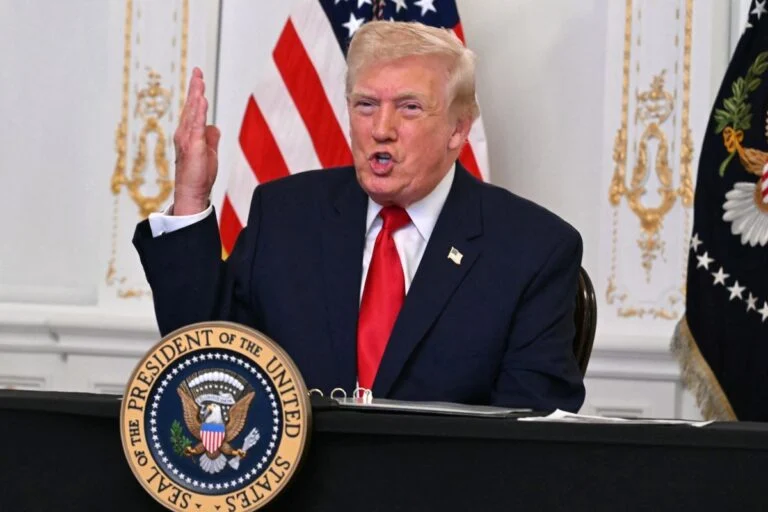
US President, Donald Trump, said the Strait of Hormuz, a critical route for global oil supplies, would reopen once the agreement is formally signed.
“The deal with the Islamic Republic of Iran is now complete. Ships of the world, start your engines. Let the oil flow!” Trump wrote on social media on Sunday,
Shortly afterwards, Iran’s Deputy Foreign Minister, Kazem Gharibabadi, said the agreement would bring an immediate end to the conflict between both countries.
“The agreement puts an immediate end to the countries’ war, and both sides will hold talks within two months to seek a final agreement,” he said.
His remarks came hours after Tehran vowed to retaliate against an Israeli strike on its ally, Hezbollah, in Beirut’s suburbs, an incident that threatened to derail the negotiations.
Later on Sunday, Pakistan’s Prime Minister, Shehbaz Sharif, announced: “Both sides have declared the immediate and permanent termination of military operations on all fronts, including in Lebanon.”
Sharif also thanked the leaders of Qatar, Saudi Arabia and Turkey for supporting the mediation efforts.
Despite the announcement, key aspects of the agreement remain unclear.
Iran’s Mehr News Agency reported that the US would release $12 billion in frozen Iranian assets before formal negotiations begin. It also cited a 14-point memorandum of understanding, which reportedly provides for the release of $24 billion in frozen assets during a 60-day negotiation period after the agreement is signed.
However, the Trump administration has yet to comment on those claims.
The nuclear issue is expected to remain a major sticking point, with Washington seeking to curb Tehran’s uranium enrichment programme and address its stockpile of highly enriched uranium.
In an interview with The New York Times, Trump said negotiations were continuing over whether Iran should suspend uranium enrichment for 20 years.
He hinted that the US could accept a 15-year suspension but declined to discuss the negotiations publicly.
The announcement was welcomed by the international community, with many expressing hope that it would lead to lasting peace in the region.
United Nations Secretary-General,Antonio Guterres, described the agreement as “a critical step” toward ending the conflict in the Middle East.
Meanwhile, the United Kingdom, France, Germany and Italy said they were ready to lift sanctions on Iran and would work “with the US, Iran and regional partners to seize this moment, maintain momentum and achieve a long-term diplomatic settlement.”
Financial markets also reacted positively. Oil prices fell by more than four per cent in Tokyo, while Japan’s Nikkei stock index rose by three per cent.
The Strait of Hormuz is one of the world’s most important oil shipping routes, and its closure had fuelled higher energy prices, disrupted global supply chains and contributed to inflation in several countries.
Speaking to Fox News, US Vice President, JD Vance, said: “What we’re going to be able to do is drive down the cost of energy, not just now but for the long term, and create a real engine of prosperity in the Middle East.”
He added that he planned to attend the signing ceremony in Geneva and said it was possible that Trump would also be present.
The agreement came after a tense day in which Trump publicly criticised Israel over an airstrike on Beirut that he said delayed the peace process.
In a phone interview with Axios, Trump said: “I was so pissed off. I let him know.”
The latest Israeli strike revived fears of renewed hostilities after previous attacks on Beirut had triggered Iranian missile retaliation and Israeli counterstrikes.
Tehran has consistently maintained that any agreement to end the conflict must also address the parallel fighting in Lebanon, where Israel has been conducting military operations against the Iran-backed Hezbollah movement.