






By Emmanuel Adeleke
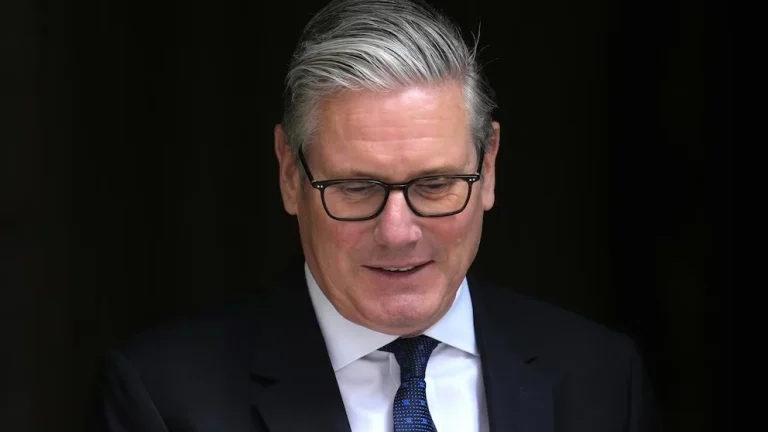
British Prime Minister, Keir Starmer, has announced plans to ban children under the age of 16 from accessing social media, saying the platforms are harming young people and exposing them to dangerous content.
Starmer said the government would prohibit children under 16 from using social media platforms, warning that many of the services are designed to be addictive and expose users to harmful material.
According to the government, the proposed ban will cover platforms including Snapchat, TikTok, YouTube, Instagram, Facebook and X, but will not apply to messaging services such as WhatsApp.
The Prime Minister said he hopes the legislation will be passed by late December, with the ban expected to take effect in the spring of next year.
He added that the government would also introduce “world-leading action on gaming services and live-streaming platforms.”
In a statement, the government said it was also considering overnight curfews and mandatory breaks from infinite scrolling for users under the age of 18, with further details expected in July.
Starmer said the policy was influenced by Australia’s experience after it became the first country to ban children under 16 from using social media in December.
The announcement follows a government-led consultation during which British teenagers tested social media restrictions and app time limits.
Responding to the proposal, a YouTube spokesperson warned that a blanket ban could push children toward “less safe services.”
Speaking on online safety, Starmer said the government would also take action against gaming and live-streaming platforms that allow strangers to contact children.
“Is there a situation in the offline world where you would just let your child pair up with a stranger? An adult that you don’t know about? No. So we’re taking action on that,” he said.
He, however, did not provide further details.
The United Kingdom’s move comes amid a growing global push to strengthen online protections for children.
Last week, Canada’s culture minister introduced legislation that would ban children under 16 from opening social media accounts and require artificial intelligence chatbot services to limit the generation of harmful content.
The proposed Digital Safety Act makes Canada one of several countries tightening regulations on social media platforms over concerns about their impact on children.
Indonesia began enforcing a similar ban for users under 16 in March, while several European governments have also indicated plans to adopt comparable measures.
The UK government’s public consultation on the proposal, which closed in late May, received about 116,000 submissions, making it the second-largest consultation response in the country’s history.
According to the government, more than 83 per cent of parents who participated said the risks associated with social media outweigh the benefits for children, while 91 per cent supported setting the minimum age for social media use at 16.
The announcement comes a week after the UK government directed technology companies to prevent children from sending and receiving nude images on their devices.
Britain’s interior ministry said companies, including Apple and Google, have been given three months to introduce safety features that would block children from creating or accessing nude images on phones and tablets.
The ministry warned that if the companies fail to comply, the government will introduce legislation compelling them to activate the technology.
Starmer’s Labour government said technology companies have a “moral responsibility” to “protect children from coercion, abuse and sextortion.”
The government added that the proposed legislation would prevent children from accessing pornography and make it more difficult for online predators to target minors.
According to an analysis by the Internet Watch Foundation cited by the government, 91 per cent of online child sexual abuse reports recorded in 2024 involved self-generated content created by children themselves.