





By Efa Sunday
The Speaker of the House of Representatives, Rt. Hon. Tajudeen Abbas, has revealed that Federal Government is advancing legislative measures to give Nigerians in the diaspora the right to vote in national elections.
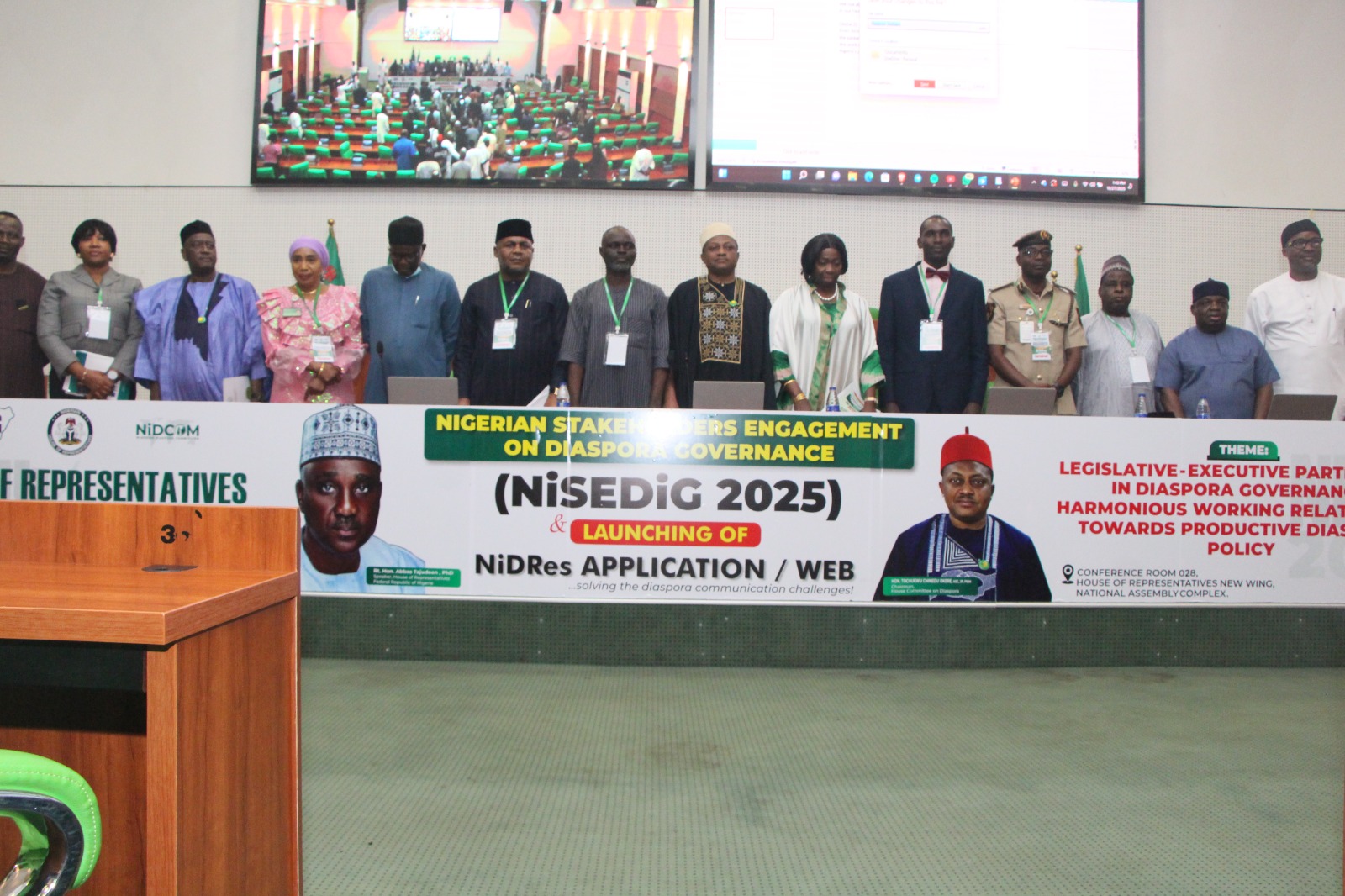
Abbas disclosed this on Monday during the Nigerian Stakeholders Engagement on Diaspora Governance (NiSEDiG 2025) and the launch of the Nigerians in Diaspora Response (NiDRes) App and Website, jointly organised by the House of Representatives Committee on Diaspora and the Nigerians in Diaspora Commission (NiDCOM) in Abuja.
Represented by Hon. Patrick Umoh, member representing Ikot Ekpene/Essien Udim/Obot Akara Federal Constituency of Akwa Ibom State, the Speaker described the proposed diaspora voting bill as a significant step toward inclusive democracy.
鈥淭his bill is a major step towards extending democratic participation to all citizens and ensuring that every Nigerian voice is heard in the process of nation-building,鈥� Abbas said.
He reaffirmed that the 10th House of Representatives prioritises diaspora engagement as part of its agenda for inclusion, accountability, and economic reform.
In his remarks, Hon. Tochukwu Chinedu Okere, Chairman of the House Committee on Diaspora, said the NiSEDiG 2025 initiative aims to build a unified system that combines legislation, institutions, and technology to strengthen diaspora governance. He added that the NiDRes App and Website will simplify access to government services for Nigerians abroad and facilitate interaction with embassies and missions.
NiDCOM Chairman/CEO, Hon. Abike Dabiri-Erewa, in her keynote address, highlighted the commission鈥檚 progress in six years, emphasising that diaspora contributions continue to shape critical sectors including health, education, agriculture, ICT, and transportation.
鈥淲e have now entered a new phase of consolidating diaspora engagement to boost national development,鈥� she said.
Dabiri-Erewa recalled that the National Diaspora Policy, approved by the Federal Executive Council in 2021, provides a framework for deeper diaspora involvement in national growth. She also noted that remittances, estimated at $23.81 billion in 2019, remain a crucial pillar of the Nigerian economy, representing about 6% of GDP.
She listed key NiDCOM initiatives such as the National Diaspora Day (July 25), the Nigeria Diaspora Investment Summit, the National Town Hall Meeting, and the Diaspora Quarterly Lecture Series.
Dabiri-Arewa, however, identified challenges such as inadequate funding, limited infrastructure, and the need to amend the NiDCOM Act to secure sustainable financing through remittance-linked charges.
The NiSEDiG 2025 and NiDRes launch underscored Nigeria鈥檚 renewed effort to create a structured, inclusive, and technology-driven diaspora engagement framework. The hybrid event drew participants from Nigerians in Diaspora Organisations (NIDO), academia, youth groups, MDAs, the Nigerian Immigration Service, and state diaspora focal officers.