









By Emmanuel Adeleke
The Nigerians in Diaspora Commission (NiDCOM) has expressed concern over a directive by the Central Bank of The Gambia requiring banks operating in the country to replace non-Gambian employees with qualified Gambian nationals by December 31, 2026.
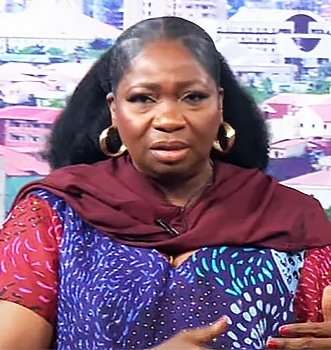
NiDCOM Chairman and Chief Executive Officer, Abike Dabiri-Erewa, described the directive as deeply worrisome, warning that its implementation could affect 57 Nigerian professionals working in four Nigerian-origin banks in The Gambia.
In a statement issued by NiDCOM鈥檚 Head of Media, Public Relations and Protocols, Abdur-Rahman Balogun on Tuesday, the commission said the affected professionals reportedly hold valid residency and work permits and have made significant contributions to the Gambian banking sector.
The directive, reportedly issued on September 16, 2026, requires banks to replace existing non-Gambian employees with qualified Gambian nationals before the end of the year.
While acknowledging The Gambia鈥檚 right to promote local employment and develop its workforce, Dabiri-Erewa maintained that such policies must respect existing employment arrangements, legitimate work authorisations and the principles of African solidarity and regional integration.
NiDCOM also highlighted the economic contributions of the four Nigerian-origin banks potentially affected by the directive.
According to the commission, the banks collectively account for approximately 37.2 per cent of total banking industry deposits, valued at 35.3 billion Gambian dalasis, 32.6 per cent of loans worth 7.67 billion dalasis and 37 per cent of industry assets valued at 44.78 billion dalasis.
They also account for about 34.5 per cent of investments in Central Bank bonds and reportedly provide 90 per cent of the funding supporting the operations of the National Water and Electricity Company (NAWEC).
The commission described it as contradictory to encourage African investment, regional economic cooperation and the free movement of people while implementing employment policies that could lead to the displacement of qualified African professionals.
NiDCOM therefore called on the Central Bank of The Gambia to immediately reconsider and reverse the blanket replacement directive.
It also urged the Gambian authorities to engage the Nigerian High Commission in Banjul, affected financial institutions and other relevant stakeholders to reach an equitable resolution.
The commission further called for respect for the spirit of ECOWAS integration and the longstanding cordial relationship between Nigeria and The Gambia, advocating constructive diplomatic engagement to resolve the dispute.