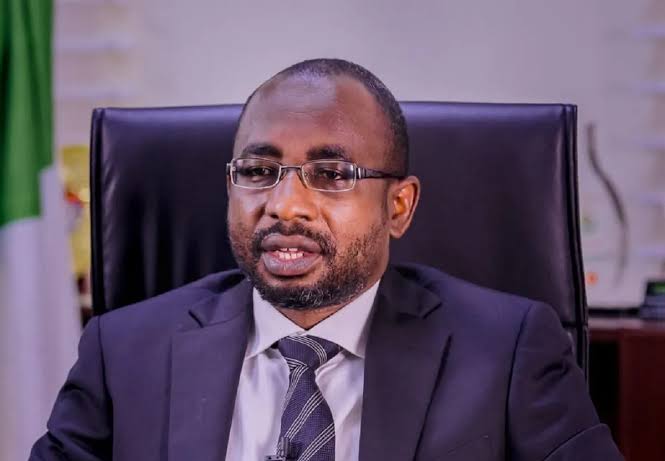





The Director-General of the National Information Technology Development Agency (NITDA), Kashifu Inuwa, has underscored the importance of collaboration between government institutions and emerging startups as a catalyst for Nigeria鈥檚 digital transformation and national development.
Speaking in Abuja during Nigerian Satellite Week 2026, themed 鈥淗arnessing Space Technology for an Extraordinary Nigeria,鈥� Inuwa urged stakeholders to embrace partnerships as a pathway to innovation and impact.
鈥淭ake a bold step, and you can make a difference,鈥� he said, emphasising the need to translate ideas into tangible outcomes through collective effort.
The NITDA boss, represented by the Director of Stakeholder Management and Partnerships, Aristotle Onumo, delivered a presentation titled 鈥淓nhancing Collaboration Between Government Agencies and Emerging Startups.鈥�
He outlined four guiding principles for driving transformation: enabling the ecosystem rather than controlling it, prioritising networks over institutions, developing talent while supporting innovation and adopting practical solutions; and focusing on platforms rather than isolated projects.
To illustrate the power of digital innovation, Inuwa shared the story of a rural farmer whose productivity challenges, ranging from unstable rents to failed loans, were overcome through access to digital tools and networks.
He explained that such incremental interventions can scale into broader economic gains and ultimately contribute to national infrastructure, including satellite systems.
鈥淭his is the power of space technology, and it shows why events like this are so important,鈥� he noted.
Highlighting the evolving role of space technology, Inuwa observed that startups are increasingly driving innovation across telecommunications, navigation, security, and cloud services. Once dominated by global superpowers, the sector is now emerging as a key economic driver, with Nigeria鈥檚 鈥淪unrise Packet鈥� projected to contribute more than $1.5 billion to the economy by 2030.
鈥淚nnovation without adoption is wasted,鈥� he added, stressing the critical role of government in enabling startups to scale through supportive policies, infrastructure, and incentives.
theAccording to him, developmental regulation should focus on creating markets, orchestrating ecosystems, and delivering public value rather than stifling innovation. He pointed to several initiatives supporting Nigeria鈥檚 innovation ecosystem, including the Digital Start-Up Act, Idea Hatch, and the National Digital Leadership Programme.
Inuwa concluded with a strong call for collaboration among government, startups, NGOs, and investors, describing Nigeria鈥檚 youth as the country鈥檚 greatest asset.
鈥淚f we are going to create a digital Nigeria, we must collaborate,鈥� he said.
Also speaking at the event, the Minister of Communications, Innovation and Digital Economy, Dr. Bosun Tijani, described Nigeria鈥檚 satellite infrastructure as central to the nation鈥檚 digital future.
鈥淣igeria is the only West African country with its own satellite. NigComSat provides critical connectivity and resilience, benefiting not just Nigeria but the entire region,鈥� he said.
Tijani disclosed that President Bola Tinubu has approved the acquisition of NigComSat-2A and NigComSat-2B, a move expected to significantly enhance the country鈥檚 space capabilities.
鈥淲hat truly matters is how we leverage this technology to improve agriculture, education, security, and business operations,鈥� he added.
The minister also highlighted key government investments, including a 鈧�12 billion digital-economy research cluster fund under Project Bridge. He said Nigeria is expanding its digital backbone through 90,000 kilometres of fibre-optic cables, nearly 4,000 telecom towers in underserved communities, and new satellite deployments to strengthen regional connectivity across Cameroon, Niger, Chad, Burkina Faso, and the Republic of Benin.
鈥淭he talent, ideas, and energy are all here in Nigeria. It is up to us to turn them into real outcomes for our people and the economy,鈥� Tijani said.
Welcoming participants, the Managing Director of Nigerian Communications Satellite (NIGCOMSAT) Limited, Jane Nkechi Egerton-Ideyen, said Nigeria鈥檚 space programme is entering a new phase marked by deliberate and focused growth.
She noted that the agency鈥檚 revenue grew from less than $650 million in 2023 to more than $2 billion in 2025, attributing the surge to key reforms, new commercial deals, and rising demand for satellite broadband services across Africa.
Egerton-Ideyen also revealed that Nigeria has launched seven space assets in just over two decades and is shifting from prestige-driven initiatives to practical outcomes, enhancing connectivity, improving livelihoods, and promoting inclusive development.
She added that more than 500 young Nigerians received training in satellite technology within the past year, while over 50 startups have benefited from NIGCOMSAT鈥檚 accelerator programme.