









Cassava farmers in Africa can now get customised advice on when, if and how to invest on farm inputs on their farms, thanks to a new mobile application dveloped by the African Cassava Agronomy Initiative (ACAI) of the International Institute of Tropical Agriculture (IITA).
The app, called “Akilimo”, is an all-in-one agronomic advisory service to support cassava growers with knowledge and recommendations to intensify their cassava-based cropping systems.
In a statement made available to 狈别飞蝉辫别补办辞苍濒颈苍别,听the Digital Extention & Advisory Services Specialist of ACAI, Godwin Atser, said Akilimo is聽built with and for smallholder cassava growers.
According to him, “the name 鈥楢kilimo鈥� is portmanteau of two Swahili words: 鈥榓kili鈥�, which means smart and 鈥榢ilimo鈥�, which means agriculture.”
On how the app works, Atser explained: “Akilimo鈥檚 recommendations are based on knowledge gathered from field trials in over 5,000 farmers鈥� fields. Akilimo combines this data with weather and soil data in spatial crop models to calculate expected yield increases and revenue gain from investments in improved agronomic interventions. These include customized advice on fertilizer application, tillage regime and best planting practices, cost-effective weed control measures, intercropping practices and tailored planting and harvest schedules.”
Atser also disclosed that ACAI aims to increase dissemination of the agronomic recommendations to farmers in the year 2020 as discussed at its 2019 annual review and planning meeting held early this month in Zanzibar, Tanzania.
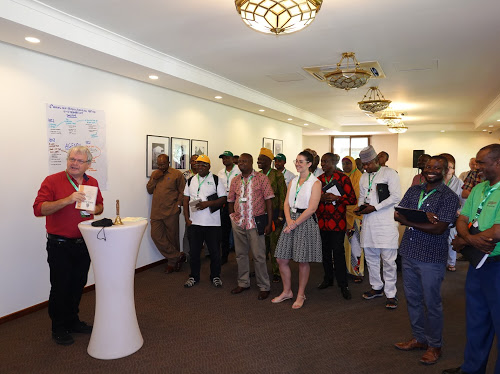
The meeting, which can be described as an indaba of close to 80 experts: agronomists, breeders, social scientists, development partners, farmers and policymakers, provided an ample opportunity for reflection of ACAI鈥檚 activities not just for 2019 but also in the last 4 years of the project. Furthermore, it was a time for implementers of the project to look into the future of ACAI with emphasis on 2020 work plan.
He said: “Unlike in the past, this year鈥檚 meeting focused on dissemination: How dissemination activities took off in 2019, and what momentum is needed for 2020. As Dr Pieter Pypers, ACAI Project Coordinator simply puts it: It鈥檚 about scaling and dissemination 铿乺st, and how we have started gaining momentum with going on ground with Akilimo”.
“But more than the scaling of Akilimo, there were scientific sessions where the science behind ACAI recommendations were presented. A session by the PhD students on the ACAI project added glamour and insights to the scientific work of the project.”
Christian Witt, Senior Program Officer with the Bill & Melinda Gates Foundation could not hide his admiration for ACAI鈥檚 approach to agronomy and scaling. In his words: 鈥淥ne thing that stands out ACAI is the science behind what you do.鈥�
Back at the foyer, different dissemination partners of ACAI mounted booths with videos and ACAI Decision Support Tools displaying the practice of scaling. The聽session was about 鈥楤eyond Rhetoric鈥�. The session focused on 鈥榯he how鈥� and 鈥榯he tools鈥� that partners are using to disseminate agronomic recommendations to farmers in their different communities.
While science and dissemination formed the core of the meeting, organizers also provided space for teambuilding that attracted fun among team members in the ancient Stone Town city.
The team building activity: 鈥淟ost in Stone Town鈥� was about members of a team working together to accomplish specific tasks within a given timeframe. The activity showed clearly that without teamwork, little or nothing can be achieved.
At the end of the 3-day event, Dr Alfred Dixon, IITA Director for Development & Delivery expressed confidence that ACAI was showing the way to revolutionize cassava agronomy.
鈥淚 am a breeder of cassava 鈥� I spent years breeding but I think it is time to look towards agronomy to narrow the yield gap,鈥� he said.