Akinwande Soji-Ojo
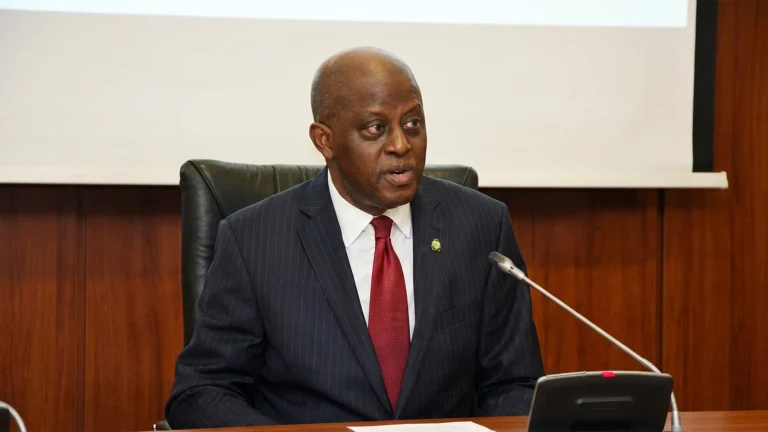
The newly confirmed Governor of the Central Bank of Nigeria (CBN), Yemi Cardoso, has spoken about his plans to stabilise the country鈥檚 foreign exchange (FX) market and slow inflation.
Cardoso spoke on Tuesday while being screened by the Senate.
Nigeria鈥檚 FX market has been experiencing high levels of volatility since the beginning of President Bola Tinubu’s administration.
The gain the local currency recorded on Monday was quickly reversed on Tuesday when the naira fell to an all-time low of N1,000 to a dollar.
The CBN Governor said the immediate plan to stablise the naira would be for the apex bank to settle some financial obligations and make 鈥渢ransparent rules.鈥�
鈥淣umber one is what I will term an 鈥榦perational issue.鈥� Right now we have a situation where we are aware that there are unsettled obligations by the CBN.
鈥淲hether it is 4 billion, 5 billion or 7 billion, I don鈥檛 know but definitely the immediate priority will be to verify the authenticity and extent of what is owed.
鈥淣umber two, apart from the operational issue, there is one that is system related that involves ensuring that we come up with rules that are open, transparent that any of the players in that area understands. We can’t expect foreign investors, portfolio investors 鈥� we can鈥檛 expect them if there is no open and transparent system that everyone understands.
鈥淚n setting up those guidelines one will carry the relevant stakeholders along and the comment was made earlier that one should be ready to engage everybody and hear views.
鈥淲ith those two things, though they may seem simple, will go a long way to ease up the restrictions we are having on people that want to come in,鈥� he said.
Cardoso added that to tackle the country鈥檚 inflation, the CBN would roll out evidence-based policies.
“There will be a need to significantly revamp the infrastructure in the CBN with respect to data. We will ensure that our data gathering capacity is significantly enhanced, that is key in measuring your inflation,鈥� he said.
The CBN Governor further explained that avoiding deficit financing would tackle money supply issues.