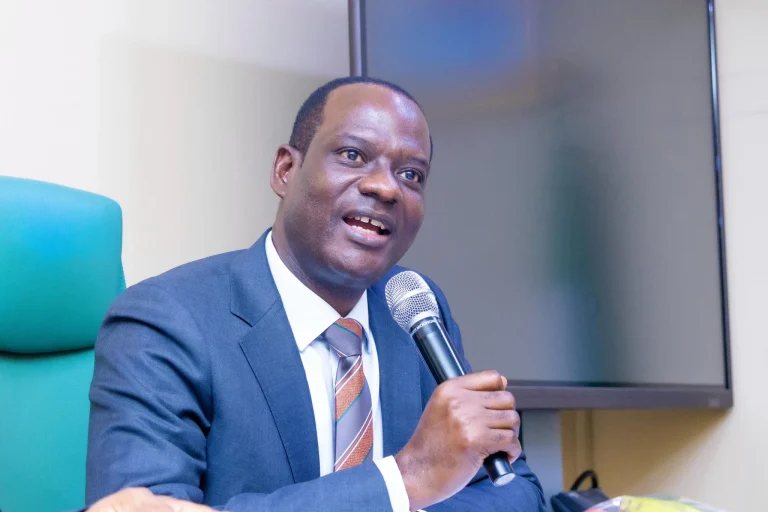






Minister of Finance and Coordinating Minister of the Economy, Taiwo Oyedele, has said the Federal Government will not restore petrol subsidy or return to a multiple exchange rate system, warning that reversing the economic reforms could undermine investor confidence.
Oyedele spoke on Saturday at a press briefing on the sidelines of the 2026 International Monetary Fund (IMF) and World Bank annual meetings in Bangkok, Thailand.
He said the government had no plans to reverse the economic reforms introduced under President Bola Tinubu, adding that its position had been made clear during engagements with investors, credit rating agencies and multilateral institutions.
鈥淟et me be clear, there will be no return to fuel subsidies or multiple exchange rates,鈥� the minister said.
He explained that the Federal Government鈥檚 30-day retail margin discount on petrol was a commercial decision by the Nigerian National Petroleum Company Limited (NNPCL) to cushion the effects of rising fuel prices, rather than a subsidy funded with public money.
鈥淭he recent 30-day retail margin discount is a time-bound commercial decision by the NNPC to reduce margins and support Nigerians. It is not a subsidy paid from public funds,鈥� he said.
Oyedele argued that reversing the reforms would undermine progress towards economic stability and weaken investor confidence.
He added that the government was exploring measures to ease the impact of higher energy costs without reinstating a blanket subsidy.
The minister also said Nigeria was targeting 7 per cent economic growth, arguing that the IMF’s projections for the country were too conservative.
The IMF had projected Nigeria鈥檚 economy to grow by 4.2 per cent in 2026 and 4.3 per cent in 2027.
However, Oyedele said the country had the potential to outperform the projections if the government sustained its economic reforms and addressed challenges affecting businesses and households.
鈥淲e have a target of 7 percent growth,鈥� he said.
The minister identified lower inflation, reduced financing costs and measures to ease pressures from food, energy and logistics as critical to achieving stronger economic growth.
According to him, the government鈥檚 economic strategy is aimed at creating a stable investment environment and expanding productive activities.
Oyedele also pointed to easing inflation and stronger external reserves as signs of progress under the ongoing reforms.
However, he stressed the need to sustain the reforms and translate improvements in key economic indicators into increased economic activity and better living standards.
The minister further called for greater investment in job creation, warning that artificial intelligence (AI) could widen the gap between economic growth and employment.
He said economic progress should not be measured by growth figures alone, stressing the need to ensure that investment and technological advances translate into decent jobs.
Citing estimates discussed at the meetings, Oyedele said about 1.2 billion young people would enter the global labour market over the next 10 to 15 years, while only about 400 million jobs were projected to be created.
The figures, he said, highlighted a significant employment challenge, particularly for developing countries with large and growing youth populations.
Oyedele warned that AI could drive economic expansion without creating enough jobs to absorb new entrants into the labour market.
He said Nigeria must respond by investing in skills development on a large scale and attracting capital into sectors capable of generating substantial employment.
The minister also called for policies to ensure that the benefits of AI were shared fairly, including arrangements that would enable African countries to leverage their data and technological capabilities to develop domestic expertise.
He added that the performance of multilateral development institutions should be assessed not only by the financing they provide or the economic growth they support, but also by the jobs their interventions create.