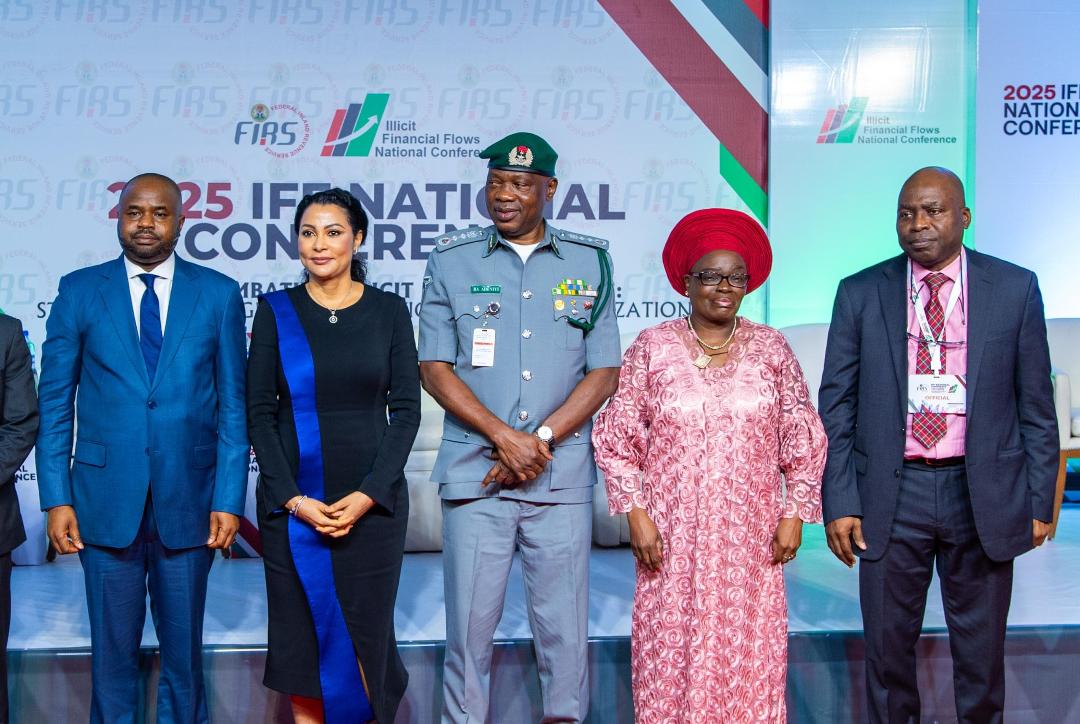







Stakeholders across public and private sectors have unanimously identified illicit financial flows (IFFs) as a major threat to Nigeria鈥檚 economic stability and called for urgent, coordinated efforts to tackle the problem.
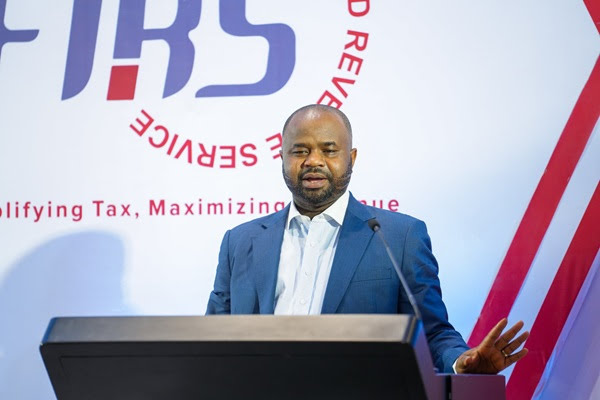
They spoke on Tuesday at the opening of a two-day national conference on IFFs organised by the Federal Inland Revenue Service (FIRS), with the theme: 鈥淐ombating IFFs: Strengthening Nigeria鈥檚 Domestic Resource Mobilisation,” held at the Transcorp Hilton Hotel, Abuja.
In his welcome address, FIRS Chairman, Zacch Adedeji, urged participants 鈥� drawn from within and outside the country 鈥� to use the platform to foster meaningful collaboration in halting IFFs and revitalising Nigeria鈥檚 fiscal framework.
Adedeji, through a statement by his Special Adviser on Media, Dare Adekanmbi, described IFFs as one of the most pressing economic challenges facing Nigeria.
鈥淚llicit financial flows through tax evasion, profit shifting, money laundering, and trade mis-invoicing are not merely financial misconduct. They drain the economy structurally, denying us the resources needed for inclusive development,鈥� he said.
He explained that each untracked dollar represents lost opportunities for infrastructure, quality public services, and social equity, adding that multinational corporations exploit complex global systems to engage in aggressive tax avoidance, further threatening Nigeria鈥檚 fiscal sustainability.
鈥淟ike many other resource-constrained nations, Nigeria loses billions annually through these illicit channels. This conference is therefore not just a policy dialogue, but a national imperative,鈥� he added.
Adedeji said President Bola Tinubu鈥檚 assent to four tax reform bills on June 26, 2025, marks a decisive step in the administration鈥檚 Renewed Hope Agenda, reflecting its commitment to tax system overhaul, legal reforms, and revenue transparency.
However, he stressed that legal reforms alone are insufficient, adding that effective enforcement, technological innovation, and public trust are equally essential.
Adedeji outlined FIRS’ three-pronged strategy– promoting voluntary compliance through taxpayer education and system simplification, leveraging technology and intelligence, including real-time analytics and a newly established Tax Intelligence and Automation Department and fostering collective action, particularly through the Proceeds of Crime Management and IFF Coordination Directorate, which works with law enforcement, the judiciary, private sector, and international partners.
Speaking, the conference chairperson and Minister of State for Finance, Dr. Doris Uzoka-Anite, stressed the need to retain wealth generated within Nigeria鈥檚 borders.
She revealed that Nigeria loses approximately $18 billion annually to IFFs, primarily through profit shifting and aggressive tax avoidance by multinational companies.
鈥淗uge sums are transferred out of the country, stripping Nigeria of vital resources that could fund essential public services,鈥� she said.
Uzoka-Anite criticised existing international tax treaties as outdated and misaligned with Nigeria鈥檚 current economic realities and tax equity objectives.
鈥淢any foreign companies operate in Nigeria without paying fair taxes. We must revise these treaties to reflect our renewed commitment to equity and reform,鈥� she added.
She praised FIRS for deploying technology to strengthen operations and reduce opportunities for tax evasion.
Also speaking, Ugandan lawyer and member of the Thabo Mbeki High-Level Panel on IFFs, Hon. Irene Ovonji-Odida, noted that Africa has lost over $1 trillion in illicit flows over the past 50 years, with West and North Africa accounting for $407 billion in trade mis-invoicing alone within a decade.
She said tax avoidance through commercial activities accounts for 65% of IFFs, while criminal activities make up 30% and corruption 5%.
Ovonji-Odida accused Western powers of complicity, noting that professional frameworks in sectors such as law, accounting, auditing, and finance are dominated by opaque systems rooted in the Global North.
鈥淭hese systems shape the ethos of global economic governance, often to the detriment of African interests,鈥� she said.
She called for a stronger, unified African stance on global tax reforms and urged continued South-South cooperation, particularly within United Nations frameworks.
In a goodwill message, Comptroller-General of Customs, Bashir Adeniyi, highlighted the role of enforcement agencies in curbing IFFs, citing the seizure of $8.3 million at Lagos Airport during his tenure as Area Comptroller.
Adeniyi expressed concern over the reaction of the Financial Action Task Force (FATF), which, he said, appeared more interested in inflows into Nigeria than in tracking outward cash movements.
鈥淭his conference is timely, especially as Nigeria prepares for a FATF assessment. A whole-of-society approach is essential, involving Customs, FIRS, EFCC, and other stakeholders,鈥� he said.
He also pointed to illegal mining and cross-border movement of funds as major contributors to IFFs and praised the involvement of the United Nations Office on Drugs and Crime (UNODC) in addressing the issue.