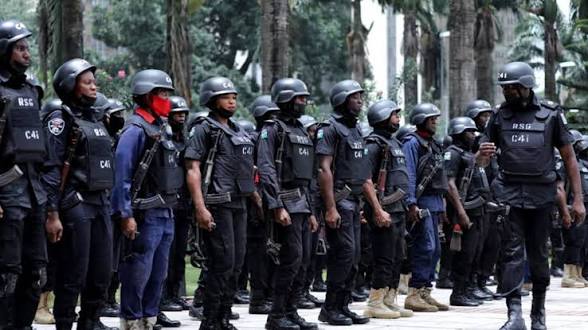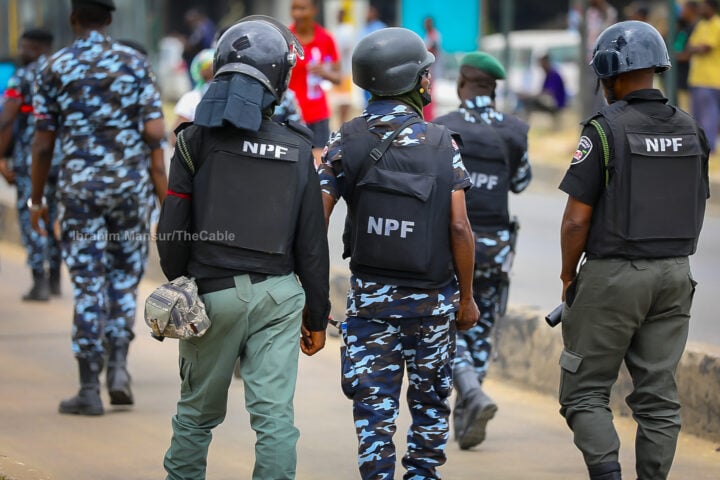










If Nigeria is going to decentralise policing through state police, then it must simultaneously decentralise and digitise intelligence gathering.
Nigeria’s long-running debate on state policing appears to be entering a decisive phase. The House of Representatives has passed the bill seeking the establishment of state police, while the Senate has advanced the proposal through second reading and referred it to its Constitution Review Committee for further legislative scrutiny and public consultations. As discussions continue around funding, accountability, command structures, and safeguards against political abuse, one critical question remains largely overlooked: how will state police gather, analyse, and share intelligence in an increasingly digital world?
If Nigeria is going to decentralise policing, it must simultaneously decentralise and digitise intelligence gathering. For decades, the country’s response to insecurity has relied heavily on kinetic measures: deploying troops, establishing checkpoints, conducting military operations, and convening emergency security meetings. While these interventions remain necessary, they are often reactive, addressing attacks after they occur rather than preventing them. Criminal and terrorist networks have evolved faster than the systems designed to stop them. To reverse this trend, Nigeria must complement traditional security operations with a technology-driven, intelligence-led approach that anticipates threats before they materialise. This is where cybersecurity now becomes critical. Cybersecurity, long considered the preserve of corporate IT departments and financial institutions, must now become a critical national security tool, and Nigeria can no longer afford to treat it as an afterthought.
Cybersecurity is often viewed as a concern for banks, telecommunications companies, and large corporations. Yet, across the world, intelligence gathering, digital surveillance, and data analytics now complement conventional policing and military operations. Nigeria’s 2022 adoption of the AMBER Alert programme through the partnership between NAPTIP and Meta demonstrates the growing role of technology in public safety. However, its effectiveness depends on public awareness, institutional capacity, and integration into broader security systems. Experiences from Israel, Kenya, Europe, and North America also show that while technology cannot replace conventional security measures, it can significantly enhance their effectiveness.
The security challenges confronting Nigeria is made even more urgent by developments across the wider West African region. According to the Global Terrorism Index 2026, violent extremist groups continue to expand their footprint across the Sahel, exploiting weak governance structures and porous borders. As instability deepens in neighbouring states, Nigeria faces increasing risks of cross-border criminal and terrorist infiltration. These realities require Nigeria to strengthen not only its physical borders but also its intelligence capabilities. Unfortunately, intelligence coordination remains one of Nigeria’s weakest links.
The country possesses multiple security and intelligence agencies, including the Armed Forces, the Nigerian Police Force, the Department of State Services, the National Intelligence Agency, the Defence Intelligence Agency, the Nigeria Security and Civil Defence Corps, Immigration, Customs, and other specialised institutions. The challenge is not the absence of agencies; it is the fragmentation of information. Critical intelligence often remains trapped within institutional silos. Agencies collect data but do not always share it effectively. Information that may appear insignificant to one institution could be the missing piece needed by another to prevent an attack. In today’s security environment, information is only valuable when it is integrated, analysed, and acted upon quickly.
With recent legislative actions by both chambers of the National Assembly, the debate has shifted from whether Nigeria needs state police to how the system will be designed and implemented. Discussions have focused on funding, recruitment, command structures, accountability, and the risk of political interference. Yet one critical issue remains largely absent: the role of cybersecurity and digital intelligence in the future of state policing.
Creating state police formations without digital intelligence capabilities would risk reproducing many of the challenges confronting the current security architecture. State police should not simply decentralise personnel; they should decentralise intelligence gathering, threat detection, and rapid response capabilities. Every State command should have dedicated digital intelligence capacity for cyber investigations, data analytics, open-source intelligence, geospatial monitoring, and community reporting. At the same time, these capabilities must operate within an integrated national framework that enables real-time information sharing among states and federal security agencies. Criminal networks do not respect state boundaries, making coordination essential.
Digital intelligence also offers significant opportunities in terrorism financial tracking. Terrorism, banditry, and kidnapping depend on funding to recruit operatives, procure weapons, and sustain operations. As Nigeria’s digital economy expands, financial technology platforms generate data that can help investigators identify suspicious transactions and disrupt illicit funding networks. Integrating cybersecurity with financial intelligence systems would strengthen efforts to combat organised crime and violent extremism.
Technology can further enhance citizen participation in security management. Nigeria’s large mobile phone population represents an underutilised security asset. With the right framework, mobile technology can support community-based intelligence gathering, emergency reporting, and rapid response. An adaptation to localized AMBER Alert-style system for kidnapping and missing-person incidents could improve information flow between communities and security agencies, enabling citizens to contribute valuable information and expanding the network of eyes and ears available during emergencies. However, technology alone is not a solution. State police security personnel must also be trained and constantly retrained in cyber investigations, data analysis, and digital intelligence operations, while citizens must be equipped to use reporting platforms responsibly. Success will depend on building accessible tools and, more importantly, ensuring that reports generate visible action. Public participation can only be sustained when citizens believe that information shared with authorities will produce meaningful results.
The greatest obstacle is not technology but governance. Nigeria has often approached security as a crisis-management exercise rather than a long-term investment priority. Vast resources are spent responding to attacks, rebuilding affected communities, and managing humanitarian consequences, while comparatively less attention is devoted to preventive intelligence infrastructure. Yet security is not only a governance issue; it is a development imperative. For a country seeking to attract investment, boost agricultural productivity, and expand its digital economy, the cost of building robust intelligence and cybersecurity systems is far lower than the economic losses caused by persistent insecurity.
Recent kidnappings in Oriire (Oyo State), Magbon (Ogun State), the abduction of a monarch in Ondo State, and the kidnapping of a council vice chairman in Osun State highlight the urgency of strengthening intelligence capabilities. Such crimes are rarely spontaneous; they are planned, financed, and coordinated through networks that increasingly rely on technology. Nigeria already possesses the talent required to build modern intelligence systems. The challenge lies in strategic investment, coordination, and political will. As the state police debate advances, policymakers must surely ensure that cybersecurity and intelligence-led policing form the backbone of the state police architecture. Without that digital backbone, state policing may simply decentralise existing limitations.
Cybersecurity must no longer be treated as an IT issue; it has become one of the most powerful tools available in the fight against terrorism, kidnapping, and organised crime. That same urgency must extend to how Nigeria is policed. The debate is no longer whether the country needs state police, but whether it is prepared to build a policing system fit for the digital age because twenty-first century security challenges cannot be solved with twentieth century policing models.
Bolu Daniels, a Security Analyst writes via [email protected]