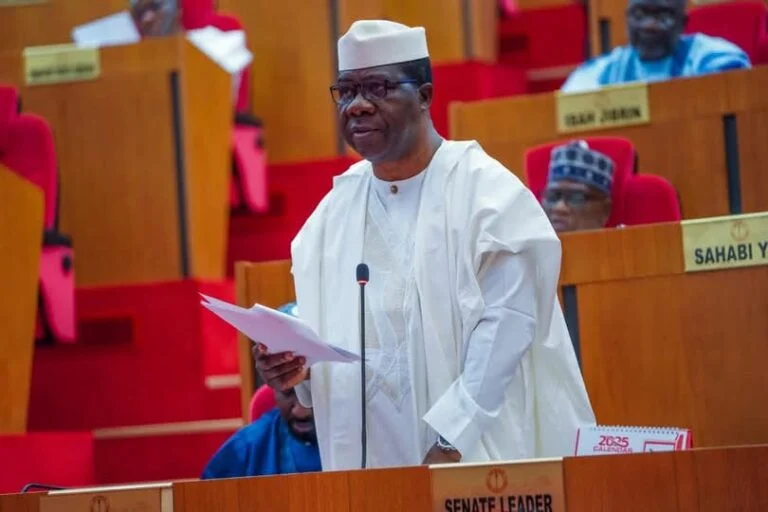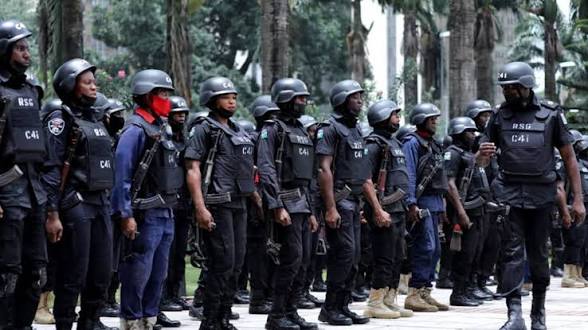










In every functioning democracy, the police ultimately answer a simple but profound question: whose authority do they represent? In Nigeria, that question has become increasingly urgent as the National Assembly moves closer to amending Section 214 of the Constitution to allow the creation of state police. The debate is no longer merely about security; it is about power, accountability, and the future architecture of Nigerian federalism.
For decades, Nigeria has operated a highly centralised policing system under the Nigeria Police Force (NPF), a structure inherited largely from the country鈥檚 long years of military rule. In theory, this model was meant to guarantee uniformity, neutrality and national cohesion. In practice, however, it has struggled to keep pace with the security demands of a large, diverse and rapidly changing federation. The question confronting the nation today is not simply whether state police should exist, but whether Nigeria possesses the institutional maturity to make such a system work.
Every Nigerian has a relationship with the police. For some, that relationship is defined by moments of protection and assistance. For many others, it is coloured by suspicion, frustration or outright fear. For decades, the police have greeted citizens with the hopeful slogan, 鈥淭he Police Is Your Friend.鈥� However, the lived reality of policing across the country has often strained that perceived friendship to a pitiable breaking point.
Few events capture this tension more vividly than the protests of October 2020. The nationwide demonstrations against police brutality, popularly known as the EndSARS protests, marked a defining moment in Nigeria鈥檚 democratic history. Millions of Nigerians, especially young people took to the streets to demand accountability, transparency and reform within the police, SARS was a unit within the force- the Special Anti-Robbery Squad, but the protests were not merely a reaction to the excesses of a particular unit within the force; they reflected a deeper crisis of trust between the Nigerian state and its citizens. However, beyond the issues of brutality and accountability lies a structural question that has shaped policing in Nigeria since independence- centralisation.
Nigeria maintains a single national police force of fewer than 400,000 personnel to serve over 200 million people across 36 states and the Federal Capital Territory. While operational control lies with the federal government, State governors that are constitutionally designated as Chief Security Officers have little or no authority over police deployments. This creates a contradiction: Governors are politically accountable for security but lack control over the primary institution tasked with maintaining law and order, fueling calls for state police. How will a State be created with its affairs handed to a Governor to steer democratically, yet its security fate remains in the hands of a federally-controlled police force?
Proponents of state policing have continued to argue that decentralised policing offers a more responsive and context-sensitive approach to security. Nigeria is a vast and complex country where security challenges vary dramatically from one region to another. Banditry in the north-west, farmer鈥揾erder conflicts in the north-central, kidnapping in the south, oil-related militancy in the Niger Delta, and urban crime in major cities all present different policing demands. A centralised force operating under a uniform national command structure often struggles to respond quickly and effectively to such diverse threats. Supporters of state police explicitly believe that localised policing would allow security agencies to develop deeper familiarity with the people within the communities they serve. Officers recruited from within states are more likely to understand local languages, social networks and cultural dynamics. This proximity according to the for-groups can enhance intelligence gathering, improve response times and strengthen cooperation between citizens and law enforcement agencies.
There is also the question of scale. Nigeria鈥檚 police-to-population ratio remains significantly below international recommendations. Estimates suggest that the country has fewer than 400,000 police officers for a population exceeding 220 million people. This shortfall places enormous strain on the existing force and limits its ability to maintain a consistent presence across the country. Decentralised policing would surely allow states to supplement federal capacity and expand the overall size of the security workforce. However, the argument for state police cannot be examined without acknowledging its potential dangers.
Nigeria鈥檚 political system remains heavily influenced by powerful state executives. Governors already wield considerable influence over state legislatures and political structures within their domains. Critics fear that granting them direct control over armed police formations could create opportunities for abuse. In a political environment where elections are fiercely contested and opposition politics can be fraught with tension, the possibility that state police could be weaponised against political rivals remains a recurring legitimate concern.
History provides reason for caution. During Nigeria鈥檚 First Republic, regional police forces sometimes became instruments of political intimidation and partisan enforcement. These experiences contributed to the eventual centralisation of policing under military rule. Opponents of state police warn that decentralisation, if poorly designed, could revive similar patterns of abuse.
Another challenge lies in the vast economic disparities among Nigerian states. While a few states possess strong revenue bases and relatively robust administrative structures, many others struggle to meet basic financial obligations such as salary payments and infrastructure development. Policing is an expensive enterprise requiring consistent funding for personnel, training, equipment, technology and logistics. Without clear fiscal standards, there is a risk that some state police forces could become underfunded, poorly trained and ineffective. Lagos State security architecture for example is woven around the highly funded Lagos State Security Trust Fund (LSSTF), which in 2025 attracted approximately 鈧�1.8 billion in private sector contributions from individuals alone. With this, Lagos State demonstrates that where there is economic depth and institutional vision, security infrastructure can be built and sustained outside federal dependency. Nonetheless, Despite the institutional capacity of the state, it still struggles with: policing density, informal security networks and coordination with federal police. However, should state police be constitutionally approved, Lagos would be best positioned in the country to make that transition immediately and effectively.
There is also the problem of coordination. Criminal networks rarely respect administrative boundaries. Kidnappers, armed robbers and insurgent groups often operate across multiple states, exploiting jurisdictional gaps in law enforcement. A fragmented policing structure without strong inter-state cooperation mechanisms could create new opportunities for organised crime. These concerns do not necessarily invalidate the case for state police, but they underscore the need for careful institutional design. If Nigeria chooses to pursue decentralised policing, the reform must be built upon a foundation of strong safeguards and clear constitutional principles.
First, any move toward state police must begin with a deliberate constitutional process supported by extensive national consultation. Policing reform should not be driven by political expediency but by rigorous policy analysis. An independent commission composed of legal experts, security professionals, and governance specialists could provide a comprehensive framework for designing the system.
Accountability mechanisms must be strengthened. Independent oversight bodies with constitutional authority should be established to monitor the conduct of state police forces and investigate allegations of abuse. Such institutions must be insulated from political interference and empowered to enforce professional standards.
Fiscal sustainability must occupy a central place in any framework for state policing. States seeking to establish their own police formations should be required to demonstrate genuine financial capacity not merely the ability to recruit officers, but the sustained wherewithal to invest in training institutions, forensic infrastructure, technology, and the welfare systems that underpin a professional and well-functioning force. The temptation to launch police formations on political momentum alone, without a credible funding architecture, must be firmly resisted.
Equally important is the question of recruitment and training standards. One of the enduring strengths of the current centralised model is its national training framework, which provides a measure of consistency and professionalism across the force. Decentralisation must not become a backdoor to the proliferation of undertrained officers whose competence varies by the fiscal mood of their state government. Rather, a robust national accreditation system should be established to ensure that all police officers whether federal or state are held to uniform professional standards, benchmarked against global best practices and regularly reviewed to reflect an evolving security landscape.
Mechanisms for inter-state cooperation must also be carefully designed. Crime does not stop at state borders, and effective policing requires seamless information sharing, joint operations and coordinated intelligence networks. A decentralised structure must therefore include strong platforms for collaboration between federal and state agencies.
Finally, and perhaps most importantly, clear legal safeguards must be established to prevent the political misuse of state police forces. Democratic policing requires strict boundaries between law enforcement and partisan politics. Without these protections, the very institution intended to enhance security could become a tool for undermining democratic competition.
The debate over state police ultimately reflects a broader question about the nature of Nigeria鈥檚 federal system. True federalism involves a balance between national cohesion and local autonomy. While the federal government retains responsibility for national security, states must also possess the capacity to respond to local challenges within their jurisdictions. Many federal democracies operate multi-layered policing systems in which national, regional and local agencies share responsibility for law enforcement. These models demonstrate that decentralised policing can function effectively when supported by strong institutions, professional norms and robust oversight. For Nigeria, the challenge lies in adapting these principles to its unique political and social realities.
The country stands at a constitutional crossroads. The growing complexity of Nigeria鈥檚 security challenges suggests that the status quo may no longer be sufficient. Yet institutional reform of this magnitude cannot be rushed. The creation of state police must not become a symbolic gesture or a political concession; it must be a carefully constructed system designed to strengthen both security and democratic accountability. If done thoughtfully, decentralised policing could mark a significant step toward building a more responsive and resilient security architecture. If done poorly, it could deepen existing governance challenges and create new avenues for abuse. Ultimately, the question facing Nigeria is not simply whether state police should exist. It is whether the country is willing to build the legal frameworks, financial structures and democratic safeguards necessary to ensure that such a system serves the public interest.
The badge of policing represents more than authority; it symbolises trust between the state and the citizen. In deciding who should wear that badge and who should command it, Nigeria must ensure that the ultimate beneficiary of any reform is neither the federal government nor the state governors, but the Nigerian people themselves.
Nigeria鈥檚 debate over state police is ultimately a debate about the kind of federation the country wants to become. A nation of Nigeria鈥檚 size and diversity cannot indefinitely rely on a security architecture designed for a different political era. Yet decentralisation without strong safeguards could prove just as dangerous as the problems it seeks to solve. The real task before policymakers is therefore not merely to create state police, but to design institutions capable of balancing power with accountability. If Nigeria succeeds in doing so, it will not simply be reforming its policing structure; it will be strengthening the very foundations of its democracy.
Bolu Daniels, a security analyst based in Ibadan, Oyo State can be reached via [email protected]