






Akinwande Soji-Ojo
Religious leaders in Nigeria have called for greater engagement in shaping the ethical development of artificial intelligence (AI), warning that unchecked AI advancements could undermine human dignity and faith.
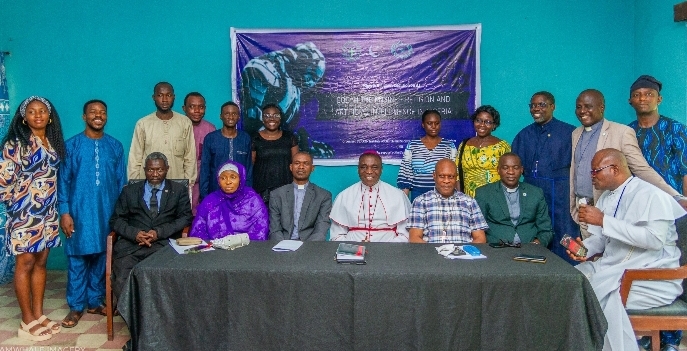
Speaking at a press conference organised by the Nigeria Religious Coalition on Artificial Intelligence, Rt. Rev. S. Oluwole Onaleke, Bishop of the Diocese of Agodi, Methodist Church Nigeria, urged faith communities to actively participate in AI discourse.
The event, held at the Institute of Church and Society in Samonda, Ibadan, on Thursday, brought together representatives from the Christian Council of Nigeria, Institute of Church and Society, Ibadan (CCN-ICS), Jama’atu Nasril Islam (JNI), and the Future of Life Institute (FLI).
The bishop stressed the urgent need to bridge the gap between technological advancements and religious values.
鈥淎rtificial intelligence is shaping our world at an unprecedented pace, and we must ensure it aligns with ethical and spiritual principles,鈥� he said.
He highlighted concerns over AI鈥檚 unpredictable nature and the risk of it being used in ways that could disempower humans.
鈥淲e cannot ignore the reality that AI is already making critical decisions in business, healthcare, and even military applications. Yet, there is no clear plan to prevent disasters or safeguard humanity from the risks of AI surpassing human intelligence,鈥� he warned.
Onaleke traced the origins of AI-related concerns to science fiction, referencing Czech writer, Karel 膶apek鈥檚 1920 play, R.U.R., where robots led a rebellion against their creators. While AI has moved from fiction to reality, he argued that its ethical implications remain largely unexplored, especially within religious circles.
鈥淩eligious leaders have a duty to engage in these conversations and ensure that technology serves humanity, not the other way around.
“AI鈥檚 presence is already deeply embedded in everyday life, from virtual assistants to e-commerce recommendations and even healthcare management,” he said.
The bishop emphasised that while AI enhances efficiency, it also raises profound moral and theological questions.
鈥淲hat happens when AI mimics human intelligence to the extent that we question our own uniqueness? What does it mean to be created in the image of God if machines begin to exhibit human-like consciousness?鈥� Onaleke asked.
The concept of Imago Dei鈥攖he belief that humans are created in God鈥檚 image鈥攚as a focal point of the discussion. Onaleke questioned whether machines with artificial general intelligence (AGI) could claim a form of divine likeness.
鈥淚f we create AI with human-like reasoning, do they share in the sacred identity of humanity? And if so, where does that leave us?鈥� he pondered.
“Religious communities must also guard against AI becoming an object of worship or a tool for redefining humanity. Faith traditions are clear that putting trust in anything other than God is idolatry. AI should never replace our spiritual connection but should instead be used responsibly to enhance human life,鈥� he asserted.
He warned that failing to embed ethical principles into AI development could lead to disastrous consequences.
鈥淭he future danger is not just that men may become slaves to technology, but that we may create intelligent systems that dominate us,鈥� Onaleke cautioned, quoting philosopher Erich Fromm.
The bishop pointed to the influence of AI in social media algorithms, which shape public opinion, religious engagement, and even charitable activities. He urged faith leaders to take an active role in ensuring AI aligns with moral values.
鈥淩eligious institutions cannot afford to be passive. We must influence AI development before it influences us in ways we cannot control,鈥� he said.
Nigeria, as a country where religion plays a central role, has a unique responsibility to lead in AI ethics, Onaleke argued. He called for policy measures to ensure AI serves society鈥檚 best interests while respecting religious traditions.
鈥淣igeria should advocate for international frameworks that prevent AI from undermining human relationships and dignity,鈥� he proposed.
The press conference concluded with a set of demands from the coalition. These include harnessing AI for beneficial applications in agriculture, education, and healthcare while rejecting AI systems that disempower workers or manipulate faith communities.
The bishop also called for caution in applying AI to religious practices, warning that hasty implementation could dehumanise worship or mislead believers.
鈥淎rtificial intelligence is not inherently good or evil鈥攊t depends on how we use it. If guided by wisdom and faith, AI can be a tool for human flourishing. But if left unchecked, it could challenge the very essence of what it means to be human,鈥� Onaleke concluded.