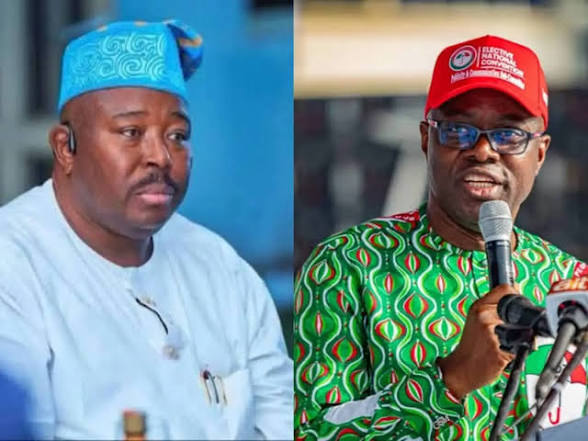
The failure of opposition parties to abandon their individual ambitions in favour of a consensus presidential candidate against President Bola Tinubu in the 2027 election has effectively dashed hopes of a broad-based coalition, a chieftain of the G-100 political pressure group, Umanu Elijah, has said.
Elijah disclosed this in an interview with The PUNCH on Sunday, blaming opposition politicians for their unwillingness to make the concessions necessary to forge a united front against the ruling All Progressives Congress (APC).
G-100, a political pressure group convened by former Director-General of the Progressives Governors’ Forum, Dr. Salihu Lukman, was established to facilitate a broad-based opposition coalition ahead of the 2027 general elections.
The group has argued that opposition parties would struggle to defeat the APC if they contested the election independently, particularly given the ruling party’s political structures and electoral advantages.
As part of its efforts, G-100 has held consultations with former Vice President Atiku Abubakar, former Anambra State Governo, Peter Obi; and Oyo State Governor, Seyi Makinde, among other political figures, in a bid to build consensus around a common platform and a single presidential candidate.
The initiative has also sought to bring together opposition parties and influential political actors across party lines, with the expectation that a united front would improve their chances of defeating Tinubu in 2027.
However, the coalition project has faced growing doubts as opposition politicians continue to pursue their individual political ambitions and campaign activities, with little indication of an imminent agreement on a common candidate.
Elijah said the single-candidate proposal championed by Lukman had failed.
“The sole candidacy thing is dead and buried. The candidates are not ready to make concessions. You can see what the Allied Peoples Movement (APM) is doing. They are going about their campaigns, and none of these candidates is talking about single candidacy,� he said.
Elijah cited the continued campaign activities of the African Democratic Congress (ADC) and the APM, alongside those of other opposition parties, as evidence that the prospects of a consensus arrangement had diminished.
The opposition coalition push had been driven by concerns that a divided opposition would split votes and weaken the challenge to the APC in the next general elections.
However, none of the political actors, including Atiku, Obi of the Nigeria Democratic Congress (NDC), Makinde and Adewale Adebayo of the Social Democratic Party (SDP), has shown a willingness to sacrifice their presidential ambitions in support of a consensus candidate, further weakening the prospects of a united opposition.
The development is likely to see opposition parties approach the 2027 election as fragmented political blocs rather than a coalition united by a common purpose and interest.