Akinwande Soji-Ojo
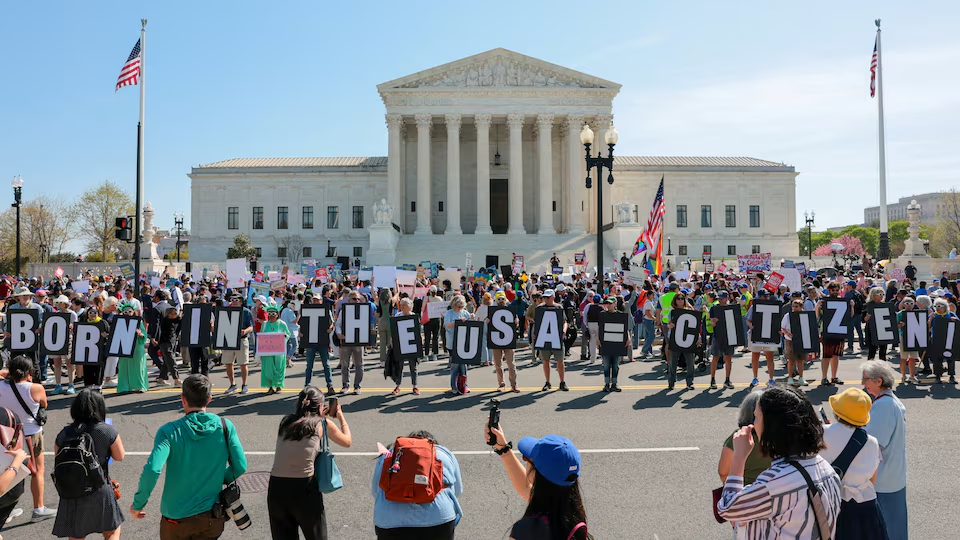
Attorneys-General from 22 Democrat-led states have sued to block President Donald Trump鈥檚 move to end a century-old聽immigration practice known as birthright citizenship聽guaranteeing that United States-born children are citizens regardless of their parents鈥� status.
Trump had on Monday, just after taking office, signed an executive order to deny automatic citizenship to babies born in America if their parents are not US citizens or permanent residents.
The decision has sparked multiple lawsuits.
Twenty two states, including Washington D.C., San Francisco, and American Civil Liberties Union (ACLU) and other groups have filed lawsuits. These cases were filed in Boston and Seattle federal courts.
According to Massachusetts Attorney General Andrea Joy Campbell, this rule would affect more than 150,000 babies born each year in the United States. Without citizenship, these children wouldn鈥檛 be able to get Medicaid health insurance, work legally when they grow up, or vote in elections.
New Jersey Attorney General, Matthew Platkin, also said: 鈥淭oday鈥檚 immediate lawsuit sends a clear message to the Trump administration that we will stand up for our residents and their basic constitutional rights.鈥�
Connecticut Attorney General, William Tong, a US citizen by birthright and the nation鈥檚 first Chinese American elected attorney general, said the lawsuit was personal for him.
鈥淭he 14th Amendment says what it means, and it means what it says 鈥�- if you are born on American soil, you are an American. Period. Full stop.
鈥淭here is no legitimate legal debate on this question. But the fact that Trump is dead wrong will not prevent him from inflicting serious harm right now on American families like my own,” he said.
The lawsuits say Trump鈥檚 order goes against the 14th Amendment of the Constitution, which grants citizenship to people born in the US. They cited a Supreme Court decision from 1898 (United States v. Wong Kim Ark) that confirmed this right for children of non-citizen parents.
One of the people suing is a pregnant woman in Massachusetts who is living in the US under temporary protected status and is due to give birth in March.
Reacting, the White House deputy press secretary, Harrison Field, said Trump’s administration is ready to face the states in court, calling the lawsuits 鈥渘othing more than an extension of the Left鈥檚 resistance.鈥�
鈥淩adical Leftists can either choose to swim against the tide and reject the overwhelming will of the people, or they can get on board and work with President Trump,鈥� he said.
While signing the executive order on Monday, Trump had said: “The privilege of United States citizenship does not automatically extend to persons born in the United States.
鈥淎mong the categories of individuals born in the United States and not subject to the jurisdiction thereof, the privilege of United States citizenship does not automatically extend to persons born in the United States: (1) when that person鈥檚 mother was unlawfully present in the United States and the father was not a United States citizen or lawful permanent resident at the time of said person鈥檚 birth, or (2) when that person鈥檚 mother鈥檚 presence in the United States at the time of said person鈥檚 birth was lawful but temporary (such as, but not limited to, visiting the United States under the auspices of the Visa Waiver Program or visiting on a student, work, or tourist visa) and the father was not a United States citizen or lawful permanent resident at the time of said person鈥檚 birth.鈥�
The executive order by Trump states that: 鈥淏y the authority vested in me as President by the Constitution and the laws of the United States of America, it is hereby ordered:
“Section 1. 聽Purpose. 聽The privilege of United States citizenship is a priceless and profound gift.聽 The Fourteenth Amendment states: 聽鈥淎ll persons born or naturalized in the United States, and subject to the jurisdiction thereof, are citizens of the United States and of the State wherein they reside.鈥澛� That provision rightly repudiated the Supreme Court of the United States鈥檚 shameful decision in聽Dred Scott v. Sandford, 60 U.S. (19 How.) 393 (1857), which misinterpreted the Constitution as permanently excluding people of African descent from eligibility for United States citizenship solely based on their race.聽
“But the Fourteenth Amendment has never been interpreted to extend citizenship universally to everyone born within the United States.聽 The Fourteenth Amendment has always excluded from birthright citizenship persons who were born in the United States but not 鈥渟ubject to the jurisdiction thereof.鈥澛� Consistent with this understanding, the Congress has further specified through legislation that 鈥渁 person born in the United States, and subject to the jurisdiction thereof鈥� is a national and citizen of the United States at birth, 8 U.S.C. 1401, generally mirroring the Fourteenth Amendment鈥檚 text. 聽
“Among the categories of individuals born in the United States and not subject to the jurisdiction thereof, the privilege of United States citizenship does not automatically extend to persons born in the United States: 聽(1) when that person鈥檚 mother was unlawfully present in the United States and the father was not a United States citizen or lawful permanent resident at the time of said person鈥檚 birth, or (2) when that person鈥檚 mother鈥檚 presence in the United States at the time of said person鈥檚 birth was lawful but temporary (such as, but not limited to, visiting the United States under the auspices of the Visa Waiver Program or visiting on a student, work, or tourist visa) and the father was not a United States citizen or lawful permanent resident at the time of said person鈥檚 birth.
“Sec. 2. 聽Policy. 聽(a) 聽It is the policy of the United States that no department or agency of the United States government shall issue documents recognizing United States citizenship, or accept documents issued by State, local, or other governments or authorities purporting to recognize United States citizenship, to persons: 聽(1) when that person鈥檚 mother was unlawfully present in the United States and the person鈥檚 father was not a United States citizen or lawful permanent resident at the time of said person鈥檚 birth, or (2) when that person鈥檚 mother鈥檚 presence in the United States was lawful but temporary, and the person鈥檚 father was not a United States citizen or lawful permanent resident at the time of said person鈥檚 birth.
“(b)聽 Subsection (a) of this section shall apply only to persons who are born within the United States after 30 days from the date of this order.
“(c)聽 Nothing in this order shall be construed to affect the entitlement of other individuals, including children of lawful permanent residents, to obtain documentation of their United States citizenship.聽
“Sec. 3. 聽Enforcement. 聽(a) 聽The Secretary of State, the Attorney General, the Secretary of Homeland Security, and the Commissioner of Social Security shall take all appropriate measures to ensure that the regulations and policies of their respective departments and agencies are consistent with this order, and that no officers, employees, or agents of their respective departments and agencies act, or forbear from acting, in any manner inconsistent with this order
“(b)聽 The heads of all executive departments and agencies shall issue public guidance within 30 days of the date of this order regarding this order鈥檚 implementation with respect to their operations and activities.
“Sec. 4. 聽Definitions.聽 As used in this order:
“(a) 聽鈥淢other鈥� means the immediate female biological progenitor.
“(b) 聽鈥淔ather鈥� means the immediate male biological progenitor.
“Sec. 5. 聽General Provisions. 聽(a)聽 Nothing in this order shall be construed to impair or otherwise affect:
“(i)聽 聽the authority granted by law to an executive department or agency, or the head thereof; or
“(ii)聽 the functions of the Director of the Office of Management and Budget relating to budgetary, administrative, or legislative proposals.
“(b)聽 This order shall be implemented consistent with applicable law and subject to the availability of appropriations.
“(c)聽 This order is not intended to, and does not, create any right or benefit, substantive or procedural, enforceable at law or in equity by any party against the United States, its departments, agencies, or entities, its officers, employees, or agents, or any other person.鈥�
This is not the only legal battle Trump is facing. He鈥檚 also dealing with lawsuits challenging his decisions about changes to the Department of Government Efficiency, now led by Elon Musk, new rules making it easier to fire federal employees, and other immigration policies.