









Akinwande Soji-Ojo
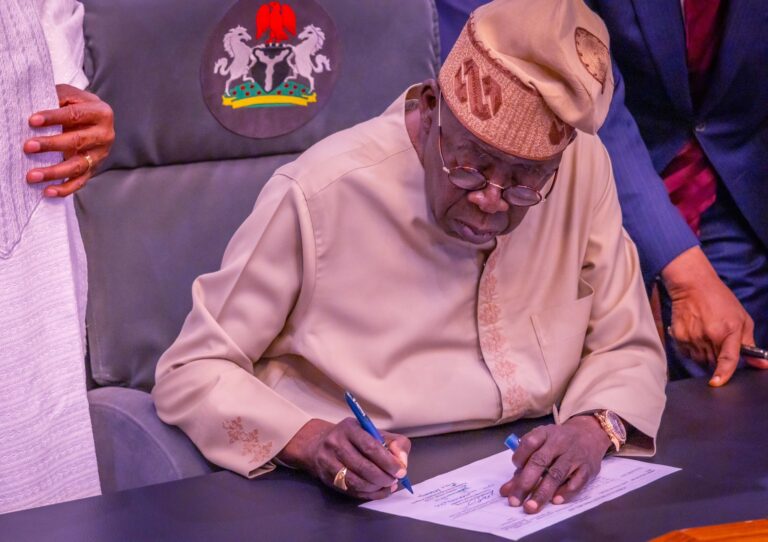
President Bola Tinubu has announced the signing of the Deep Offshore Oil and Gas Projects Incentives (Tax Remission) Order, 2026, describing it as a major policy aimed at unlocking up to $50 billion in investment, creating jobs, boosting local content and positioning Nigeria as Africa鈥檚 hub for deep offshore project execution.
In a post on his , the president said Nigeria had for years possessed some of the world’s most promising deep offshore oil and gas resources, but many major projects had remained stalled because investors lacked the certainty needed to commit long-term capital.
According to him, while the country has abundant offshore resources, capable engineers, businesses and young people with growing technical expertise, the absence of a predictable investment framework has prevented the sector from reaching its full potential.
鈥淔or many years, Nigeria has possessed some of the most promising deep offshore oil and gas resources in the world, yet several major developments have remained stalled.
鈥淥il lies beneath our waters. We have the engineers, businesses and young people capable of doing increasingly sophisticated work in the sector. What has often been missing is the certainty required for investors to commit billions of dollars, over many years, at the scale needed to turn that potential into production, jobs and opportunity for Nigerians.
鈥淲e cannot afford to leave that opportunity beneath our waters for another decade,” he said.
The president said he signed the Deep Offshore Oil and Gas Projects Incentives (Tax Remission) Order, 2026 to provide 鈥渃lear and predictable terms鈥� for a new generation of deep offshore investments in Nigeria.
鈥淭he framework has the potential to unlock up to $50 billion in investment, beginning with the approximately $10 billion Bonga South West project. For existing deep offshore leases, there is a clear window to reach Final Investment Decision by 31 December 2029 and receive the full standard incentive available under the Order,鈥� he stated.
The president stressed that there was an urgent need to attract investment, noting that countries across the world compete daily for capital.
鈥淭here is urgency to this work. Capital moves, and countries compete for it every day. The countries that attract long-term investment are not necessarily those with the greatest natural resources. They are the ones that provide the greatest certainty.
鈥淣igeria must be one of those countries,鈥� he said.
Tinubu said the new tax incentive order represents the tenth major policy directive introduced by his administration targeted specifically at the oil and gas sector.
鈥淓ach has dealt with a constraint holding back investment, production or value creation.
鈥淭aken together, they represent a deliberate effort to make our oil and gas industry more competitive, attract capital back to Nigeria and ensure that more of the value created from our resources remains here at home,” the president said.
He, however, said attracting investment alone was not enough, stressing that his administration also wants Nigerians to benefit directly from the economic opportunities generated by the projects.
鈥淏ut attracting investment is only half of my purpose.
鈥淚 want the work that comes with these projects to come home to Nigeria. I want our engineers involved, our fabrication yards working, our marine and technical service companies securing contracts, and our young people acquiring skills that will remain valuable long after the first barrel is produced,鈥� Tinubu said.
He noted that projects benefiting from the Order’s supplementary incentives would be required to carry out activities in Nigeria, except where clearly defined exemptions apply and in accordance with Nigerian Content requirements.
鈥淭he Order reflects this priority. For projects accessing its supplementary incentives, activities are to be performed in Nigeria, subject to clearly defined exceptions and Nigerian Content requirements,鈥� the president said.
He added that his administration’s broader ambition is to transform Nigeria into Africa’s leading centre for deep offshore project execution by developing indigenous expertise, businesses and industrial capacity alongside the country’s natural resources.
鈥淢y ambition is that we use this new investment cycle to build Nigeria into Africa鈥檚 regional hub for deep offshore project execution.
鈥淲e should not only possess the resources. We should increasingly possess the skills, businesses and industrial capacity required to develop them,鈥� he stated.
He also disclosed that after meeting with the Chief Executive Officer of Shell plc, Wael Sawan, he directed his team to develop a comprehensive framework that would benefit the wider industry rather than a single company or project.
鈥淲hen I engaged the Chief Executive Officer of Shell plc, Mr Wael Sawan, I directed my team to look beyond a solution for one company or one project.
鈥淲e needed a framework that could unlock a wider pipeline of investment while protecting Nigeria鈥檚 long-term interests.
鈥淭hat framework is now in place,” the president stated.
Tinubu said the true measure of the policy’s success would be reflected in the tangible benefits enjoyed by Nigerians through employment, stronger local businesses, increased oil production, higher government revenues and enhanced domestic capacity.
鈥淯ltimately, I will judge its success by what Nigerians see from it in terms of good jobs, stronger Nigerian businesses, greater production, increased revenues for the Federation and new capabilities built here at home.
鈥淥ur natural resources must work harder for our people.
鈥淭hat is the purpose of this decision, and we will pursue it with urgency.
鈥淣igeria First,” he said.