









By Efa Sunday
Ten leading Nigerian banks, including Zenith Bank Plc, Access Holdings Plc and United Bank for Africa Plc, recorded a combined interest income of N4.6 trillion in the first quarter of 2026 despite a reduction in benchmark interest rates by the Central Bank of Nigeria.
Analysis of the lenders鈥� unaudited financial statements showed that the N4.6 trillion interest income represented an 8.2 per cent increase compared to the N4.3 trillion recorded during the same period in 2025.
The banks generated the earnings from loans and advances to customers, investments in government securities, placements with banks and other interest yielding assets amid persistently high lending rates in the economy.
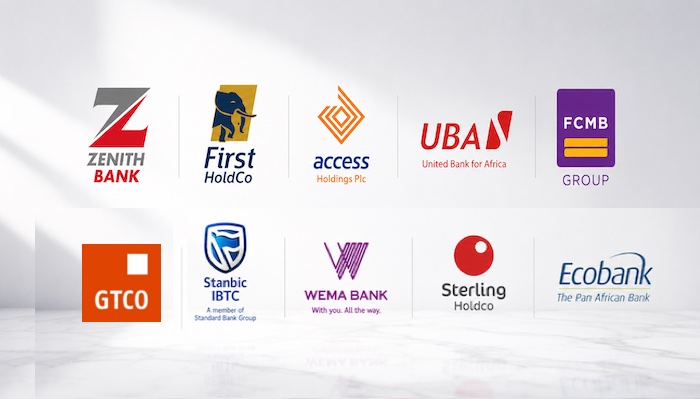
The financial institutions reviewed included Zenith Bank, Access Holdings, UBA, Guaranty Trust Holding Company, Ecobank Transnational Incorporated, First Holdco, Wema Bank, Sterling Financial Holdings Company and Stanbic IBTC Holdings.
The strong performance came despite the CBN鈥檚 decision to reduce the Monetary Policy Rate from 27 per cent to 26.5 per cent between January and March 2026 following signs of easing inflationary pressures and improved foreign exchange stability.
Among the banks, Zenith Bank emerged as the highest earner with N869.1 billion in interest income, representing a 3.8 per cent increase from N837.64 billion recorded in the corresponding period of 2025.
Access Holdings followed with N824.75 billion, though slightly below its performance in the same quarter last year.
First Holdco posted N704.45 billion in interest income, reflecting a 12.7 per cent increase from N625.28 billion recorded a year earlier.
UBA generated N641.1 billion, representing a 6.8 per cent year on year growth, while Ecobank reported N561.08 billion, up by 23.4 per cent from N454.63 billion posted in the first quarter of 2025.
GTCO also recorded strong growth with N466.5 billion in interest income, nearly 18 per cent higher than the figure achieved during the same period last year.
The earnings growth came amid continued high lending rates across the banking sector.
Data released by the CBN showed that the average maximum lending rate remained unchanged at 35.17 per cent in March 2026 despite the reduction in the policy rate.
Similarly, the average prime lending rate stood at 19.29 per cent for the second consecutive month in March after rising to 19.54 per cent in January, its highest level in almost two decades.
The prime lending rate applies to customers considered low risk, while the maximum lending rate represents the highest rate charged by banks to borrowers.
Speaking after the 305th Monetary Policy Committee meeting, CBN Governor Olayemi Cardoso said members agreed to maintain key monetary measures to allow previous tightening policies continue to impact the economy.
According to him, the committee believed the recent rise in inflation was largely caused by temporary external factors.
鈥淭he committee鈥檚 decisions were anchored on a comprehensive assessment of risks to the outlook,鈥� Cardoso said.
He added that the current policy direction remained capable of supporting gradual disinflation over time.
Financial analysts attributed the sustained growth in banks鈥� interest income to the prevailing high interest rate environment and broader macroeconomic conditions.
Fitch Ratings said the CBN鈥檚 tight monetary policy stance remained necessary to curb inflation and maintain economic stability.
The agency, however, noted that rapid credit growth and increased money supply still reflected relatively loose financial conditions, while negative real interest rates continued to limit foreign portfolio inflows.
Investment banker and stockbroker, Tajudeen Olayinka, said the high interest rate environment was largely aimed at attracting foreign investment, strengthening foreign reserves and stabilising the naira.
He explained that the repricing of loans and other financial instruments contributed significantly to the strong interest income posted by banks.
Olayinka, however, warned that sustaining the policy for too long could worsen government debt servicing costs and increase inflationary pressures in the economy.