





By Efa Sunday
In a small clinic on the outskirts of Johannesburg, a young woman named Naledi sits quietly on a plastic chair, her hands folded tightly in her lap. She has been here before, many times, for tests, for counselling, and for information she was often too afraid to act on. But today feels different. She is here not because she fears HIV, but because she wants to stay free from it. When the nurse calls her name, she rises, and in a moment that looks ordinary but feels revolutionary, she receives an injection that will protect her for the next six months. For Naledi and thousands like her across southern Africa, this is more than a medical step, it is a doorway to a safer life.
This World Aids Day arrives at a moment of rare hope. From South Africa to Eswatini to Zambia, Africa has begun administering lenacapavir, a long-acting prevention injection that scientists say has shown more than 99 per cent effectiveness against HIV. They describe it as the closest the world has come to an HIV vaccine. For a continent that has carried the weight of the epidemic for more than fourty years, this is not just another tool, it is a turning point that could reduce new infections by as much as 60 percent once scaled across communities.
The rollout began in South Africa under the supervision of a Wits University research unit as part of a Unitaid-supported programme. Announcing the milestone, Unitaid said in a statement on Monday that 鈥渢he first individuals have begun using lenacapavir for HIV prevention in South Africa,鈥� adding that this marks one of the first real-world uses of the six-month injection in low and middle income countries.
The announcement resonated across the region, not only because it validated a scientific breakthrough, but because it honoured decades of advocacy by African communities who demanded prevention options that reflect their realities.
In Zambia and Eswatini, initial doses were unveiled during World Aids Day ceremonies after both countries received 1,000 doses each through a United States-backed programme. These were not symbolic gestures; they were statements of intent, especially on a day dedicated globally to remembering both loss and resilience.
According to World Health Organisation, this year鈥檚 World Aids Day theme, 鈥淥vercoming Disruption, Transforming the AIDS Response,鈥� is more than a slogan. It explained that the theme calls for sustained political leadership, international cooperation and a human-rights-centred approach to ending AIDS by 2030.
For African communities, where stigma, inequality and structural barriers shape the daily reality of HIV, the theme feels personal. It speaks to those who want protection but struggle to keep up with daily medication, those who want privacy but fear judgement, and those who simply want the freedom to choose without the weight of survival hanging over them.
That is where lenacapavir shifts the narrative. Oral PrEP, though effective, required daily discipline. Many stopped; many hid; many tried but could not keep up. The reasons were human, not moral. Life is complicated for a young woman navigating relationships, social pressure and limited autonomy. It is complicated for a young man who fears being misunderstood for taking pills associated with stigma. It is complicated for a mother juggling work, survival and her own health. A twice-yearly injection removes the pressure of daily adherence. It offers privacy, convenience and dignity. It fits into the lived rhythm of African communities instead of forcing them to reorganise their lives around a pill bottle.
Yet progress does not come without complexity. Gilead Sciences has agreed to supply the injection at no profit to two million people across high-burden countries over the next three years. It is a meaningful start, but far short of the scale needed to secure a continental shift.
Critics argue that Africa cannot achieve a 60 per cent drop in new infections unless access expands rapidly. But hope is rising with the announcement that generic versions will become available in 2027 at an estimated cost of about $40 per year, through agreements involving Unitaid, the Gates Foundation and Indian manufacturers. If delivered at scale, these generics could democratise access and allow all African countries, regardless of wealth, to offer the same level of protection that wealthier nations enjoy.
Still, the most powerful part of this story does not come from laboratories or boardrooms. It comes from the people whose lives now open into a quieter, safer future. Women like Naledi, who can enter relationships without fear. Adolescents who can grow into adulthood without carrying lifelong infection. Parents who can watch their children mature in a continent experiencing fewer new cases than ever before. The breakthrough is scientific, but the victory will be human.
Across clinics in Africa this week, nurses say they have seen tears of relief, not tears born of sickness, but from the realisation that for the first time in many years, prevention feels attainable. It feels simple. It feels like something they can do for themselves, without apology and without fear.
This is what it means to overcome disruption. It means that after years of global setbacks, economic instability, political turbulence and the lingering effects of the pandemic, African countries are reaffirming their right to protect their people. It means transforming the AIDS response by giving communities tools that honour their autonomy. It means moving from survival to prevention; from silence to choice; from crisis to control.
Lenacapavir is not a miracle cure, it is not the end of HIV. But on this World Aids Day, it is the clearest signal yet that the epidemic can be slowed dramatically, that new infections can fall sharply, and that the dream of ending AIDS by 2030 no longer feels like a distant aspiration.
As Naledi walks out of the clinic into the warm Johannesburg afternoon, she is not thinking about statistics or global strategies. She is thinking about freedom, she is thinking about possibility. She is also thinking about a future where the virus that shaped her mother鈥檚 generation does not have to define hers.
And for the first time in a long time, Africa is beginning to believe that such a future is possible.
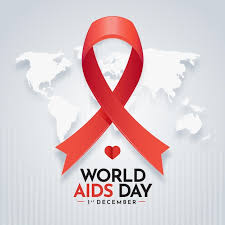
World Aids Day, designated every year on December 1 since 1988, is an international observance dedicated to raising awareness about the AIDS pandemic caused by HIV and to mourning those who have died from the disease.