Akinwande Soji-Ojo
The South African government has reaffirmed its gratitude to Nigeria for its role in the struggle against apartheid, while both countries held high-level talks over the recurring xenophobic attacks on Nigerians living in South Africa.
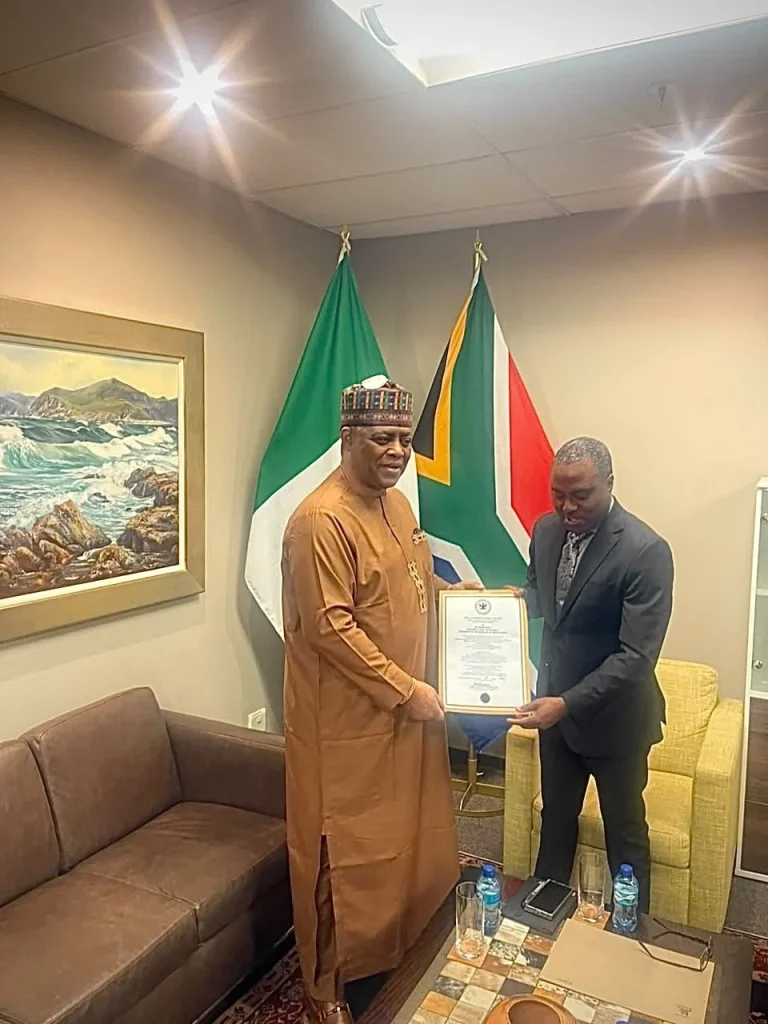
South Africa’s Minister of International Relations and Cooperation, Ronald Lamola, stated this on Monday during a meeting with Nigeria’s Minister of State for Foreign Affairs, Sola Enikanolaiye, in Abuja.
According to reports, South African President, Cyril Ramaphosa had asked Lamola to deliver a message to President Bola Tinubu. However, Tinubu delegated Enikanolaiye to receive the envoy.
Lamola said the visit was aimed at reaffirming the historic friendship and solidarity between Nigeria and South Africa, while also addressing concerns over violence against foreign nationals.
He acknowledged Nigeria’s pivotal role in supporting South Africa’s liberation from apartheid, describing the country’s contribution as a sacrifice that remains deeply appreciated by the South African people.
“We remain deeply indebted to the people of Nigeria for their sacrifice,” Lamola said.
He added that President Ramaphosa and his administration remain firmly opposed to xenophobia, racism, discrimination, homophobia and all forms of intolerance.
The minister, however, stressed that South Africa has a sovereign responsibility to enforce its immigration laws and tackle irregular migration and criminal activities, including drug trafficking, internet fraud and other offences.
Lamola said migration has become a continental challenge that requires African countries to work together within the framework of the African Union’s protocols on orderly and regular migration.
“We believe that Nigeria and South Africa have a shared responsibility to respond to these challenges within the African continent,” he said.
He added that details of Ramaphosa’s message to Tinubu would be discussed during a closed-door session.
Responding, Enikanolaiye said Tinubu directed the meeting to enable both countries address the persistent attacks on Nigerians in South Africa in a frank and honest manner.
He urged the South African government to take urgent and concrete steps to end what Nigeria described as recurring Afrophobic attacks against Nigerians and other African nationals, warning that the violence threatens decades of strategic partnership between Africa’s two largest economies.
Enikanolaiye said official records show that 98 Nigerians have been killed in mob and hate-related attacks in South Africa since 2022.
He noted that five Nigerians have been reported killed this year, although some repatriated Nigerians claimed the death toll was higher.
The minister stressed that while Nigeria does not condone criminality, anyone accused of committing crimes should be arrested, prosecuted and punished through the judicial process rather than subjected to mob justice.
“Nigeria will not support drug traffickers or any criminal activity, but those accused of crimes must be treated in accordance with the rule of law, South Africa’s Constitution and international human rights standards,” he said.
Enikanolaiye noted that many of the victims were legally resident in South Africa and questioned the failure of security agencies to intervene during some of the attacks, saying the incidents raise concerns about state responsibility and the safety of foreign nationals.
He disclosed that nearly 1,500 Nigerians had been repatriated from South Africa this year, describing the experience as emotionally devastating.
“I shed tears when I received the first batch of evacuees. I saw children, women and the elderly returning home with almost nothing after their properties had been looted and destroyed. That is not the Africa we want,” he said.
Enikanolaiye reaffirmed Nigeria’s commitment to maintaining cordial relations with South Africa and expressed optimism that both countries would strengthen dialogue, rebuild confidence and uphold the ideals of African solidarity.