









By Bisi Oladele
(Executive Editor)
A groundbreaking new report by world-leading economists and other experts on debt and development has called for an urgent action and systemic reforms.
The report said it has become imperative to tackle the escalating debt and its attendant development crises in Nigeria and other nations of the world reeling under debt burdens. The debt crisis, the report noted, hinders indebted nations from building infrastructures, delivering on healthcare, education and financing environmental protection, thereby leaving billions of people in poor living standard worldwide.
Authored by Pope Francis鈥� Jubilee Commission 鈥� a group of over 30 leading global experts led by Nobel laureate and Columbia University professor Joseph Stiglitz and former Minister of the Economy of Argentina and Columbia University School of International and Public Affairs
Professor Mart铆n Guzm谩n – the Jubilee Report is a blueprint for tackling the debt and development crises and creating the financial foundations for a sustainable people-centered global economy.
The report was released on June 20, 2025.
The commission was appointed by Pope Francis as a key initiative for the Jubilee year 2025 鈥� a legacy of his papacy.
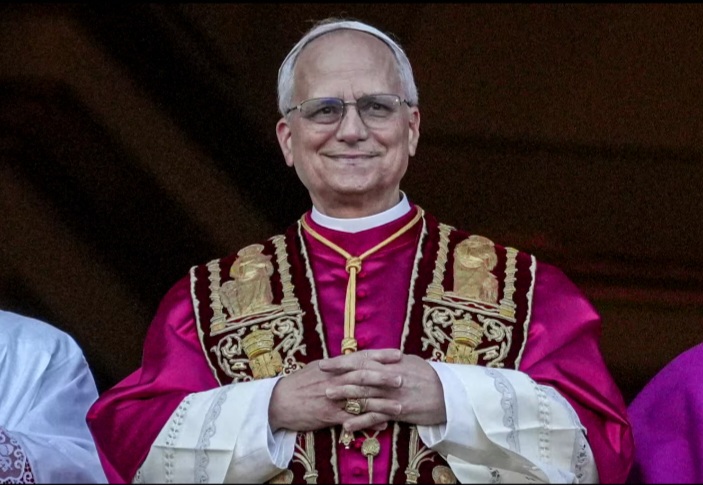
The report follows Pope Francis鈥� repeated calls for global debt relief, which are now being carried forward by Pope Leo XIV, and brings together for the first time a combination of sound economic expertise with the moral responsibility to act.
The report shows that the debt crisis plaguing the global financial system is also fueling a development crisis. It noted that 54 per cent of developing countries now spend 10 per cent or more of their tax revenues just on interest payments.
Nigeria still spends over 60 per cent of its revenue on debt servicing.
The report stated: 鈥淎cross the developing world, average interest burdens have nearly doubled in the past decade. This diverts resources away from essential investments in health, education, infrastructure, and climate resilience 鈥� depriving millions of life-saving care, nutrition and employment.
鈥淭his does not have to be the case: solutions exist that are both economically sound and beneficial to all.鈥�
As global market uncertainty grows and refinancing options diminish for debt-distressed nations, this report charted a bold and practical path forward, arguing that, through shared responsibility, the world can avoid a lost decade for development and climate action and instead support economic
recovery and long-term development.
It presented a moral and practical vision: that global finance should serve people and the planet 鈥� not punish the poor to protect profits.
As solutions, the report recommended improvements in debt restructuring, end of bailouts to private creditors, strengthening of domestic policies, transparency enhancement and re-imagination of global finance.
The renowned experts want multilateral institutions to change their policies and legislation in key jurisdictions (New York State and England) so that creditors and debtor
governments are newly incentivized to agree to more timely and sustainable debt restructurings.
They want the institutions including the International Monetary Fund (IMF) to change their policies and practices to support sustainable recoveries, not de facto bailouts of private creditors or crippling austerity.
The commission also wants a strengthening of domestic policies to allow developing countries extensively use
capital account regulations to discourage destabilizing flows and create a more stable
environment for long-term investments and invest in structural transformation.
To the commission, the world should support financial policies that are transparent and
have broad societal support while re-imagining global finance to drive financing for sustainable development, including lending that supports long-term growth.
The report鈥檚 findings will be discussed at the 4th International Conference on Financing for
Development in Seville, Spain, from June 30 to July 3, and at key global gatherings where the global debt and development crises will be high on the agenda, including the United Nations General Assembly in New York City in September and the G20 Summit in Johannesburg, South Africa, in November.
Commenting, Nobel laureate Joseph Stiglitz said: 鈥淭here is growing consensus among experts that the current debt system serves financial markets, not people. This threatens to condemn entire nations to a lost decade 鈥� or worse. Now is the time for responsible action.鈥�
The co-lead and former Minister of Economy for Argentina (2019-2022) Mart铆n Guzm谩n also said: 鈥淭he debt crisis is crowding out investments in health, education, and climate and is making the
economic and social situation dramatic in many developing economies. Pope Francis鈥� call was a moral act of timely leadership. In this Jubilee year, a coalition of the willing must act to tackle the debt and development crises or else inequality of opportunity will rise and instability will spiral with worldwide medium-term destabilizing consequences.鈥�
Pope Leo XIV had declared at his inauguration on 18 May 2025:鈥淚n this our time, we still see too much discord, too many wounds caused by hatred, violence, prejudice, the fear of difference, and an economic paradigm that exploits the earth鈥檚 resources
and marginalizes the poorest.鈥�