






Akinwande Soji-Ojo
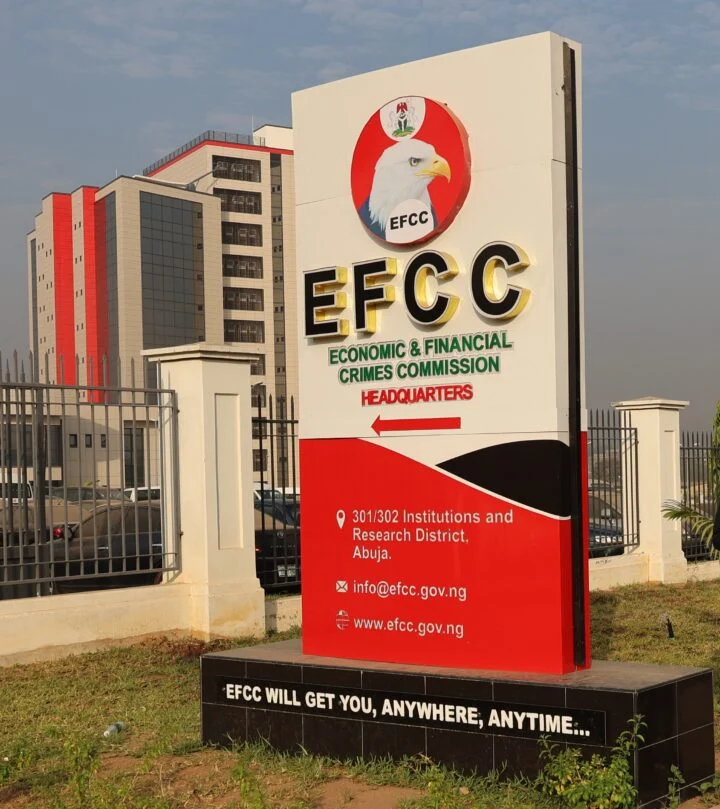
The Economic and Financial Crimes Commission (EFCC) has said those challenging its legality are “feeling the heat� of the anti-graft war.
Speaking on Channels Television on Monday, EFCC’s Director of Public Affairs, Wilson Uwujaren, said the agency is worried and shocked about the suit in view of the corruption problem in the country.
Recall that attorneys-general of 16 states had recently filed a suit challenging the constitutionality of the law establishing the EFCC.
The states argued that in enacting the law in 2004, the National Assembly failed to adhere to section 12 of the 1999 Constitution (as amended), which governs the incorporation of international treaties into domestic law.
They noted that the EFCC Act cannot be applied to states that did not give their consent to its creation.
The 16 states challenging EFCC’s legality are Kogi, Ondo, Edo, Oyo, Ogun, Nasarawa, Kebbi, Katsina, Sokoto, Jigawa, Enugu, Benue, Anambra, Plateau, Cross River and Niger.
The Supreme Court has fixed October 22 to hear the suit filed by the 16 states.
Also, in two separate letters addressed to the constitution review committees of the Senate and House of Representatives last week, a former president of the Nigerian Bar Association (NBA), Olisa Agbakoba (SAN), said EFCC was not constitutionally established.
However, a human rights lawyer, Femi Falana (SAN), and some civil society organisations have faulted the suit.
Uwujaren said EFCC’s establishment followed due process in the National Assembly, calling on Nigerians to reject the move to “derailâ€� the operations of the agency.
“I am worried that with the kind of problem we have with corruption in this country, some people will go to court to challenge the legality of EFCC.
“What you see playing out today is simply people who are feeling the heat of the work of the EFCC, and they simply want to derail what is going on within the EFCC. They see EFCC as a threat.
“Nigerians should see through the gimmick of those who are behind the suit on the legality of the commission.
“We are really shocked by what is happening. Nigerians should see through this shenanigan and oppose it because I don’t see how this country can survive without the EFCC, with the kind of corruption problem that we have in this country. Nigeria cannot do without the EFCC,” he said.
The commission was established on December 12, 2002 following an act of National Assembly under the administration of former President Olusegun Obasanjo.