





Akinwande Soji-Ojo
The United States Department of State has authorised non-emergency US government employees and their family members to leave the embassy in Abuja, citing a deteriorating security situation in Nigeria.
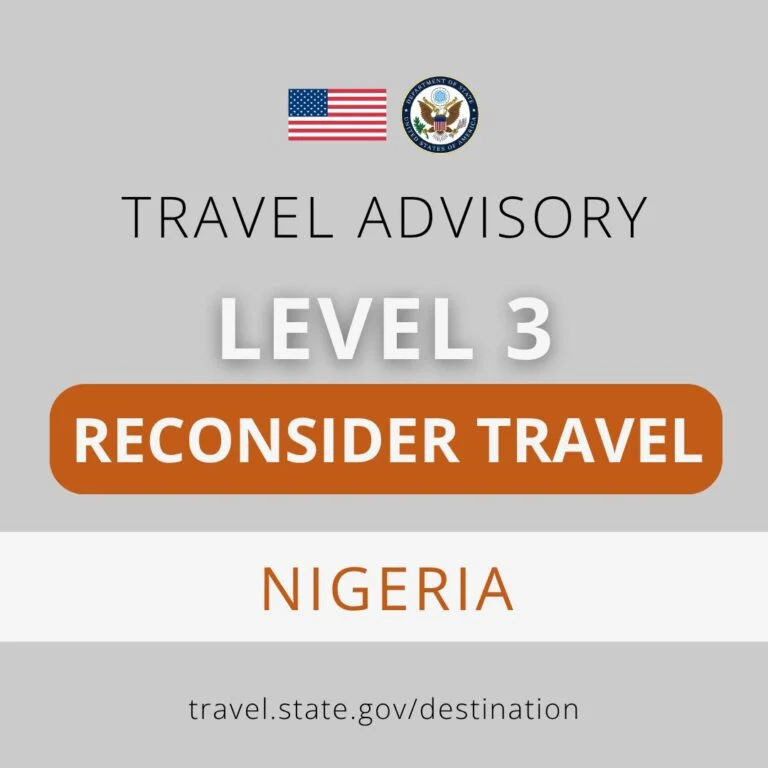
In an updated travel advisory issued on Wednesday, the department noted that, starting April 8, 2026, Americans are advised to reconsider travel to Nigeria due to crime, terrorism, kidnapping, and civil unrest.
The advisory classified Nigeria overall as “Level 3: Reconsider Travel,� while some states were placed under “Level 4: Do Not Travel.�
The department also added Plateau, Jigawa, Kwara, Niger, and Taraba States to the list of “Do Not Travel� areas, bringing the total to 23 states where travel is strongly discouraged.
“On April 8, 2026, the Department of State authorised non-emergency US government employees and US government employee family members to leave US Embassy Abuja due to the deteriorating security situation.
“Reconsider travel to Nigeria due to crime, terrorism, unrest, kidnapping, and inconsistent availability of healthcare services. Some areas have increased risk,” the advisory read.
States under Level 4 advisory in the North include Borno, Jigawa, Kogi, Kwara, Niger, Plateau, Taraba, Yobe, and northern parts of Adamawa due to terrorism, crime, and kidnapping.
The advisory also listed Bauchi, Gombe, Kaduna, Kano, Katsina, Sokoto, and Zamfara States, citing unrest, crime, and kidnapping.
“The security situation in these states is unstable and uncertain due to civil unrest, widespread violence between communities, and armed crime, including kidnapping and roadside banditry. Security operations to counter these threats may occur without warning,� it stated.
In southern and southeastern Nigeria, US citizens were advised to avoid Abia, Anambra, Bayelsa, Delta, Enugu, Imo, and Rivers States (excluding Port Harcourt) due to crime, kidnapping, and unrest.
“Crime is widespread in southern Nigeria. There is a high risk of kidnapping, violent protests, and armed gangs,� the advisory added.
The department noted that violent crimes, including armed robbery, carjacking, and kidnapping for ransom, are widespread, and US citizens are often perceived as wealthy and may be targeted.
It also warned that terrorist attacks remain a threat across the country, including in markets, shopping centres, hotels, places of worship, and public gatherings.
The advisory further described health services in Nigeria as limited and inconsistent, noting that medical facilities generally do not meet US or European standards.
However, the state department urged US citizens considering travel to Nigeria to enrol in the Smart Traveler Enrollment Programme for important updates, exercise caution, avoid large gatherings and demonstrations, and establish personal safety and “proof of life� protocols.