





Akinwande Soji-Ojo
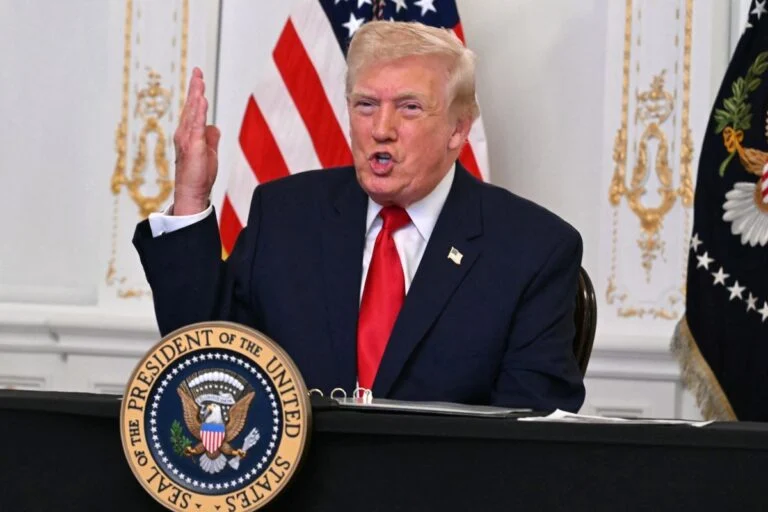
United States President, Donald Trump, on Friday claimed that America’s identity was facing a fresh threat, accusing domestic “radicals and extremists” of undermining the nation’s values on the eve of the country’s 250th Independence Day.
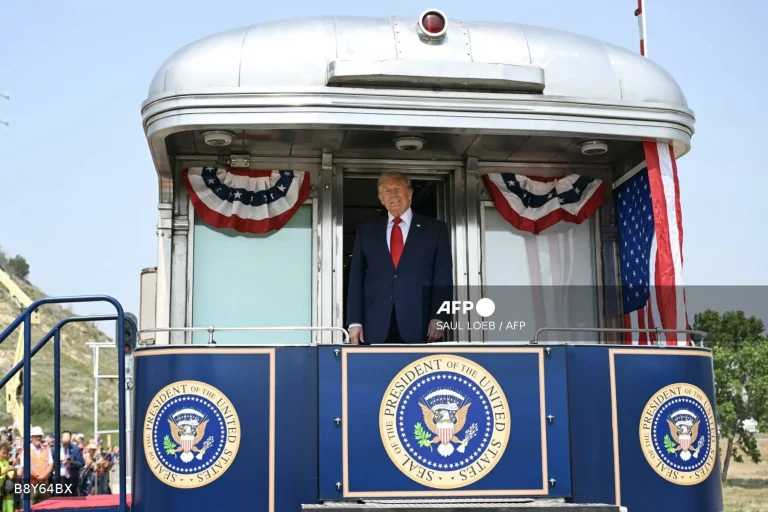
Speaking at Mount Rushmore, Trump praised American exceptionalism and paid tribute to the country’s past leaders, but warned that the nation’s identity was under siege.
“As we approach this magnificent anniversary, we see our American identity under a renewed attack,” he said.
He also claimed there was “a resurgence of the communist menace in our land.”
The remarks echoed a theme Trump has repeatedly advanced in recent weeks following a wave of primary election victories by the anti-establishment wing of the Democratic Party.
The president has argued ahead of November’s midterm elections that “communists” pose a major threat to the United States.
Trump further alleged that efforts had been made to erase America’s history and values.
“In recent years, there has been an undeniable attempt to change this exceptional character, to beat the American spirit out of us and alienate us from our history,” he said.
Although his remarks stopped short of the harsher anti-immigration rhetoric he has used in previous speeches, Trump insisted that patriotism, rather than birthplace, defines American identity.
“You do not have to be born here, but you do have to love what we have built,” he said.
The speech at Mount Rushmore—where the faces of four former US presidents are carved into the mountain—also highlighted Trump’s admiration for the monument.
His supporters have even introduced legislation seeking to add his likeness alongside those of George Washington, Thomas Jefferson, Abraham Lincoln and Theodore Roosevelt.
As part of the country’s 250th anniversary celebrations, Trump is expected to hold a campaign-style rally on the National Mall in Washington, featuring military flyovers and what he described as the world’s largest fireworks display.
However, the celebrations come at a time of deep political divisions in the United States
Trump’s approval ratings remain near historic lows, driven largely by the war in Iran, the rising cost of living, criticism of his immigration policies, concerns over his family’s growing wealth and accusations that he has sought to expand presidential powers.
His efforts to brand the anniversary celebrations have also drawn criticism. A Trump-linked organisation, Freedom 250, has assumed control of many events previously coordinated by the bipartisan America250 group, prompting some people to boycott the festivities.
A “Great American State Fair” organised in Washington reportedly attracted sparse crowds and widespread criticism over its largely empty exhibition booths.
Despite forecasts of temperatures reaching about 107 degrees Fahrenheit (41 degrees Celsius) on July 4, Trump said he would not be deterred.
“On July 4, it’s going to be approximately 107 degrees out, and I’m going to go and I’m going to make a really long speech, just to show that I can do anything,” he said on Wednesday.
As the United States marks 250 years of independence, surveys suggest many Americans remain pessimistic about the country’s ability to fulfil the ideals of the “American Dream.”
A recent Quinnipiac University poll found that 61 per cent of Americans believe the United States is not living up to the ideals set out in the Declaration of Independence, although opinions remain sharply divided along party lines.
“The Fourth of July really is a moment of freedom, but I have to be honest, in these political times, it hasn’t been as exciting to me,” Amy Kimaara, a 49-year-old special education teacher, told AFP in Los Angeles.
(AFP)