





Akinwande Soji-Ojo
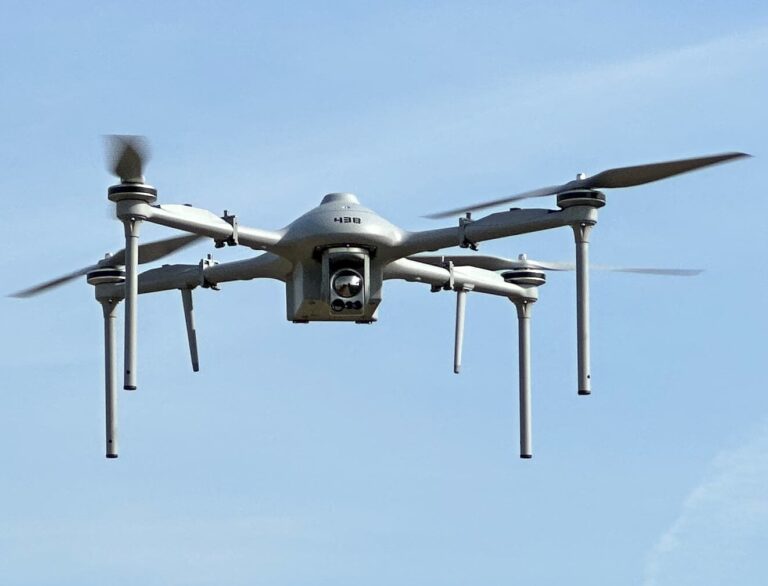
The United Nations (UN) has warned that terrorist groups operating in northern Nigeria and across West Africa and the Sahel are increasingly deploying drones, sophisticated communication technologies and cryptocurrencies to strengthen their operations.
The warning was contained in a briefing to the UN Security Council by Leonardo Sim茫o, Special Representative of the Secretary-General for West Africa and the Sahel and Head of the United Nations Office for West Africa and the Sahel.
Sim茫o presented the Secretary-General’s latest report on developments in the region, covering the period between November 29, 2025, and June 30, 2026.
The briefing came as the Security Council reviewed the political, security and humanitarian situation in West Africa and the Sahel, following its decision to extend UNOWAS’s mandate until January 31, 2029.
Sim茫o said terrorist groups are rapidly evolving and becoming increasingly difficult to contain.
“Armed groups are increasingly using drones, sophisticated communications and cryptocurrencies while coordinating operations across borders,” he said.
He added that the groups’ activities are increasingly intertwined with transnational organised crime, with the aim of consolidating territorial and economic control while eroding public confidence in state institutions.
“The problem is acute, especially in the central Sahel and northern Nigeria.
Their actions intersect with transnational organised crime and are aimed at consolidating territorial and economic control, eroding public confidence in state authority, with serious damage to social cohesion,” Sim茫o said.
The UN official said Nigeria, Niger and Burkina Faso continue to suffer terrorist attacks, kidnappings and heavy civilian casualties.
He added that about 6.8 million people have been displaced across the region, while another 1.28 million have become refugees or asylum seekers.
According to Sim茫o, women, children and young people continue to bear the brunt of the humanitarian crisis as insecurity and funding shortfalls have limited humanitarian access.
Despite the worsening security situation, he cited renewed regional cooperation, including the reopening of the Kamba border crossing between Nigeria and Niger.
Sim茫o also highlighted progress made by the Cameroon-Nigeria Mixed Commission in implementing the 2002 International Court of Justice judgment on the countries’ land and maritime boundary.
“These are some examples of regional efforts towards dialogue,” he said.
Sim茫o stressed that military operations alone would not eliminate terrorism and urged governments to address the socio-economic factors driving violent extremism.
“Fighting poverty and vulnerability must therefore remain a common objective in the broader fight against terrorism. Regional actors are working hard to find solutions,” he said.
He also disclosed that the Economic Community of West African States (ECOWAS) had renewed efforts to operationalise its standby force but remained constrained by inadequate funding.