






Britain will ban petrol and diesel vehicle sales from 2030 as part of a 10-point plan for a 鈥済reen industrial revolution鈥� unveiled on Wednesday by Prime Minister, Boris Johnson.
The British Prime Minister has earmarked 拢12 billion (鈧�13.4 billion, $15.9 billion) for the wide-ranging plans, which he hopes will secure up to 250,000 jobs and help meet a target for the UK to become carbon neutral by 2050.
The proposals include quadrupling offshore wind power within a decade while scaling up hydrogen production capacity for industry, transport, power and homes.
Investment will also be made in zero-emission public transport, alongside research into zero-emission planes and ships, and in making cycling and walking 鈥渕ore attractive.鈥�
The plans contain broader aims to make Britain a 鈥渨orld-leader鈥� in carbon capture technology and the City of London a 鈥済lobal centre of green finance.”
The government will also spend 拢525 million on developing large and smaller-scale nuclear plants, and new advanced modular reactors, in a move likely to anger environmentalists.
Johnson is hoping the ambitious proposals can help deliver on pledges to reduce Britain鈥檚 stark regional inequality and repair some of the economic damage done by the pandemic.
They are also being seen as an opportunity to reset his faltering government and align with the priorities of US President-elect, Joe Biden, ahead of the UK hosting global climate talks next December.
鈥淢y 10-point plan will create, support and protect hundreds of thousands of green jobs, whilst making strides towards net zero by 2050,鈥� Johnson said in a statement ahead of publishing the full blueprint.
鈥淥ur green industrial revolution will be powered by the wind turbines of Scotland and the North East, propelled by the electric vehicles made in the Midlands and advanced by the latest technologies developed in Wales,” he added.
Speculative solutions
The 2030 ban on petrol and diesel cars and vans follows what Downing Street called 鈥渆xtensive consultation with car manufacturers and sellers.鈥�
Johnson had said in February his government would aim to end such sales by 2035, but will now only allow the sale of hybrid vehicles until that year.
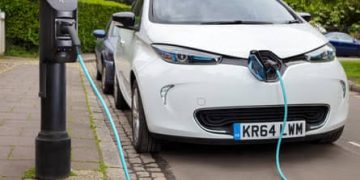
Under the new plans, it will invest 拢1.3 billion on expanding electric vehicle charge points in homes and streets across England and make 拢582 million available in grants for people to buy zero or ultra-low emission vehicles.
Meanwhile, nearly 拢500 million will be spent in the next four years on the development and production of electric vehicle batteries.
Under proposals to reduce carbon-emitting gas usage, another 拢500 million is earmarked to trial using hydrogen in homes for heating and cooking.
The government is aiming to build a so-called 鈥淗ydrogen Neighbourhood鈥� within three years, a 鈥淗ydrogen Village鈥� by 2025, and a town of tens of thousands of homes using the gas by the end of the decade.
It is also set to invest 拢1 billion in a grant scheme launched in September, and now to be extended for a year, to make homes and public buildings more energy-efficient.
Greenpeace welcomed the package and the 鈥渓andmark announcement鈥� on vehicles.
The pressure group called the move 鈥渁 historic turning point on climate action鈥� that could 鈥減ut the government back on track to meeting its climate commitments.鈥�
鈥淚t鈥檚 a shame the prime minister remains fixated on other speculative solutions, such as nuclear and hydrogen from fossil fuels, that will not be taking us to zero emissions anytime soon, if ever,鈥� it added.
(AFP)