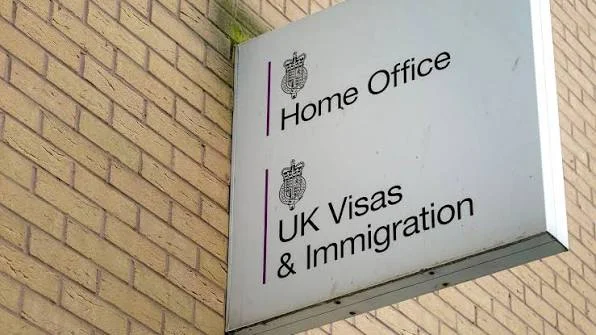







The United Kingdom Department for Education (DfE) has excluded teachers trained in Nigeria, Ghana and India from using the direct route to apply for Qualified Teacher Status (QTS) in England.
The change took effect on September 9, 2026, according to issued by the DfE.
QTS is the professional teaching qualification for teachers in England and is recognised by many schools across the country.
Under the revised rules, teachers trained in Nigeria, Ghana or India are no longer eligible to use the 鈥淎pply for QTS in England鈥� service.
The latest decision followed the release of data on applications for QTS from overseas-trained teachers during the 2024/2025 academic year.
The data, released on August 27, showed that Nigeria recorded 1,076 applications, of which 364 resulted in QTS, while 599 applications were declined.
Ghana recorded 1,067 applications, with 196 resulting in QTS and 749 declined.
The DfE said the eligibility requirements had been updated to ensure that countries covered by the service had a national regulator capable of confirming a teacher鈥檚 professional standing and providing references that met its requirements.
It said India was excluded because it 鈥渄oes not have a national regulator that can confirm professional standing.鈥�
Explaining the decision regarding Nigeria and Ghana, the department said: 鈥淥ur data shows that more than 70% of applications from teachers in Ghana and Nigeria include work history references that use public email addresses, such as Gmail or Hotmail, rather than a school鈥檚 official email domain.鈥�
It added that this meant assessors spent 鈥渁dditional time and resources trying to verify information provided in applications.鈥�
The department said it must be confident that information provided by applicants is genuine to ensure that overseas teachers awarded QTS have the skills and experience required to teach in English schools.
鈥淭eachers who are not eligible to apply for QTS in England service can explore other routes into teaching,鈥� it said.
To apply for QTS, overseas-trained teachers must have a valid passport, an undergraduate degree equivalent to a UK bachelor鈥檚 degree and professional recognition as a teacher in the country where they trained.
Applicants must also have completed any mandatory induction requirements required for full teacher registration in their country of qualification.
They are required to demonstrate that they are qualified to teach children aged between five and 16 and have at least nine months of teaching experience gained after qualifying as a teacher.
Applicants must also provide employment references verifying their work history and use an email address linked to their school鈥檚 official domain.
Depending on the country where a teacher trained, additional requirements may include qualifications to teach pupils aged between 11 and 16, as well as a specialism in subjects such as mathematics, science, biology, chemistry, physics, French, German, Italian, Japanese, Latin, Mandarin, Russian or Spanish.
However, because teachers in England are employed by individual schools rather than the DfE, schools may consider alternative routes into teaching.
The department said teachers who are no longer eligible to use the QTS application service can explore other routes into teaching in England.
Following the latest changes, South Africa is the only African country that remains on the general list of countries eligible for the service.
Countries and regions that remain eligible include Australia, Canada, the European Economic Area, Guernsey, Hong Kong, Jersey, New Zealand, Switzerland, Ukraine and the United States.
Teachers qualified in Jamaica, Singapore and South Africa can also apply under specified conditions, including additional subject and age requirements where applicable.