





Akinwande Soji-Ojo
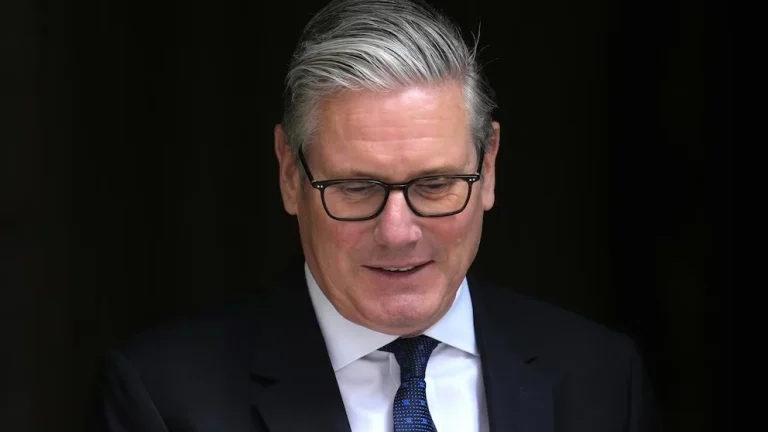
British Prime Minister, Keir Starmer, is reportedly considering stepping down amid mounting pressure from members of the Labour Party, with senior party figure, Andy Burnham, expected to be sworn in as a Member of Parliament on Monday following his by-election victory.
UK media reported that Starmer spent the weekend reflecting on his political future after Burnham’s decisive victory in the Makerfield by-election, a result widely seen as paving the way for a leadership challenge.
Under Labour Party rules, anyone seeking to lead the party must be a sitting MP.
Although there was no official confirmation from Downing Street on Monday morning, government ministers acknowledged that Starmer had been weighing his options.
Junior Education Minister, Jacqui Smith, told Sky News that the prime minister had been “thinking really hard about what is best for the country.”
“I do not know if he has made a decision. I know that he has been thinking really hard about what is best for the country.
“I trust him to make the right decision,” she added.
According to reports, Starmer, who had previously insisted he would resist attempts to force him from office, reconsidered his position after Burnham’s emphatic electoral victory.
The Guardian reported that the prime minister is expected to announce plans to resign after sustained pressure from Labour MPs, while the BBC said there were growing indications he could outline a timetable for his departure on Monday.
Even United States President, Donald Trump, weighed in on the speculation, writing on his Truth Social platform that, “Keir Starmer will resign.”
Trump also criticised Starmer’s handling of immigration and energy policies.
Burnham, who has served as Mayor of Greater Manchester since 2017, has openly declared his intention to seek the Labour leadership. In his by-election victory speech, he warned that the governing party had a “final chance to change.”
If Starmer resigns and Burnham emerges unopposed in the leadership race, the 56-year-old could automatically become Britain’s next prime minister because Labour commands a comfortable majority in parliament.
Starmer, who became prime minister in July 2024, has faced months of political turbulence marked by policy reversals, ministerial resignations, scandals and declining public support. His leadership also came under intense scrutiny following Labour’s poor performance in last month’s local and regional elections across England, Scotland and Wales.
Media reports suggest Starmer may remain in office until after the summer, allowing Labour to elect a new leader at its annual conference in late September. More than 100 Labour MPs are said to have urged him to step aside, while several senior ministers, including Foreign Secretary, Yvette Cooper, have reportedly called for a change in leadership.
Burnham, a former cabinet minister and MP, has so far revealed little about his plans should he become prime minister, although UK media reports suggest he intends to reshuffle key positions in government if he succeeds Starmer.