









Akinwanse Soji-Ojo
The United States has launched retaliatory strikes against Iranian military targets after an American Apache helicopter was shot down near the Strait of Hormuz.
The United States Central Command (CENTCOM) said on Tuesday that it carried out strikes on Iranian air defence systems, ground control stations and surveillance radar sites in response to the incident.
According to CENTCOM, the Apache helicopter was downed while patrolling the Strait of Hormuz on Monday.
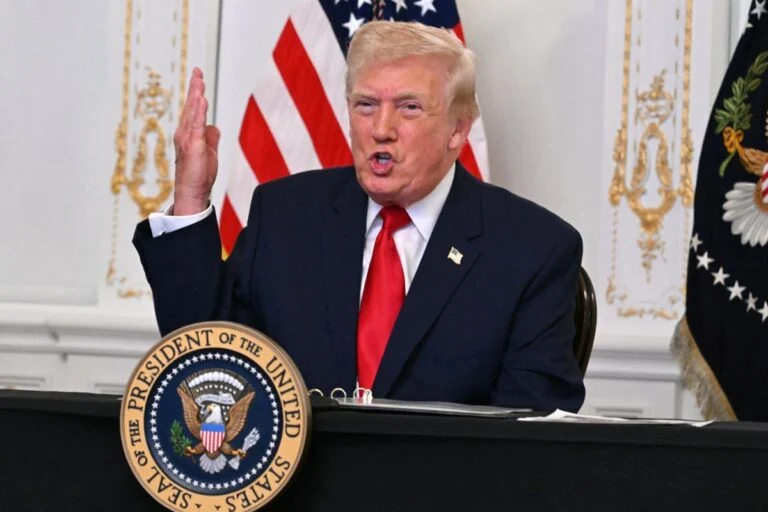
Confirming the military action, US President Donald Trump told ABC News: “I think it is very important to respond. They shot down a helicopter, and we are responding as we speak.”
Earlier, Trump had downplayed the incident in remarks to The Wall Street Journal, saying: “It wasn’t a big deal,” while adding that “the pilot is fine.”
The two crew members aboard the helicopter were rescued by an American sea drone.
CENTCOM later announced that it had “completed self-defence strikes” against Iranian targets.
Reacting to the development, Iranian Foreign Minister, Abbas Araghchi, vowed that Tehran would respond.
“Despite its defeats on the battlefield, the US opted to test our determination. Our powerful armed forces will leave no attack or threat unanswered,” he said.
Although Araghchi did not directly address the downing of the helicopter, he warned that foreign forces should leave the region if they wished to remain safe.
Shortly afterwards, Iran’s Islamic Revolutionary Guard Corps (IRGC) announced that it had launched attacks on the US Fifth Fleet in Bahrain and a military airbase in Jordan in retaliation for the American strikes.Kuwait also reported coming under Iranian attack.
The latest escalation comes after weeks of heightened tensions between Iran and Israel.
Before the US strikes, both countries had exchanged missile attacks in what was considered the most serious violation of the ceasefire brokered in April.
Although both sides later agreed to suspend hostilities following Trump’s call for an immediate ceasefire, each warned that military action could resume if fresh attacks were launched.
With renewed exchanges of fire and retaliatory threats, concerns are growing that the fragile truce could collapse and trigger a broader regional conflict.