Akinwande Soji-Ojo
United States (US) President, Donald Trump, has announced that exports from Nigeria to the US will now be subjected to a 14 per cent tariff.
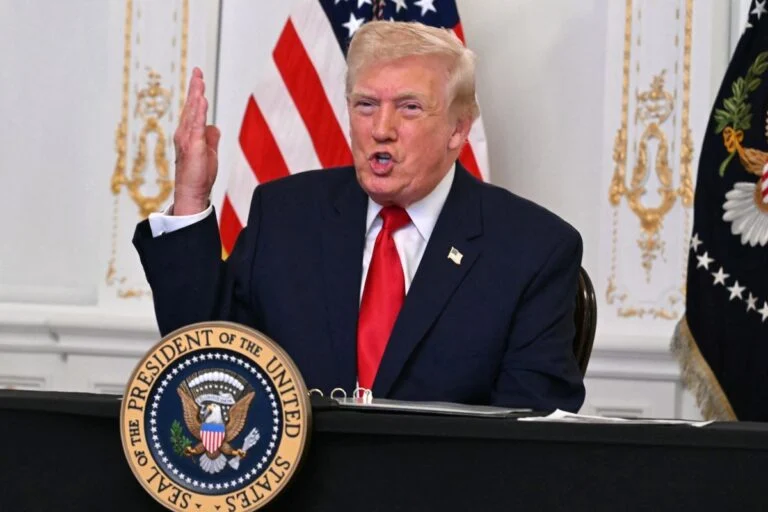
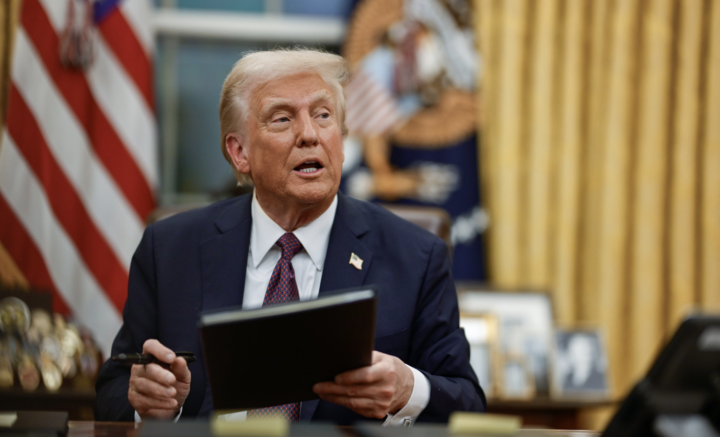
The decision, which was made public during a 鈥楳ake America Wealthy Again鈥� event in Rose Garden on Wednesday, is part of a broader strategy aimed at rebalancing global trade and addressing perceived unfair trade practices.
The newly introduced 14 per cent tariff marks a significant shift in US-Nigeria trade relations, with the US government citing an ongoing trade imbalance.
According to the Trump administration, Nigeria imposes a 27 per cent tariff on US exports, a disparity the administration claims has long been detrimental to American businesses and consumers.
In response, the Trump administration has now imposed a new tariff on Nigerian exports to mitigate what it argued is an unfair trade arrangement.
In his address, Trump framed the tariff as part of a larger initiative to protect American industries and ensure that foreign nations play by what he described as 鈥渇air trade” rules.
Trump said it was the start of a new era of 鈥渇air trade,鈥� promising to 鈥渟upercharge America鈥檚 industrial base鈥� and force open foreign markets long accused of shutting out US goods.
“This is one of the most important days in American history. We will supercharge our domestic industrial base. We will pry open foreign markets and break down foreign trade barriers, and ultimately, more production at home will mean stronger competition and lower prices for consumers.
鈥淭his will be, indeed, the golden age of Americans coming back. We鈥檙e going to come back very strongly,鈥� the US president said.
In addition to the 14 per cent tariff on Nigerian exports, Trump also unveiled a broader trade policy that includes a baseline 10 per cent tariff on all US imports.
The new tariffs, which take immediate effect, apply to more than 50 countries.
They include major trade partners like China, European Union, India, and Japan, as well as developing economies in Asia, Africa, and Latin America.
The new policy is a dramatic shift in global trade and economic policy, rattling markets and stirring fears of a global trade war.
Aside from Nigeria, some African countries that would be impacted by the new policy include Algeria (30 per cent), South Africa ( 30 per cent), Lesotho (50 per cent), Mauritius (40 per cent), Kenya (10 per cent), Namibia (21 per cent) as well as Ethiopia and Ghana, which are 10 per cent apiece.