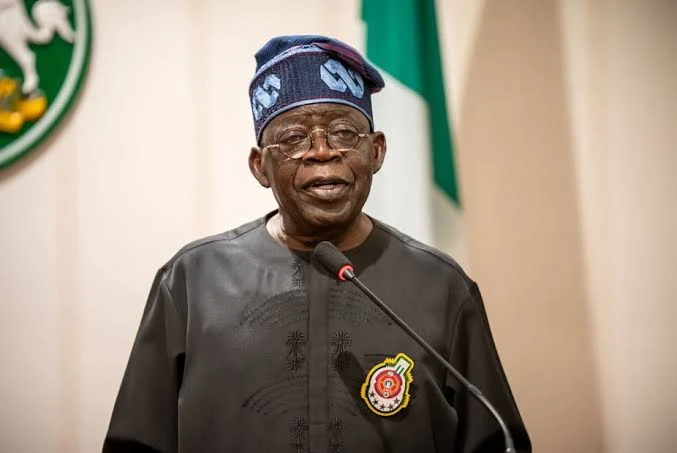






President Bola Tinubu has warned Africa against playing the role of a mere exporter of raw minerals, saying exporting unprocessed resources perpetuates poverty and underdevelopment across the continent.
Tinubu, who gave the warning on Wednesday at the Africa Minerals Strategy Group (AMSG) event on the sidelines of the ongoing United Nations General Assembly (UNGA) in New York, emphasised the necessity of processing Africa鈥檚 mineral wealth locally.
The president, who was represented by Vice President Kashim Shettima, pointed out that while Africa holds a significant portion of the world’s mineral reserves, including 92% of global platinum, 56% of cobalt, and 54% of manganese, these resources have been primarily extracted and exported to foreign countries for refining and manufacturing.
Tinubu highlighted the urgent need for the continent to break free from this dependency, stating that the extraction of raw minerals without local processing only deepens Africa’s underdevelopment and prolongs its economic challenges.
In his address, entitled, 鈥楢frica’s natural resources shaping the future,鈥� Tinubu explained that this has left the continent at the mercy of foreign markets, forcing it to repurchase finished products at much higher prices.
“A situation in which the raw minerals are extracted from our countries, exported, refined, and sold to us as finished products merely consolidates the foundations of our misery and pushes us further down the depths of underdevelopment,” he said.
He called on African nations to adopt a new agenda that prioritises local value addition, which he noted are essential to industrialising the continent and providing sustainable economic growth.
On the evolution of lithium-ion technology, the president said the development has enabled the swift production and manufacturing of portable consumer electronics such as laptops, computers, mobile phones and electric cars.
“We live in a world of electronic mobility in which lithium-powered batteries provide higher specific energy, higher energy density, higher energy efficiency, longer cycle life, and longer calendar life.
鈥淭he global need for new battery technology has triggered a new scramble for Africa鈥檚 critical minerals. Africa possesses 92% of global reserves of platinum, 56% of Cobalt, 54% of Manganese and 36% of Chromium. These are the minerals employed in the manufacturing of the new batteries. In short, the world needs Africa today more than ever,鈥� he added
Tinubu further emphasised Africa’s determination to move beyond the historical exploitation of its resources, advocating the localisation of the entire mineral value chain within the continent.
He also assured of his administration鈥檚 commitment to adding local value to Nigeria鈥檚 mineral resources as part of the AMSG’s vision chaired by Nigeria’s Minister of Solid Minerals Development, Mr. Dele Alake.
The president, who drew attention to Nigeria鈥檚 vast market of over 226 million people, said the success of the country’s $10 billion telecoms market is proof of its growth potential 鈥渋n the manufacturing of Lithium batteries, concentrates and components to set up their business and domesticate the value chain from extraction to production in Nigeria.”
He affirmed that AMSG is focused on transforming Africa from a supplier of raw materials into a global mining industry stakeholder.
Speaking, Alake, laid out the group鈥檚 vision to transform Africa鈥檚 mining industry through local value addition and industrialisation.
The minister, who spoke at the event in his capacity as the chairman of AMSG, criticised the traditional model of mineral extraction in Africa where raw materials are exported for processing abroad, resulting in loss of economic opportunities and jobs on the continent.
He maintained that this pattern of trade has left African nations vulnerable, as they are forced to import finished goods at inflated prices.
The minister proposed a shift towards local value addition鈥攑rocessing raw minerals into finished goods within Africa鈥攁s a strategy for enhancing the continent’s economic independence and contributing more significantly to its GDP.
“We are moving from commercialisation to industrialisation. By processing and manufacturing raw minerals into finished goods, we can increase employment, reduce our reliance on imports, and ultimately raise the contribution of the solid minerals sector to our GDP,” Alake said.
He acknowledged that although the continent faces significant developmental challenges, Africa’s natural wealth provides a pathway to prosperity if leveraged correctly.
While setting the mood for the important conversation on how Africa’s natural resources should benefit the people, reduce poverty and create wealth for the people on the continent, AMSG General Secretary, Mr. Moses Michael Engadu, called for a new vision and political will among African leaders to ensure value addition becomes a sacrosanct condition to granting mineral license to any investor.
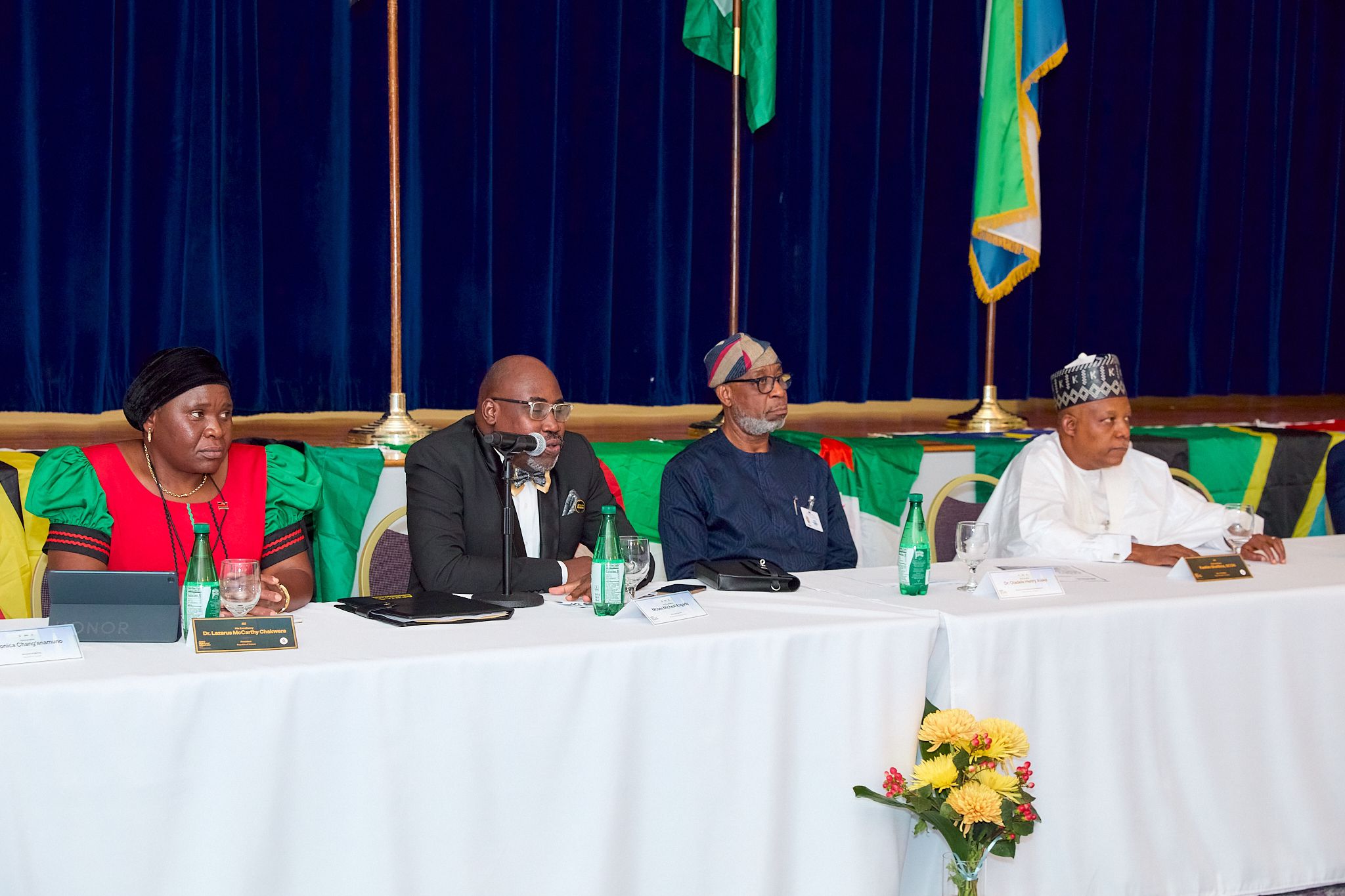
The roundtable had representatives from investors, development partners, multilateral institutions and major financial institutions in attendance.