









All across the globe, the COVID-19 pandemic outlined in bold relief the inadequacies of the governance template and institutional architecture that governments all over seemed to have grown complacent about. Many healthcare delivery systems and facilities were essentially overwhelmed by the influx of fatalities and the exponential rate of infections that the coronavirus inflicted on humanity. Of course, there was no public service or infrastructural template that could have been prepared enough for a novel coronavirus strain that turned all accepted social norms and administrative orthodoxies upside down. The pandemic, by its very virulence and fatalities, has therefore become the ultimate reform instigator of the twenty-first century. And whether we like it or not, after the coronavirus scourge has been ameliorated, the public service and the administrative normal of the post-COVID-19 dispensation will have to readjust to a new normal that requires urgent reform imperatives and administrative framework, insights and paradigmatic reflections.
And there is nowhere this is more so than in Africa that has often been considered as the most difficult administrative context in the world. Its difficulty is the result of many decades of colonial and imperial administrative calculations and encumbrances that had undermined the vitality of African administrative and governance frameworks and protocols. Before the coronavirus arrived in Africa, there had been prognostications of doom and woes. When it finally crossed the Atlantic into the continent, the doomsday prediction did not come to pass, but the COVID-19 exposed the fragile underbelly of the African administrative structures and its accumulated weaknesses and faults. And this is starker in Nigeria relative to other African countries. To reiterate that Nigeria鈥檚 infrastructural deficit requires a huge infusion of three trillion dollars over the next thirty years reveals the weakest link in her administrative template. The coronavirus simply revealed the depth of the institutional debilitation and pathologies that the Nigerian public service system has had to battle with since independence.
Public services all across the world have always been constrained by the reform imperative of modernizing to be able to achieve an institutional vitality and readiness that is able to confront any present or future administrative challenges. With the coronavirus pandemic, this modernizing imperative becomes all the more demanding as the public service now stands between the population and a ravaging virus that has already killed thousands, and has millions in its frightening grip. While the Nigerian COVID-19 incidence is still less tragic compared to the rest of the world, the number of deaths and infection recorded so far could still have been mitigated if the administrative system is not only equipped with an early warning component but also have the sufficient institutional capacity readiness to confront any emergency, anticipated or sudden. Indeed, even with the pandemic statistics that seem less acute in comparison with those of, say, the United States and the United Kingdom, the rising incidence of infections and fatalities still raises a dilemma for the Nigeria government: how to manage the pandemic without jeopardizing the vitality of the economy.
While overall, Nigeria鈥檚 emergency response pockets of effectiveness in some States and instances are commendable given the huge structural constraints to achievements recorded, to all intents and purposes, the COVID-19 pandemic caught Nigeria napping. Three instances are apt to sufficiently make this point. First, the pandemic caught Nigeria at the point of its multiple institutional wastages and redundancies. Managing these redundancies through the Oronsaye Report just entered the public discourse again with the pandemic. Second, most public institutions, and especially tertiary educational institutions, are not facilitated sufficiently to achieve online workforce arrangement that could have mitigated the effects of the pandemic on their structures and on the structure of the national economy. Working online and the dynamics of digitizing the workforce have been around for too long to have constitute a significant challenge for federal structures and institutions in Nigeria, Yet, we cannot also underestimate the deep level of institutional inertia that keeps innovation and institutional creativity at bay. And lastly, the government鈥檚 governance capacity was not sufficient to roll out a stimulus package that is sufficiently effective to sustain a lockdown regime that would have successfully quarantined the coronavirus without subjecting the entire population to danger.
The deep implication of this unflattering analysis of the state governance capacity, public service system and institutional emergency response management effectiveness in Nigeria is that there is a lot more to do and still a lot more to learn in terms of the changes and reform that can make the public service an engine of economic growth and administrative efficiency in Nigeria. Before the commencement of the pandemic, Nigeria has remained hesitant in its reform adaptability. However, the COVID-19 incidence is not only compelling states to urgently modernize their public service innovation profile; but even more, it is demanding a reexamination of existing reform initiatives. And this demand rings out even louder in Nigeria鈥檚 institutional and governance architecture that has only been reforming by default.
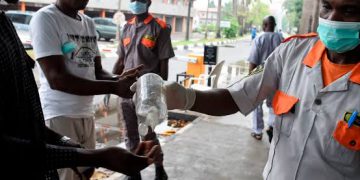
The public service everywhere has three major imperatives by which to make an adequate sense of this health crisis and move on from there. The first institutional frame of reaction is for the public service to deal with the administrative and governance implications of the pandemic. This is the ongoing phase and Nigeria is not faring well, despite the low incidence of the coronavirus. The pandemic revealed that the response time of the Nigerian public service system to crisis is abysmally slow. This is a system that utilizes the fire-brigade approach to crisis鈥攚e wait until the crisis is fully blown before we begin to scamper around for solution. The system鈥檚 early warning is next to nil. Health workers and law enforcement agents have been thrust into the midst of the lockdown engagement without any adequate personal protective equipment. And the entire populace could not stay locked down and become prey for hunger and starvation.
The recovery stage is the frame within which the public service learns from its initial response as well as the global trajectory and dynamics of responses and reactions to the pandemic as the stimulus to become stronger and more energetic in the face of challenges, known and anticipated. The last phase is the thriving stage in which the public service is institutionally ready for the new normal in terms of governance and administration. All these three frames of reactions are not necessarily chronological. In fact, they are simultaneous鈥攁 proactive administrative system will see the continuity of one stage with the other, and so progressively act within all the frames simultaneously. Indeed, commentators have identified five imperatives that binds the recovery and thriving phases together in a continuous framework of efficiency: (a) 鈥渦nderstand the required mindset shift; (b) identify and navigate the uncertainties and implications; (c) embed trust as the catalyst to recovery; (d) define the destination and launch the recovery playbook; and (e) learn from other鈥檚 successes.鈥�
Lessons from across the world range across the administrative spectrum that link the very essence of crisis management to economic and fiscal issues. Managing the crisis requires the government to attend to the negative impact of the pandemic while making every effort to concentrate infrastructural facilities to diminishing the consequences of the pandemic. This requires not only minding critical healthcare delivery structures, but also looking at the economic and fiscal measures in place to ensure that looming recession and inflationary reactions are properly managed. And a post-COVID-19 world will require the public service everywhere to find a place in a digitized world and adopt open government initiatives that will make online platforms the conveyor of efficiency and transparency in administrative operations. The social media, which the traditional bureaucratic framework seems to have deliberately neglected, will now play a huge role in creating awareness about administrative awareness and functions. And the workforce professionalism will be transformed forever. No manager can any longer discountenance the urgent necessity of working from home.
Specifically, the public service system in Nigeria will have to face to its peculiar administrative and institutional imperatives that will allow it function efficiently in a post-COVID-19 governance dispensation. As a first and critical step, the federal government needs to revisit the existing and numerous public service reform strategies and plans in reflecting on desirable administrative reform measures. There are five broad areas that I have identified around which can serve as the rallying point for rethinking the public service capability readiness in the age of the coronavirus while at once addressing the change management side of the transition cum national economic transformation objectives.
The first and the most urgent is for the government to rethink its capacity for strategic policymaking that exploit and deploy critical tools and systems thinking to utilize big-data for policy intelligence and analysis that reaches deep into the very essence of policies and their implementation. This will also imply adopting advanced project and risk management tools and techniques which deploy outsourcing to achieve secondary objectives such as building a greener economy and supporting SMEs and social enterprises; achieve impact investing, social impact bonds, etc. in the bid to address the social impact angle to the pandemic. The second level of issues involve improving the capacity of public servants to bring multiple perspectives to policy challenges and public service delivery using foresight techniques to test different scenarios, and building resilience into policy design from potential shocks and unforeseen events. This also include getting the skills to design contracts and to conceive performance indicators that are able to track value for money, and investment instruments that are flexible enough to adjust when indicators suggest a need for change. There is also the urgent need for adopting new and creative stakeholder鈥檚 engagement skills that not only achieve targeted interventions, but also work at transforming public behavior, via strategic communication, towards the achievement of desirable outcomes that impact the entire populace and move good governance forward.
At the third level, the public service system in Nigeria needs to develop skills and competences that speak to the dynamics of change management, including network management skills, partnership development, knowledge management and sharing, the incubation of social innovation, partnership development around open government data; framing issues around results, and so on. For instance, it has now become critical for the system to achieve much more effective and efficient public service delivery through smarter citizens engagement practices. Thus, the public service requires such tools as the social media, crowdsourcing, performance challenge prizes, ethnography, opinion research, branding and user data analytics
And lastly, there is the imperative of establishing and managing new contractual relationships with third party service providers through service contracts, grants to non-profit organisations, social impact bonds, and the public-private partnerships (PPPs) which require a range of commercial, legal and regulatory skills, knowledge of market dynamics, and the way firms operate, how to design and manage contractual relationships in ways that provide value to all parties especially the public, and new skills to regulate crises-prone market behavior.
In the final analysis, the COVID-19 pandemic ought to serve as a wake-up call for the renewal and deepening of institutional reform in Nigeria. if the political and bureaucratic elite have been hesitant in the past, the enormous loss of Nigerian lives is enough needless sacrifice to jumpstart a reform architecture that will be capacity ready to engage with any future crises yet unknown and unanticipated. No crisis should take the public service system in Nigeria by surprise again. But there is a price to be paid in terms of infrastructural commitment and political will.
Prof. Tunji Olaopa
Retired Federal Permanent Secretary &
Directing Staff, National Institute for Policy
and Strategic Studies (NIPSS), Kuru, Jos.
[email protected]
[email protected]