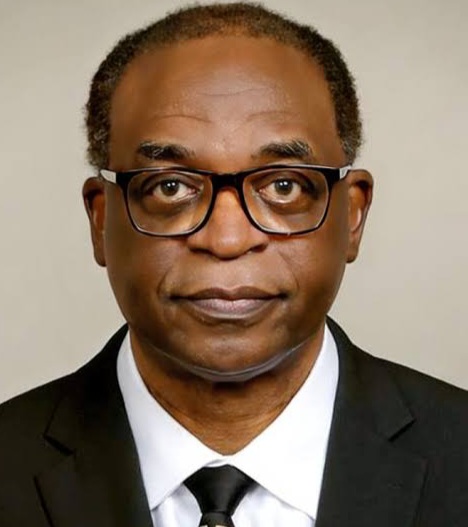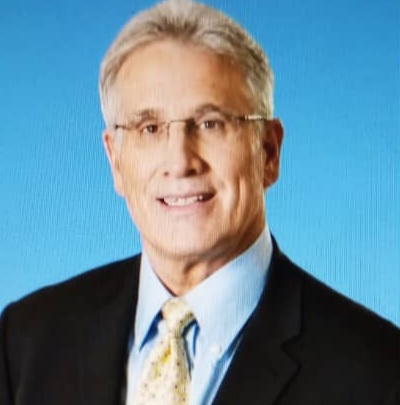










By Isaac Megbolugbe
Introduction
In both academia and global business, exceptionalism is rarely a solitary pursuit. More often, it is the result of a masterfully orchestrated mentorship鈥攁 seamless, evolving relationship that transforms raw intellect into industry-defining leadership. My own journey, which culminated in receiving the prestigious Albert Nelson Marquis Lifetime Achievement Award, is inextricably linked to the intentional, rigorous stewardship of Professor Emeritus Peter Linneman. Over decades, his mentorship seamlessly transitioned through three distinct phases: the academic apprenticeship, the strategic cultivation of high-status autonomy, and ultimately, an enduring partnership of mutual professional trust.
Phase I: The Academic Apprenticeship and the Permission to Emulate
Great mentorship begins with the fundamentals. As a doctoral student at the Wharton School, University of Pennsylvania, my relationship with Professor Linneman started as a classic academic apprenticeship. He provided the blueprint for my intellectual foundation, allowing me to absorb the core principles of top-tier academia and strategic consulting simply by reading his work and engaging in intense, scholarly debates.
Professor Linneman did something few elite minds dare to do: he trusted me to study, copy, and duplicate his unique expertise. By immersing myself in his research conceptualization, structural frameworks, and narrative voice, I learned not just how to analyze data, but how to construct arguments that could shift global policy. This permission to emulate his methodology gave me the tools to achieve a major doctoral breakthrough, generalizing hedonic price theory to disequilibrium and incomplete markets in developing nations鈥攁 feat that ultimately forced the World Bank to reverse its long-standing economic policies.
Phase II: Molding for Exceptionalism Through High-Status Assignments
True leadership development requires a mentor to gradually replace instruction with trust. Once I mastered the fundamentals, Professor Linneman began molding me for excellence by honoring my creativity and escalating the complexity of my responsibilities. He did not micromanage; instead, he continuously tasked me with higher-status assignments that tested the boundaries of my capabilities.
When I moved into policy analysis at the National Association of Home Builders (NAHB) and Fannie Mae, he seamlessly extended his influence, aligning me with elite networks like Dr. Douglas Diamond Jr. When we began co-authoring journal articles together, he gave me the autonomy to execute the bulk of the research and drafting, validating my mastery of his narrative style across five joint publications. He further resourced my growth by embedding top talent directly into my orbit, sending two of his finest Wharton Applied Economics doctoral graduates, Dr. Man Cho and Dr. Henry Buist, to collaborate with me. Throughout this period of rapid growth, he became a fierce advocate in rooms I had not yet entered, speaking proudly to peers and institutions about my relentless work ethic and “can-do” mentality.
Phase III: The Full Circle of Leadership and Mutual Trust
The ultimate testament to a seamless mentorship is when the hierarchy dissolves into mutual respect. My transition to academia at the Johns Hopkins University Carey Business School brought our relationship full circle when he confidentially recommended me to lead a newly endowed real estate center. Simultaneously, he integrated me into his world-class consulting firm, providing a bridge to advise major financial institutions under an elite global brand.
The dynamics of our bond shifted fundamentally after I rose to become the Practice Leader of the Global Housing Finance Practice at PricewaterhouseCoopers (PwC). Having watched me grow from an apprentice into an international authority, Professor Linneman began seeking me out for business and career advice. This tremendous vote of confidence in my leadership and advisory expertise was the ultimate validation. The master was now consulting the former student, cementing a relationship built on equal footing and absolute intellectual synergy.
Conclusion: A Legacy Marked by Lifetime Achievement
To be honored with the Albert Nelson Marquis Lifetime Achievement Award is to look back at a career that has left an indelible mark on both business and academia in the United States. Yet, every milestone鈥攆rom rewriting housing policy for the World Bank to leading global practices at PwC鈥攖races its lineage back to Professor Linneman’s office at Wharton. Through a seamless blend of rigorous standards, profound trust, and unwavering advocacy, he did not just teach me how to navigate housing markets; he built the framework that allowed me to learn, grow, flourish, and ultimately achieve a lifetime of exceptionalism.
A Tribute of Profound Gratitude to Professor Peter Linneman
It is rare to encounter a mentor whose guidance not only shapes the trajectory of your academic career but fundamentally defines your professional identity and worldview. For me, Professor Peter Linneman has been that transformative force鈥攁 brilliant scholar, a demanding gatekeeper, an empowering collaborator, and a lifelong champion.
Our journey began at the Wharton School of the University of Pennsylvania, where I first walked into his office under the direction of Professor William G. Grigsby. Seeking to learn hedonic price theory, I arrived having devoured three of his Journal of Urban Economics articles and his entire University of Chicago doctoral dissertation. That initial, intense 30-minute discussion was my litmus test. Passing it opened the door to a rigorous academic relationship that began with his MBA courses and evolved into a deep exploration of urban economic theory.
Professor Linneman鈥檚 mentorship was marked by immense generosity and intellectual rigor. He did not merely teach; he engaged me in endless, profound debates on housing market models. I became an intentional “copycat” of his work, absorbing his research conceptualization and embodying his narrative voice. This immersion led to a major dissertation breakthrough: generalizing hedonic price theory to disequilibrium and incomplete markets in developing nations鈥攁n academic feat that ultimately convinced the World Bank to reverse its policy against using these models in under-developed housing sectors. I remain profoundly proud to have been the very first doctoral student to have Professor Linneman chair their dissertation committee.
Beyond graduation, his stewardship never wavered. He launched my career in Washington, D.C., by recommending me to a fellow University of Chicago alumnus, Dr. Douglas Diamond Jr., at the National Association of Home Builders (NAHB), setting the stage for my future success at Fannie Mae. Years later, our relationship came full circle as peers. We co-authored five journal articles together鈥攁 collaborative masterclass that refined my analytical capabilities to an elite standard. He sent his own Wharton doctoral brilliant graduates, Dr. Man Cho and Dr. Henry Buist, to work alongside me, further binding our professional lineages.
Even as my career advanced to the Johns Hopkins University Carey Business School, Professor Linneman remained a vital guardian of my progress. Tasked with conducting a nationwide search for a director to lead a newly endowed real estate center, he confidentially recommended me to the Dean. Simultaneously, he granted me the privilege of leveraging his world-class consulting brand to bridge the gap between academic theory and institutional real estate advisory work.
Professor Linneman, you gave me the tools to decode the complexities of the housing market and the platform to influence global policy. You taught me how to think, how to write, and how to lead. For your unwavering belief in my potential, your enduring advocacy, and your monumental impact on my life, I offer my deepest and most lasting gratitude.
We First Met at His Office
Professor Emeritus Peter Linneman was in his second year at the Wharton School of the University of Pennsylvania when I first visited his office. Prompted by Professor William G. Grigsby, my goal was to learn hedonic price theory and explore its application to housing markets and public policy for my doctoral thesis.
Before our initial meeting, I prepared rigorously:
- I went to the聽, specifically visiting the Van Pelt-Dietrich Library Center to read three of his articles published in the聽.
- I ordered a physical copy of his聽聽doctoral dissertation from the聽, which I read in its entirety.聽
When we met, I informed him of Professor Grigsby’s recommendation. We engaged in a highly technical 30-minute discussion regarding his dissertation. After successfully passing this informal litmus test, he instructed me to take two of his MBA courses and complete a term paper for each to earn PhD-level academic credit.
To fully grasp the professional practices of real estate as both a business and an industry, I chose to audit six real estate courses at the Wharton School without seeking academic credit. Simultaneously, to strengthen my quantitative foundation, I undertook intensive private tutoring in statistical theory and econometrics from a PhD student in statistics.
This rigorous preparation enabled me to construct a highly sophisticated doctoral thesis proposal. Recognizing the advanced technical nature of my proposed research, Professor Grigsby strategically transferred the Chairmanship of my PhD Dissertation Committee to Professor Linneman.
Professor Linneman did not merely accommodate me in his classes; he deeply engaged me in rigorous debates surrounding the theories and models of urban economics, with a particular focus on hedonic housing market models. Through these frequent, invaluable discussions, I became a close student of his methodology, actively mirroring his research conceptualization and narrative style. By the time my thesis proposal was finalized, I had fully internalized his approach to inquiry and writing.
Consequently, Professor Linneman approved the first draft of my dissertation’s core chapters. He was convinced I had achieved a major academic breakthrough: generalizing hedonic price theory to encompass all stages of housing market development, specifically accounting for disequilibrium and incomplete markets in developing countries. I successfully demonstrated that the theory was universal. By utilizing flexible parameterization, my hedonic models could successfully recover structural and pricing parameters to generate critical pricing and elasticity data.
This framework proved to be a practical breakthrough with global policy implications. Armed with these findings, I successfully influenced the World Bank to reverse its long-standing policy against applying hedonic price models in under-developed housing markets. Ultimately, I am proud to have been the very first doctoral student to have Professor Linneman chair their dissertation committee.
Upon my return to the United States at Florida State University, Professor Linneman continued to champion my career, recommending me for a policy analyst position within the Office of the Chief Economist at the National Association of Home Builders (NAHB) in Washington, D.C. My supervisor there was Dr. Douglas Diamond Jr., a fellow University of Chicago economics graduate who had trained in the exact same urban economics unit as Professor Linneman. Dr. Diamond took me under his wing, meticulously training me in the rigorous art of policy analysis and teaching me how to write with absolute clarity for high-level decision-makers. By the time I transitioned to Fannie Mae, this elite mentorship had rendered me exceptionally knowledgeable and highly competent in both policy and program research and writing.
Our professional network grew even tighter when Professor Linneman sent two of his own Wharton Applied Economics doctoral graduates鈥擠r. Man Cho and Dr. Henry Buist鈥攖o work with me. Furthermore, Professor Linneman and I began co-authoring journal articles. Because I had spent years studying and mirroring his research methodology and narrative voice, I executed the bulk of the research and drafting seamlessly. Together, we co-authored approximately five articles, a collaborative process that pushed my writing and analytical capabilities to an elite professional standard.
When I later transitioned to academia at the Johns Hopkins University Carey Business School, our professional relationship came full circle. The university had hired Professor Linneman to conduct a nationwide search for a director to lead a newly endowed real estate center. Recognizing my capabilities and our shared history, he confidentially recommended me to the Dean of the Carey Business School for the role. In tandem with my academic pursuits, he generously permitted me to use my affiliation with his consulting firm to engage in advisory work, allowing me to consult for major companies while leveraging a world-class brand in real estate finance and investment.
Concluding Remarks: The Generosity of Spirit and Living Legacy of Professor Peter Linneman
In the grand halls of academia, intellectual brilliance is a commodity highly valued but not entirely uncommon. It is a trait forged in elite crucibles, refined by rigorous mentorship, and signaled by prestigious appointments. Yet, true greatness in a scholar is rarely measured by the depth of their curriculum vitae alone. Instead, it is measured by their capacity to lift others up鈥攂y a generosity of spirit that transforms raw intellectual power into a gateway for the next generation. Professor Emeritus Peter Linneman stands as a towering embodiment of this rare combination: a scholar built for phenomenal success who chose to use his platform to empower, enlighten, and elevate.
A Pedigree Built for Excellence
To understand the magnitude of Professor Linneman鈥檚 impact, one must first recognize the scale of his academic pedigree. He is an intellectual powerhouse groomed at the highest echelons of modern thought. His training at elite institutions and his time at the University of Chicago placed him directly under the tutelage of multiple Nobel Prize winners. He was educated within a tradition of uncompromising rigor, designed to produce world-class scholarship and shape global economic discourse.
When he arrived at the Wharton School of the University of Pennsylvania, he brought with him this formidable architecture of excellence. He was, by all objective measures, built for the pinnacle of professional and academic success. It would have been easy, and perhaps expected, for a scholar of such pedigree to remain insulated within the high-walled fortress of elite academia, accessible only to a select few who already spoke the nuanced language of Ivy League privilege.
Bridging the Gap: A Sanctuary of Access
It was against this backdrop of institutional prestige that my own journey intersected with his. Arriving from Nigeria, I was undeniably “green”鈥攗nfamiliar with the unwritten rules of the Western academic landscape, unsure of how global systems operated, and uncertain of how to navigate the complex social and professional frameworks of an Ivy League institution.
Where others might have seen an outsider lacking the prerequisite cultural polish, Professor Linneman saw a mind ready to learn.
This is where his profound generosity of spirit and immense heart truly shone. Professor Linneman did not hide behind the mystique of his genius. Instead, he intentionally demystified the ivory tower. He possessed a rare, brilliant capability to make the complex simple, and the intimidating accessible. For a student from Nigeria trying to find their footing, he did not just teach hedonic price theory; he provided a blueprint for how to exist, how to think, and how to operate at the highest levels of global excellence.
Demystifying a Mindset
Professor Linneman鈥檚 mentorship went far beyond standard academic advising. He willingly opened the doors to his own intellectual home, inviting me to inhabit his mindset and adopt his life framework. Through his rigorous standards鈥攕uch as challenging me to elevate MBA courses into doctoral-level research opportunities鈥攈e taught me the mechanics of a world-class work ethic.
He taught me:
- How to be:聽Navigating professional spaces with confidence, integrity, and authenticity.
- How to work:聽Demanding absolute empirical rigor while maintaining a clear, macro-level perspective.
- How to excel:聽Striking a balance between theoretical precision and real-world execution.
By sharing his personal framework for success, he leveled the playing field. He looked past the vast differences in our backgrounds and handed me the keys to a kingdom I previously thought was out of reach.
A Transdisciplinary Blessing
Today, I reflect on his mentorship with a sense of profound and enduring gratitude. The greatest gift Professor Linneman bestowed upon me was not merely an understanding of housing markets or public policy; it was the ultimate key to a life of liberating academic inquiry.
Because of his guidance, I did not become a siloed academic bound by rigid disciplinary walls. Instead, he empowered me to become a transdisciplinary scholar. He granted me the intellectual liberty and structural confidence to seamlessly bridge the gap between high-level industry and rigorous academia.
Professor Peter Linneman is undeniably a gifted intellectual, a master economist, and a legendary Wharton professor. But to those of us whose lives he radically altered, his enduring legacy is his heart. He proved that the truest measure of an educator鈥檚 success is not how brightly they shine individually, but how effectively they ignite the spark of excellence in others. I am tremendously blessed to have walked in his light, and even more blessed to carry his framework of generosity forward into the world.
Isaac Megbolugbe, Director of GIVA Ministries International. He is a recipient of Albert Nelson Marquis Lifetime Achievement Award in business and academia in the United States of America. He is retired professor at Johns Hopkins University and a Fellow of the Royal Institution of Chartered Surveyors. He is resident in the United States of America.