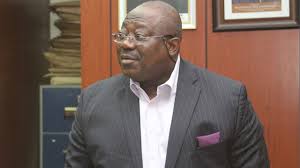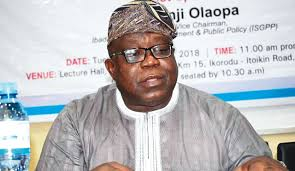







(Being Lecture delivered by Prof. Tunji Olaopa, Guest Speaker, at the Requiem Symposium Organised by the Oyo State Government in honor of former Secretary to Oyo State Government and Head of Service, late Chief Theophilus Akinyele, OON, held on 19 November, 2020, at the Parliament Building, Secretariat, Ibadan)
Just recently, the Government of Oyo State took a significant milestone in administrative history with the summit organized in honor of the recently departed icon, Pa Theophilus Adeleke Akinyele. Notably, Pa Akinyele鈥檚 death was devoid of the usual rancor that attends the funeral plans for a statesman; and second, the funeral transcended the usual fanfare and political jamboree that such deaths turn into. This is because everyone recognized the immense legacy that Pa Akinyele represented, especially with regard to his contribution to the consolidation of the civil service of the Old Western Region, and of the modern Oyo State. And so, the administration of Governor Seyi Makinde immediately recognized that one fundamental way to encode the Akinyele administrative legacy is to hold a summit in his honor. It was a good decision that was executed in grand style. The civil service has a peculiar sense of self-recognition that is instrumental and self-demeaning. Thus, like the Nigerian state herself, the civil service is an institution in dire need of heroes and heroines, but scarcely recognize any. And if the civil servants fail to recognize their own vocational worth, is it any wonder that they become cannon fodder for denigration by politicians?
The Summit was a significant idea that sends fundamental message and large insights to the civil service not only in Oyo state but in the entire Nigerian state. This complements the historic platforms that the Conference of Federal Permanent Secretaries (CORFEPS) and the States鈥� Associations of Retired and Serving Heads of Service and Permanent Secretaries provide for the recuperation of the brand and prestige that are intrinsic to our perception of who we are and how we want the world to perceive us as custodians of societal governance codes and standards. This piece enables me to distill these fundamental insights into the public sphere for critical public education. Chief Theophilus Akinyele was not just your usual civil servant. On the contrary, and like most of his colleagues who molded the golden age of the civil service in Nigeria, he was a unique administrator whose public spiritedness, professionalism and patriotism stood him out as not just one of the last of the pioneers that gave the Nigerian administrative history its celebrated name and its glorious past, but also as the very exemplar of the future of public administration and the civil service in the twenty-first century.
Simeon Adebo, Jerome Udoji, Sule Katagum, Joseph Imoukhuede, Phillip Asiodu, Ahmed Joda, Omo N鈥橭ba Akenzua Erediauwa, Francesca Emanuel, Tejumade Alakija, Gray Longe, Ason Bur, Theophilus Akinyele, Jonah Ogbole, and the rest of the first and successor generation of Nigerian civil servants were trained by the British bureaucratic elites, and hence inherited the Victorian ideals and moral codes that underlie the British administrative tradition, with its elitism and divisive class system. The family was a fundamental moral foundation of the Victorian British, and they developed a moral code founded on gentlemanliness鈥攕imilar to the Yoruba Omol煤w脿b铆鈥攁nd the imperative of truthfulness, personal responsibility, and public accountability. These values and moral codes easily translate into public institutional morality in terms of an acute sense of duty and work ethic, noblesse oblige, deferred gratification, and integrity of service. There was also significantly a philosophical underpinning about the relationship between the self and service that led to the fascination with the authority of knowledge, integrity and honor as the badge of professionalism. Talents, competence and hard work combined with moral rectitude, godliness and personal discipline to determine success, well-being and career fulfilment.
This was the professional attitude and culture that the Nigerian public servants inherited and carried into the first republic in the 60s and the early 70s. It inevitably led to the glorious infrastructural achievement of these periods, founded on the unstinting professionalism of the pioneer administrators, as well as their deep sense of patriotism to Nigeria and her future. Unfortunately, everything became fractured with the advent of the military, and most significantly, the notorious and debilitating purge of the civil service in 1975. The value of honor in service and the capacity to speak truth to power were eroded, to be replaced by the 鈥淥ga ke pe鈥� culture and the 鈥淚-am-directed鈥� administrative conformism that seriously undermined professionalism and efficiency. A 鈥渟omething-for-nothing鈥� mentality creeped in and created the foundation for the protracted bureaucratic corruption pervasive throughout the service today. The Gandhian seven deadly sins became the 鈥渘orms鈥� in the Nigerian public life: wealth without work, pleasure without conscience, knowledge without character, business without morality, science without humanity, religion without sacrifice, and politics without principles.
What makes the pioneer civil servants like Chiefs Adebo, Udoji and Akinyele exemplary? They denoted the past and signaled the future. Fundamentally, each administrative epoch determines the image of the best public administrator or manager that could best serve the purpose of its governance structure and processes. This is because the image and remit of the public manager is determined by the administrative responsibility demanded by the time and the context within which the public manager is called to serve. And therefore, this understanding of who the public manager is, and her administrative or managerial responsibilities and imperatives, keeps getting transformed by cultural, political, administrative, and professional circumstances and the demands of modern needs. Pa Akinyele and others were adequate for their time. And they give us a deep insight into what is needed for the twenty-first century.
From the ancient Pharaonic Egypt and the old Mosaic tradition to the most philosophical Max Weber, public service was conceived essentially as a vocation, a calling that leverage the deep sense of dedication and selflessness in service to God and humanity. A profession becomes a calling or a vocation when it becomes integrated within an ethical framework and is therefore attached to larger vision and purpose beyond itself. It is in this sense that a public servant is 鈥渃alled鈥� to serve the state and a purpose beyond him/herself. However, and over time, the administrative legacy laid out from the Pharaonic Egypt to the Romans and on to Napoleon became altered into a bureaucratic culture, that Douglas McGregor calls the Theory X determined bureaucratic culture. The Weberian bureaucratic theory laid the foundation of the civil service on a set of legal-rational institutional features鈥攁 neutral, hierarchically organized and efficient organization demanding precision, continuity, integrity, discipline, strictness and reliability.
The Weberian Theory X administrative tradition determined the civil service culture of the twentieth century, but that is as far as it could go. Its transactional basis is not sufficient to meet the challenges of an emergent knowledge society and its technology-enabled infrastructural sensibility. McGregor鈥檚 Theory Y provides the basis of the new administrative leadership鈥攁n administrative leadership with a transformative capacity to manage the new public service and its managerial responsibilities. The twenty-first century public administrator is circumscribed by what has been called a VUCA environment鈥� volatility, uncertainty, complexity and ambiguity. And this is even more so as these four elements would have to be managed in a democratised governance context within which citizens have become more sophisticated and participatory. Thus, the public manager must conceptually substitute management for administration in order to understand the governance dynamics that requires more than the state but also non-governmental and non-state actors to configure what good governance means.
The other requirement is more than conceptual. It is a reform-mindedness that substitute the bureaucratic system with a more flexible efficiency-focused, technology-enabled, performance-oriented and cost-effective means of achieving a more democratic service delivery. This implies not only contending with the transformation of government into an open one, with more transparency that allows citizens to participate, but also the emergence of artificial intelligence, robotics, the Internet of things, management cybernetics, etc. which threaten workplace composition and the dynamics of the public administration system. This fundamentally implies that the twenty-first century public administrator must give up the mechanical 鈥淚 am directed鈥� mentality, and become many things at the same time: a learner, thinker, strategic partner, entrepreneur, a coach, and technology-conscious.
First, the public manager of the twenty-first century will have to bring multiple perspectives to policy challenges and public service delivery using foresight techniques to test different scenarios, and building resilience into policy design from potential shocks and unforeseen events. This will require the public manager to build the skills of public servants he or she will be managing to design contracts and to conceive performance indicators that are able to track value for money, and investment instruments that are flexible enough to adjust in the face of recurrent and new challenges. The emergent public manager is also confronted by the urgent need for adopting new and creative stakeholders鈥� engagement skills that not only achieve targeted interventions, but also work at transforming public behavior, via strategic communication, towards the achievement of desirable outcomes that impact the entire populace and move good governance forward. One strategic stakeholder in which the public manager is enmeshed is the industrial relations system which must also be brought into a deep-seated re-engineering to remove deadwoods and achieve national productivity through cost reduction and a competitive wage policy.
The new public manager will be faced with the imperative of establishing and managing new contractual relationships with third party service providers through service contracts, grants to non-profit organisations, social impact bonds, and the public-private partnerships (PPPs) which require a range of commercial, legal and regulatory skills, knowledge of market dynamics, and the way firms operate, how to design and manage contractual relationships in ways that provide value to all parties especially the public, and new skills to regulate crises-prone market behaviour. Lastly, the public administrator will need to develop skills and competences that speak to the dynamics of change management, including network management skills, partnership development, knowledge management and sharing, the incubation of social innovation, partnership development around open government data; framing issues around results, and so on. This speaks to a critical skill of citizen engagement, and a focus on such tools as the social media, crowd-sourcing, performance challenge prizes, ethnography, opinion research, branding and user data analytics.
I sincerely hope this opportunity to reflect on the personality and public service trajectory of Pa Theophilus Akinyele will serve also as an urgent call to most critically examine the basis of our public service system, the paradigm shifts it badly needs, the compelling need to change the intellectual bases of the professional skills for running government, and the dynamics that motivate the profession, as basis for reflection on where we are now in terms of the relationship between the public service and our productivity and national infrastructural development trajectory, so we could come more definitively to a conclusion and decisive change action frame about what is wrong and what we have to do to correct the dysfunction in the system.
Prof. Tunji Olaopa
Retired Federal Permanent Secretary
& Professor of Public Administration,
National Institute
For Policy and Strategic Studies
(NIPSS), Kuru, Jos