









There are moments when development conversations stop sounding like routine government engagements and begin to reflect something more deliberate and structural.
The recent rail strategy co-creation sessions organised by the South West Development Commission (SWDC) felt very much like such a moment.
What stood out was the repeated emphasis on preparation, institutional readiness and the need for government to understand infrastructure not merely as construction, but as a long-term economic system requiring coordination, commercial logic and strategic planning.
Across the engagements held on May 19, following earlier discussions on May 18 and culminating in an extensive rail corridor inspection tour on May 20, one phrase surfaced repeatedly.
The need to become an 鈥渋ntelligent client鈥�.
The expression came up so frequently that it eventually began to define the tone of the entire exercise. Discussions consistently returned to the importance of understanding financing structures before pursuing projects, anticipating investor concerns before negotiations begin, and developing commercially viable frameworks before committing resources.
Participants repeatedly stressed that successful infrastructure systems are rarely built on engineering alone. They depend equally on preparation, governance structures, policy alignment and institutional coordination.
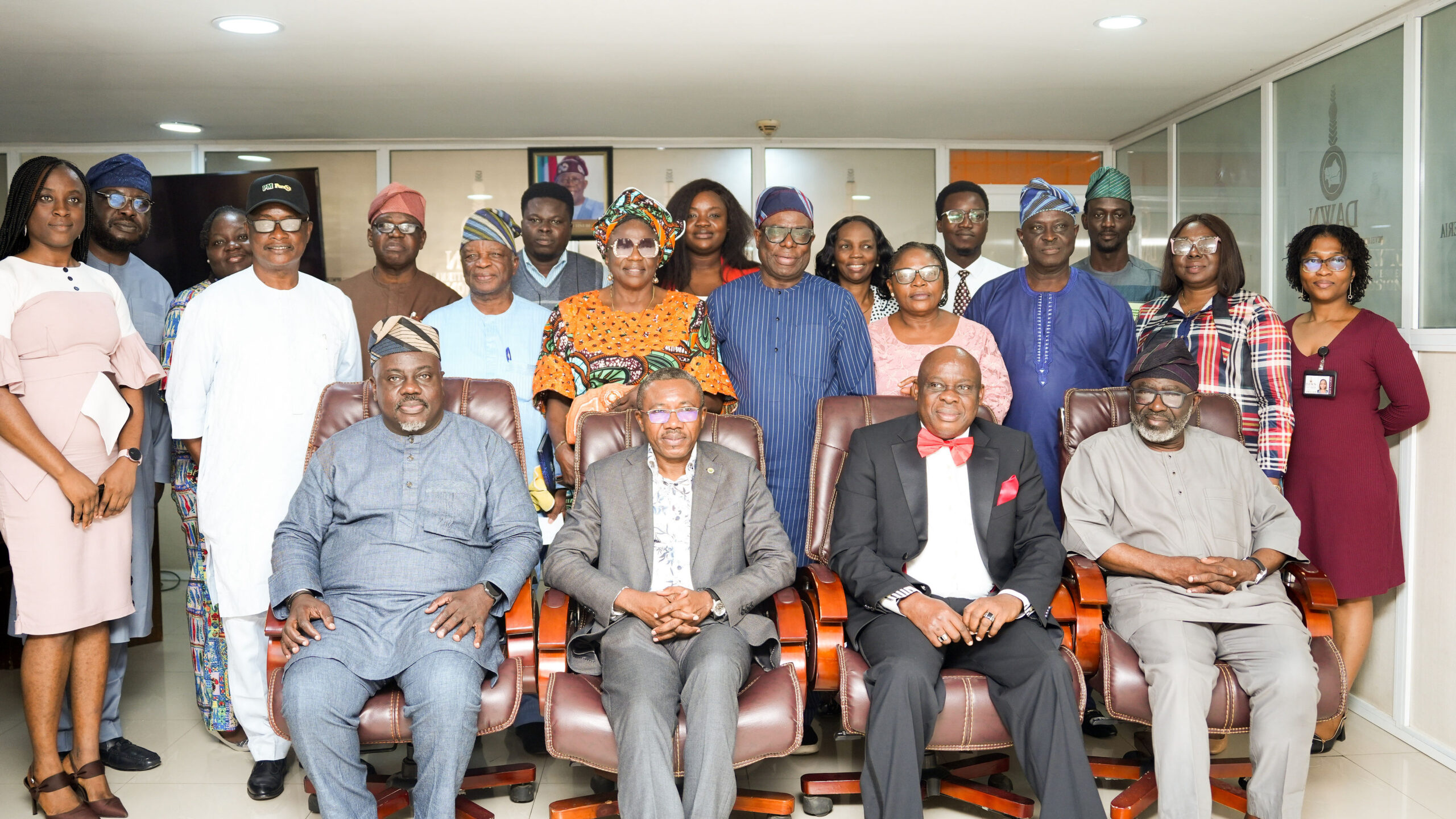
The sessions brought together SWDC management and technical officials, led by the Managing Director, Dr Charles Akinola, representatives of Odu鈥檃 Investment Company Limited, the South-West Governors鈥� Forum, Development Agenda for Western Nigeria (DAWN) Commission, Southwest Agribusiness Company Limited (SWAgCo), the Nigerian Railway Corporation (NRC), independent rail consultants and other stakeholders interested in the future of regional logistics and economic integration.
What gradually emerged from the conversations was a framework that appeared to go well beyond rail transportation itself.
At the centre of that thinking was the question of how the South-West can reorganise the movement of goods, industrial activity and regional commerce around a more integrated logistics system.
The South-West remains Nigeria鈥檚 most economically active regional bloc. Lagos serves as the country鈥檚 commercial gateway, Ogun continues attracting manufacturing investments, while Oyo increasingly positions itself as a logistics extension corridor. Osun, Ondo and Ekiti also possess considerable agricultural and mineral resources capable of supporting wider industrial expansion.
Yet despite that economic concentration, movement across the region remains overwhelmingly dependent on roads, with the consequences visible in port congestion, deteriorating highways, rising haulage costs and increasing pressure on industrial supply chains.
The question therefore is no longer whether rail matters. The more important question is whether the South-West can build an integrated movement system in which ports, industrial corridors, agricultural clusters, freight terminals and logistics hubs function as parts of a coordinated regional economy.
That broader ambition appeared to shape much of the conversations.
One phrase repeatedly used during the sessions was the 鈥渞ailway encirclement鈥� of the South-West economy.
At first hearing, the expression sounded somewhat expansive. After the field tour, however, its practical meaning became considerably clearer.
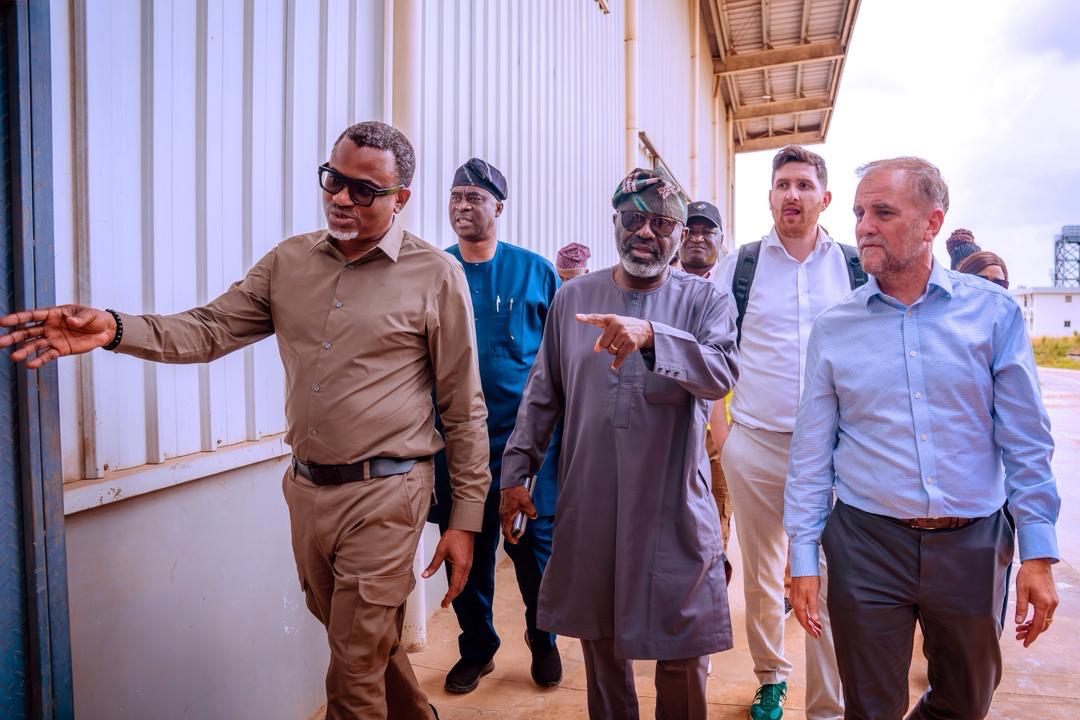
Participants travelled through sections of the NRC鈥檚 standard gauge rail network, visiting strategic freight and industrial facilities including the Papalanto Freight Yard in Ogun State, the Lafarge cement facility at Ewekoro, the Moniya Freight Yard in Oyo State and later the Lagos Port Freight Yard in Apapa.
Together, the visits revealed an existing but significantly underutilised logistics spine already cutting across major economic zones within the region.
The tour also challenged the widespread perception that freight rail operations are largely absent in Nigeria.
Beyond the areas covered by the standard gauge rail network in the South-West, cargo services presently move from Ibadan through Osogbo in Osun State and onward to Ilorin in Kwara State using sections of the existing narrow-gauge network.
At Papalanto and Ewekoro, stakeholders were shown how cement products are already being transported through the standard gauge rail channels, while gypsum, timber and other industrial materials also feature within existing freight operations.
At Moniya, participants observed how rail-linked freight arriving at the terminal is subsequently distributed by trucks into surrounding commercial corridors. Although some loading operations presently remain manual, there are expectations that increased mechanisation may emerge over time.
What became increasingly evident throughout the tour was that substantial infrastructure already exists. The larger challenge appears to lie in creating the institutional, commercial and policy framework capable of maximising the economic value around those corridors.
Officials repeatedly clarified that SWDC does not presently intend to build rail lines directly. Rather, its current thinking appears focused on positioning the South-West to benefit from the Federal Government鈥檚 broader railway master plan, which envisages eventual standard-gauge connectivity across the region and beyond.
Much of the Commission鈥檚 attention therefore appears directed towards corridor development, logistics integration, land management and investment readiness.
Land itself featured prominently during discussions.
Participants repeatedly referenced the strategic importance of railway right-of-way corridors already secured over several decades. Those corridors represent more than transportation routes. They are also valuable land banks capable of supporting industrial parks, logistics centres, warehousing facilities, agro-processing hubs, dry ports and wider commercial ecosystems.
In many advanced rail economies, the railway serves as only one component within a much larger development architecture, with substantial economic value often created around industrial and commercial activity connected to the transport system itself.
Several participants argued that the South-West possesses a unique opportunity to leverage those existing land assets more strategically.
Perhaps the most intellectually engaging aspect of the sessions was the consistent emphasis on preparation before execution.
Throughout the engagements, discussions repeatedly returned to project preparation, transaction structures, policy coordination, investor confidence, operational realities and long-term sustainability.
The underlying argument was that governments and public institutions must first understand infrastructure projects commercially, institutionally and operationally before attempting implementation.
One participant described the process as spending time and resources on 鈥渟mart thinking鈥� early enough to avoid significantly larger costs later.
That philosophy appeared to shape much of the wider conversation.
Major infrastructure projects often struggle not because of engineering limitations, but because implementation begins before issues involving financing, land administration, operational structure, regulation and commercial viability are sufficiently resolved.
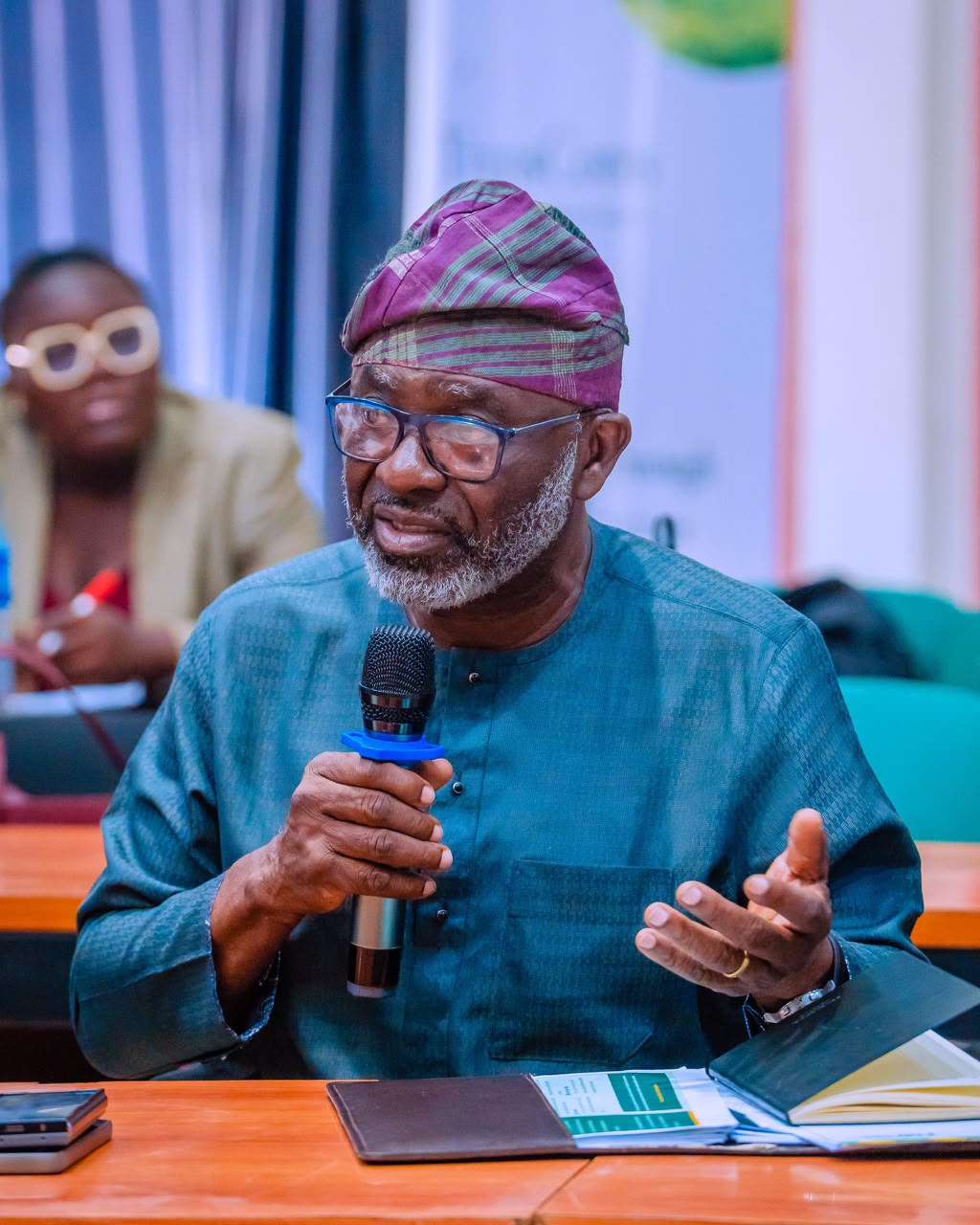
Economist and former presidential adviser, Dr Doyin Salami, offered one of the more thought-provoking interventions during the sessions.
He argued that although the South-West functions geographically as a regional bloc, its states still often operate independently in ways that weaken collective economic coordination. Rail development, he suggested, could provide a platform for greater alignment.
According to him, serious private investment into rail-linked infrastructure will likely depend on coordinated policy arrangements and stronger regional cooperation.
He also raised the possibility of South-West governments leveraging the strength of their combined balance sheets to support sovereign guarantees capable of reducing investor risks and improving project bankability.
Another notable consensus that emerged early in the discussions was that cargo matters.
Passenger rail naturally attracts public attention, but freight rail drives industrial economics.
During the tour, participants were repeatedly exposed to the scale advantages associated with freight movement by rail.
Stakeholders heard that a single locomotive can haul the equivalent of roughly 60 trailers simultaneously, significantly reducing pressure on highways while lowering transportation costs for manufacturers and large-scale industrial operators.
At Papalanto, discussions highlighted how one train movement could transport approximately 1,200 bags of 50kg cement per wagon across as many as 23 wagons operating within a single formation.
The implications for industrial logistics are substantial: fewer trucks on highways, lower cargo movement costs, reduced road deterioration and greater efficiency across manufacturing and distribution networks.
The rail advantage becomes even more significant when viewed across sectors such as cement, agriculture, timber, petroleum products and bulk industrial materials.
The presence of international rail experts added another layer to the discussions.
Among them were Steve Long and Jan Tindall, both working with the United Kingdom鈥檚 Crossrail.
Crossrail, now widely recognised through London鈥檚 Elizabeth Line, represents one of Europe鈥檚 most ambitious rail and urban mobility projects, developed to improve movement across London and its surrounding regions through integrated rail infrastructure and operational coordination.
The project involved not only major engineering complexity, but also extensive work around land management, financing structures, stakeholder coordination and long-term economic planning.
Beyond the United Kingdom, Crossrail-related expertise has also extended into advisory engagements internationally, including ongoing rail and infrastructure-related work in South Africa.
Their presentations during the sessions extended beyond technical engineering discussions and focused more broadly on governance, planning discipline, commercial preparation and institutional coordination.
Steve Long repeatedly stressed the importance of investing heavily in front-end project preparation.
His argument was that resources spent properly preparing infrastructure projects are often far lower than the eventual costs of correcting avoidable mistakes after implementation begins.
He also expressed surprise at some of the strategic advantages already available within the South-West, particularly the existence of direct rail connectivity between major economic centres within the same regional bloc.
Perhaps more significantly, he observed that substantial expertise already exists within Nigeria鈥檚 rail sector, suggesting that the larger challenge lies less in technical capability and more in creating systems capable of supporting effective execution.
The visits to Papalanto, Moniya and Apapa ultimately offered practical illustrations of rail鈥檚 wider commercial potential.
At Papalanto, participants examined how freight infrastructure already supports industrial operations around the Lafarge ecosystem.
At Moniya, discussions focused on the role freight terminals could play in supporting distribution networks extending across the South-West and into northern markets.
At Apapa, the emphasis shifted towards port logistics and the long-term importance of integrating maritime and rail systems more effectively.
As discussions progressed, one point became increasingly difficult to ignore: rail does not replace roads.
Efficient logistics systems require both to function together.
The objective is not competition between transport modes, but integration.
Perhaps the most striking aspect of the engagements, however, was not the trains, stations or freight terminals themselves. It was the nature of the questions being asked.
How do governments create confidence for investors?
How do regional institutions coordinate effectively?
How do existing public assets become commercially productive?
How do transportation systems support wider industrial development?
How do six states pursue common economic priorities without undermining individual interests?
These are not small questions, and they cannot be answered through rail construction alone.
The recent sessions suggested that SWDC increasingly understands this reality.
Whether that understanding ultimately translates into successful execution remains uncertain. Nigeria鈥檚 development history naturally encourages caution, particularly given how many ambitious infrastructure visions have struggled under the weight of politics, bureaucracy, institutional inconsistency and financing constraints.
Still, there was something notably different about the tone of these conversations.
The emphasis was not on ceremonial announcements or promises of instant transformation.
It was on preparation, coordination, systems thinking and institutional readiness.
And perhaps that is where the most important work may already have started.
Ladigbolu is a journalist based in Lagos.