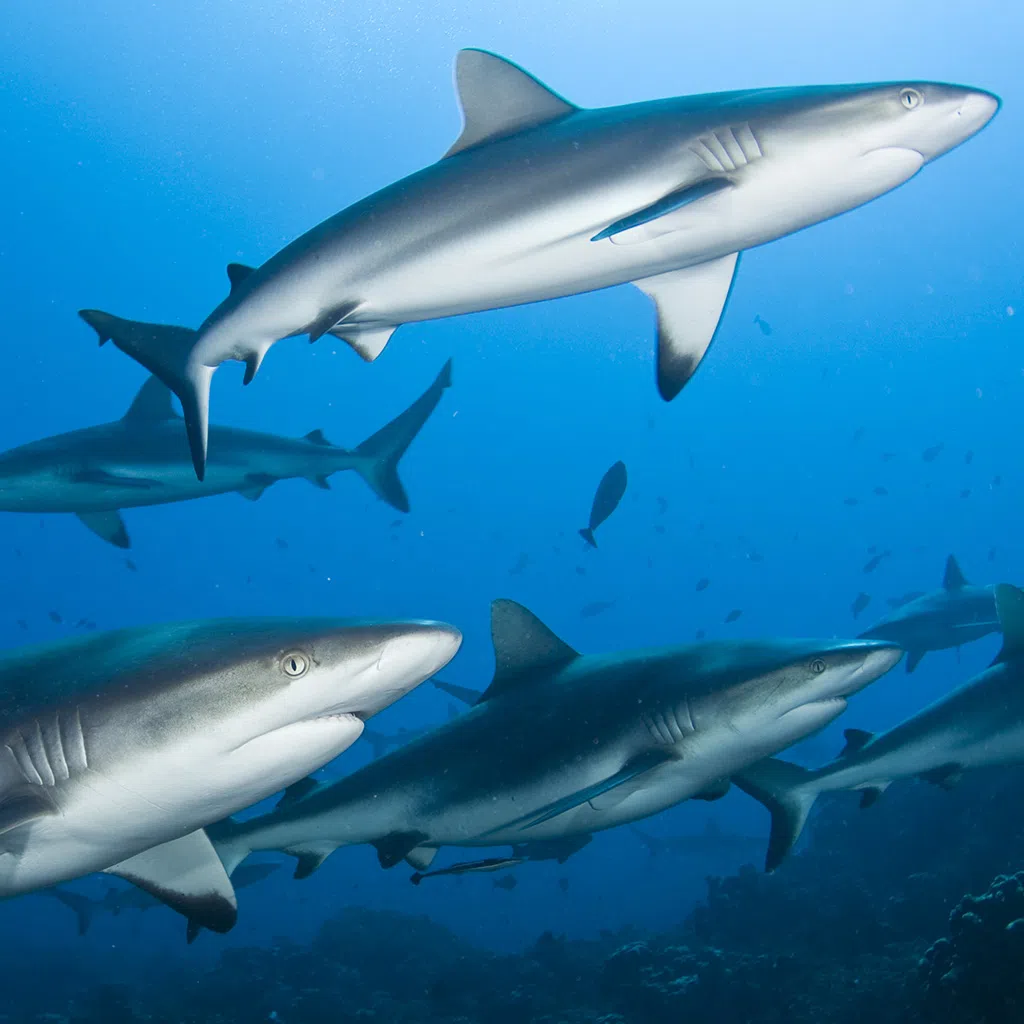







Brazilian scientists have discovered traces of cocaine, caffeine and common painkillers in sharks swimming in waters around The Bahamas.
According to a report by the New York Post on Thursday, the findings are not the result of deliberate exposure but are linked to increasing marine pollution, as detailed in a study published in the journal Environmental Pollution.
The researchers wrote: 鈥淧harmaceuticals and illicit drugs are increasingly recognised as contaminants of emerging concern (CECs) in marine environments, particularly in areas undergoing rapid urbanisation and tourism-driven development.鈥�
To determine the extent of contamination, the team analysed blood samples from 85 sharks around Eleuthera, one of the country鈥檚 more remote islands.
The specimens were tested for both legal and illegal substances.
Of the samples analysed, 28 sharks across three species tested positive for drugs, with caffeine being the most commonly detected substance.
This was followed by acetaminophen and diclofenac, the active ingredients in widely used painkillers such as Tylenol and Voltaren.
Two sharks tested positive for cocaine, which researchers attributed to possible ingestion of drug packets that may have entered the ocean.
Explaining the likely source of contamination, a study author, Natascha Wosnick of the Federal University of Paran谩, said: 鈥淚t is mostly because people are going there, urinating in the water and discharging sewage into the sea. Sharks often bite objects to investigate them and end up being exposed.鈥�
The researchers noted that the affected sharks were sampled from popular tourist and diving locations, suggesting exposure to wastewater from boats and coastal urban development.
While the exact impact of these substances on shark behaviour remains unclear, the study found changes in metabolic markers in contaminated sharks, indicating physiological stress.
An oceanographer, Tracy Fanara, who was not involved in the study, explained that such exposure could force the animals to expend more energy trying to metabolise pollutants, thereby increasing stress levels.
The report added that this is the first time cocaine has been detected in sharks in the Bahamas. Although trace amounts had previously been found in sharks in Brazil, this is also believed to be the first recorded instance of sharks testing positive for caffeine anywhere in the world.