









By Efa Sunday
In a one-day strategic meeting organised in Ibadan on Tuesday, the Reproductive Justice Initiative Foundation (RJIF) called on the Federal Government to expand the Lagos State Guidelines on Safe Termination of Pregnancy (SToP) to accommodate certain fetal abnormalities, threats to the life of the mother, and mental health concerns, especially in situations where the fetus is endangered.
RJIF made this call during an engagement seminar on improving stigma-free reproductive care and access to safe abortion for survivors of gender-based violence (GBV).
The organisation highlighted situations such as incest, rape, defilement, and sexual violence as cases that should be considered for the legal termination of unplanned pregnancies.
Speaking at the event, the founder of RJIF, Mr. Olasupo Bada, maintained that the reproductive rights of women and girls remain a health and dignity issue.
鈥淩estrictive laws do not stop abortion; they only make it unsafe. We are not saying that the government should open the doors to abortion for all. We are only saying that in cases like incest, rape, defilement, and sexual molestation, a woman should have the right to choose whether to keep the child or terminate the pregnancy.
鈥淲e have heard too many stories of mothers who were subjected to inhumane living conditions simply because the child they birthed was a product of rape. Nigeria, as a nation, is a signatory to the Maputo Protocol, which is one of the key legal instruments we are using to support our case. This protocol aligns with global human rights standards.
鈥淚t also draws strongly on Articles 16 and 18(3) of the African Charter. We are, therefore, urging the government to get it right from the source by enacting supportive legislation so that women and girls can access safe abortions and avoid unqualified practitioners,鈥� he said.
Meanwhile, the co-convener of RJIF and representative of the Ministry of Justice, Mrs. Modupe Awosemusi, identified gaps in the law.
鈥淔or a woman carrying a pregnancy where the fetus is endangered, the law does not cover that aspect. If this is discovered during the pregnancy, the law does not accommodate termination,鈥� she said.
Awosemusi expressed concern over deaths resulting from unsafe abortions, stating: 鈥淢orbidity and mortality rates have increased by 20% over the last five years due to procedures performed by unqualified practitioners.”
She added: 鈥淔or me, abortion law is a postponement of a death sentence for women and girls. Even as we speak, there are women and girls in Nigeria currently undergoing abortions. If things go wrong and a woman dies, or her womb is permanently damaged, wouldn鈥檛 it have been better if she had access to safe termination of unwanted or unplanned pregnancies?鈥�
The Lagos State Guidelines on Safe Termination of Pregnancy for Legal Indications became operational in June 2022 after Governor Babajide Sanwo-Olu assented to them. However, about a month later, the guidelines were abruptly withdrawn without explanation. They had been issued to give effect to Section 203 of the Criminal Law of Lagos State, 2015.
Following the withdrawal, RJIF filed an appeal in 2025 at the Federal High Court in Abuja to review the Lagos court judgement of 2015.
While critiquing the pending appeal, an Abuja-based legal expert, Mr. Babajide Babatunde, who joined the seminar virtually, analysed Nigeria鈥檚 reproductive health and abortion laws, noting strengths and weaknesses in the motion. He urged the claimants to close all legal loopholes to ensure a smooth hearing at the higher court.
Another speaker, Prof. David Enyongdi, in a presentation titled 鈥淚mproving Access to Safe Termination of Unplanned Pregnancy through Strategic Litigation: Suspended Lagos State Guidelines on SToP,鈥� said: 鈥淭he withdrawal of the Lagos State Guidelines has further undermined the dignity of women and is putting more lives at risk.鈥�
Citing India as an example, the professor urged the Nigerian government to take a cue from the Asian country, which not only protects the right to life, meaning mere survival, but also enacts legislation guaranteeing the quality of life for its citizens.
In conclusion, Bada called for strengthened collaboration among stakeholders, both state and non-state actors, as well as all members of society, to achieve stigma-free reproductive care and safe abortion access for survivors of sexual and gender-based violence.
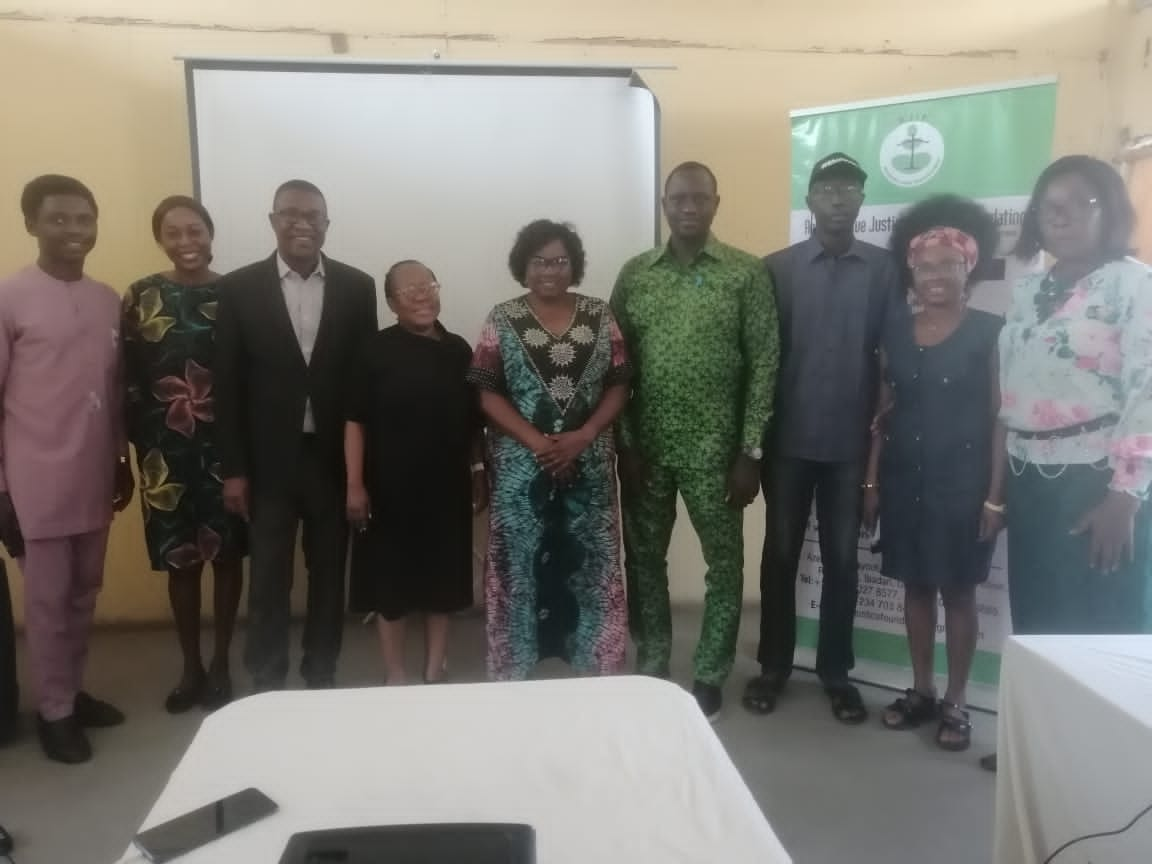
The seminar drew participants from across the legal profession, media, civil society organisations, and other relevant sectors.