





Akinwande Soji-Ojo
The Head of the Civil Service of the Federation (HCSF), Esther Walson-Jack, has admitted that her office failed to properly verify documents submitted by the controversial Presidential Foreign Intervention Promotion Council (PFIPC), acknowledging lapses in the verification process as the House of Representatives continued its investigation into the council’s inclusion in the 2026 Appropriation Act.
Walson-Jack made the admission on Monday while appearing before the House of Representatives ad hoc committee probing the PFIPC controversy and the N1.3 billion allocated to the council in the 2026 budget.
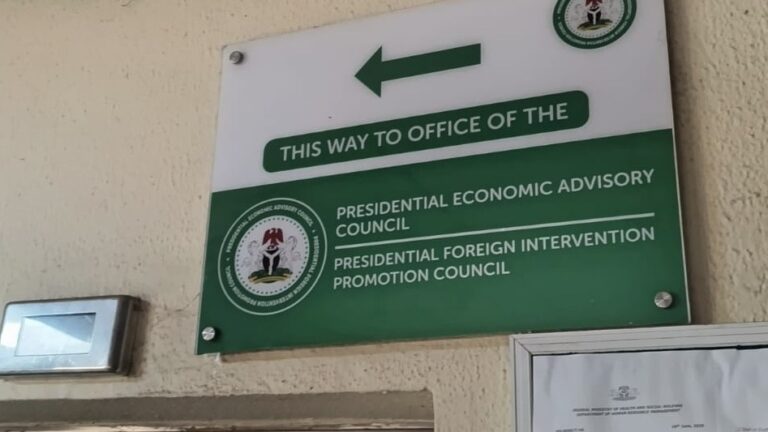
The PFIPC has been at the centre of a major controversy following allegations that it operated as a government agency despite questions over its legal status.
The scandal has also drawn in the Chief of Staff to the President, Femi Gbajabiamila, after Adeniyi Adeyemi, the man accused of operating the council, claimed he was appointed by the presidential aide.
Gbajabiamila has denied the allegation, while the Presidency said the appointment letter bearing his signature was forged. Adeyemi was arrested by operatives of the Police Intelligence Response Team (IRT) in Osun State on July 14.
Testifying before the lawmakers, Walson-Jack disclosed that the office space occupied by the PFIPC at the Federal Secretariat, Phase III, Abuja, was officially allocated to the Office of the Secretary to the Government of the Federation (OSGF), not the council.
“We can state categorically that the Office of the Head of the Civil Service of the Federation did not allocate any office space to the PFIPC,” she said.
She explained that the PFIPC first approached her office on August 6, 2025, requesting approval of its organisational structure.
According to her, the request was initially declined because the council failed to provide the required documents, including an establishment act, an enabling legal instrument or other valid documents proving its legal existence.
Walson-Jack said the council later participated in the 2025 annual workforce projection and human resources exercise, informing the office that it was operating with staff seconded from other government agencies.
She added that the PFIPC subsequently requested an authorised establishment and a recruitment waiver to employ substantive staff, stating that it already had 14 officials, including a director-general.
The HCSF said the council submitted copies of the director-general’s appointment letter and documents indicating it had been assigned a budget code.
Walson-Jack further said the request was processed alongside those of other ministries, departments and agencies and was included in the fourth batch of submissions approved on July 18, 2025, by the permanent secretary overseeing the office during her absence.
She, however, maintained that her office neither allocated office space to the PFIPC nor deployed civil servants to the council.
The HCSF explained that although her office received a request seeking the deployment of officers to the PFIPC, the request was never approved, stressing that staff recruitment and deployment are the responsibility of individual government agencies.
During the hearing, committee member, Hassan Fulata questioned why the Office of the Head of Service accepted the PFIPC’s documents without verifying the authenticity of its purported enabling act.
He argued that no government agency should participate in the budget process without valid legal backing and said officials ought to have verified the documents before assigning a budget code.
Responding, Walson-Jack admitted that her office failed to carry out adequate checks.
She explained that officers who initially reviewed the documents were not lawyers and therefore failed to detect that the purported enabling act submitted by the council was fake.
The HCSF added that she only discovered the irregularity after the controversy surrounding the council’s budgetary allocation prompted her to personally review the documents.
She said the incident exposed weaknesses in the office’s internal processes and had prompted a review of its standard operating procedures.
“We need to have another level of verification. We need to have a lawyer on the team that will receive legal documents so that the lawyer can assess every legal document,” she said.
Walson-Jack added that her office would introduce additional layers of scrutiny before accepting legal documents from government agencies.
“So we concede that we didn’t do the best we ought to have done in cross-checking those documents at the time they were presented,” the HoS admitted.
Walson-Jack also clarified that matters relating to the establishment, supervision and operations of the PFIPC fall outside the statutory responsibilities of the Office of the Head of the Civil Service and rest with the OSGF and other relevant government institutions.
Also testifying before the committee, the Director of Banking Services at the Central Bank of Nigeria (CBN), Abdullahi Hamisu, said two foreign currency accounts were opened for the PFIPC on the directive of the Office of the Accountant-General of the Federation (OAGF).
He said the CBN followed its standard account-opening procedures and did not require an enabling Act before processing the request, adding that the accounts were never funded or operated.
Following the hearing, the committee chairman, Yusuf Gagdi, summoned the Secretary to the Government of the Federation, George Akume; Minister of Budget and Economic Planning, Abubakar Bagudu; Minister of Finance, Taiwo Oyedele; Accountant-General of the Federation, Shamseldeen Ogunjimi; Director-General of the Budget Office, Tanimu Yakubu; Chairperson of the Federal Character Commission, Hulayat Ayo Omidiran; and Chairperson of the National Salaries, Incomes and Wages Commission, Ekpo Nta, to explain the operations of the PFIPC and its inclusion in the 2026 Appropriation Act.