






By Efa Sunday
As Nigeria moves steadily toward another general election cycle, the Peoples Democratic Party (PDP) is battling what many observers now describe as an existential crisis. Once the dominant political force that governed Nigeria for 16 uninterrupted years, is now engulfed in internal conflict, defections, and a deepening leadership vacuum that raises urgent questions about its future as a united political platform and a credible opposition.
The latest turn in the crisis, triggered by a Supreme Court ruling that voided the party鈥檚 previous leadership structure, has not brought the expected clarity. Instead, it has widened existing cracks and set off a fresh struggle for control. Rather than resolving disputes, the judgment created a power vacuum that rival factions have rushed to fill, leaving the party more divided than ever.
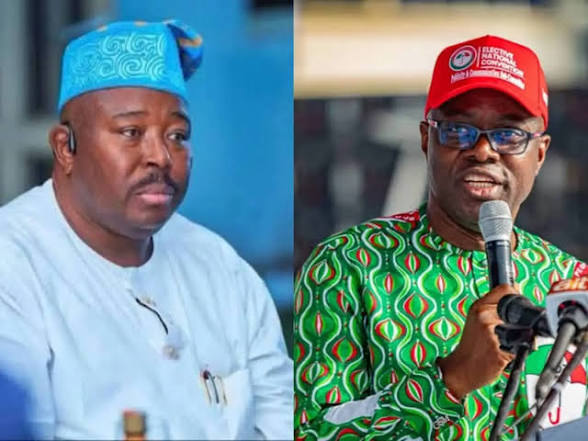
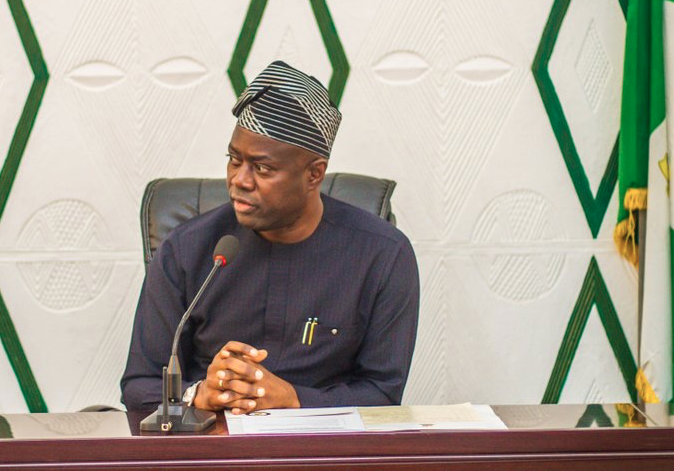
This division played out openly in Abuja, where a bloc aligned with Seyi Makinde announced the constitution of an interim National Working Committee following what it described as the PDP鈥檚 103rd National Executive Committee meeting. At that gathering, the Chairman of the Board of Trustees, Senator Adolphus Wabara, unveiled a 13-member interim leadership team headed by former Minister of Special Duties, Kabiru Turaki. The move, according to its promoters, was aimed at stabilising the party and repositioning it ahead of the 2027 elections.
Makinde acknowledged the severity of the crisis, describing it as the party鈥檚 darkest moment, but expressed optimism that it could mark the beginning of a new order. Turaki, on his part, struck a defiant tone, insisting that the PDP remains alive and capable of reclaiming power. He assured party members that the new leadership would not only stabilise internal structures but also prepare the party to contest and win future elections, including the 2027 presidential race.
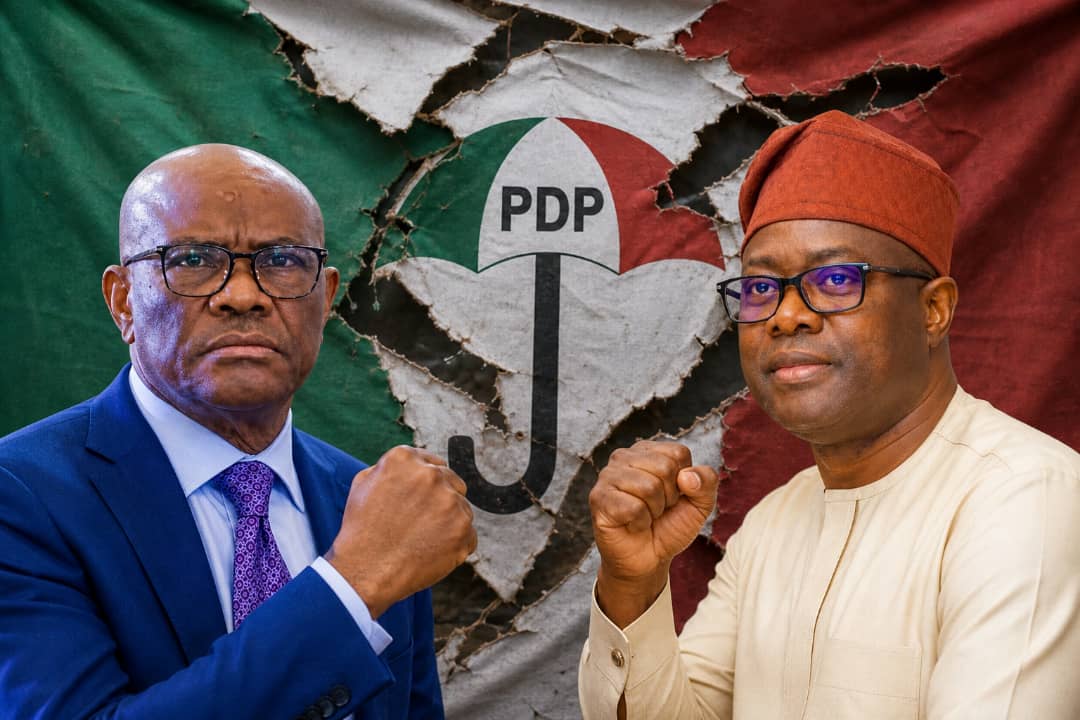
However, the response from the opposing bloc loyal to the Minister of the Federal Capital Territory, Nyesom Wike, was swift and uncompromising. The faction rejected the Abuja meeting in its entirety, describing it as illegal and its outcomes as null and void. It argued that due process was not followed, particularly regarding statutory requirements involving the Independent National Electoral Commission (INEC), and dismissed the legitimacy of both the meeting and the interim leadership it produced.
This latest confrontation underscores a deeper and more troubling contradiction within the PDP. Wike, widely regarded as a central power broker within the party, has maintained a visibly close relationship with President Bola Tinubu of the ruling All Progressives Congress (APC). His open alignment with the president has fuelled accusations from within that he is working against the interests of his own party. For many loyalists, this perceived dual allegiances represents not just a political strategy but a fundamental betrayal that weakens the PDP from within at a critical moment.
Beyond the leadership tussle, the party is also grappling with a steady erosion of its political base. High-profile defections have reduced its influence across key states, while its ability to mobilise effectively at the grassroots has been significantly weakened. The reality that the party now operates with limited control at the state level further complicates its chances of mounting a strong national comeback.
Yet, despite these challenges, there are still pockets of optimism within the PDP. Some stakeholders believe the party鈥檚 long history, nationwide structure, and residual support base provide a foundation for recovery. They argue that with genuine reconciliation, disciplined leadership, and a clear strategic direction, the PDP can still reposition itself as a formidable opposition force capable of challenging the ruling party.
The path to such a recovery, however, is narrow and uncertain. It requires more than setting up parallel leadership structures or issuing competing statements of legitimacy. It demands a sincere effort to resolve internal grievances, rebuild trust among members, and present a united front to Nigerians who are increasingly disillusioned with political instability.
As it stands, the PDP is caught in a struggle that goes beyond politics into the realm of survival. The battle lines are clearly drawn, the factions are entrenched, and the risk of further fragmentation looms large. Whether the party can overcome these divisions and reinvent itself or continue on a path toward irrelevance will depend largely on the choices its leaders make in the coming months.
For Nigeria鈥檚 democracy, the stakes are equally high. A weakened opposition diminishes political competition and accountability, leaving the electorate with fewer viable alternatives. As the 2027 elections approach, the fate of the PDP will not only determine its own future but also shape the broader balance of power in the country鈥檚 political landscape.