Akinwande Soji-Ojo
The Peoples Democratic Party (PDP), once the dominant force in Nigeria鈥檚 political landscape, is now grappling with some of the most turbulent internal battles in its 26-year history. To understand today鈥檚 crisis, one must revisit its genesis in 2022, when disagreements over zoning, party leadership, and presidential ticket choices escalated into open warfare. This was a far cry from the early 2000s when the PDP was the bride sought by every ambitious politician. At its peak, the party confidently boasted that it would rule Nigeria for 60 years, a projection that seemed plausible until its shocking 2015 defeat.
The seeds of discord were sown when the party failed to manage the fallout from its 2022 presidential primary. The emergence of Atiku Abubakar reopened long-standing tensions between northern and southern blocs. The dissatisfaction of some governors, especially the later G5 bloc, deepened the cracks. A former PDP national officer, who asked not to be named, said the party 鈥渘ever fully recovered from the zoning controversy,鈥� adding that 鈥渇rom that moment, trust evaporated.鈥�
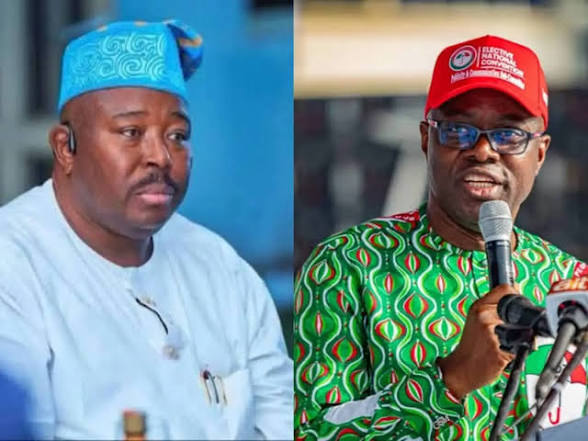
Today, the party is split down the middle. On one end is the faction associated with the newly sworn-in National Chairman, Tanimu Turaki; Oyo State Governor, Seyi Makinde; and Bauchi State Governor, Bala Mohammed. This bloc claims legitimacy through the new National Working Committee (NWC) and argues that continuity is essential for stability. Since his emergence last Saturday, Turaki has maintained that his leadership is constitutional. “We are not fighting anyone; we are only insisting that the PDP must follow its constitution and stop the culture of impunity,鈥�” he recently told reporters.
The Turaki/Makinde/Mohammed group maintains that it is acting to 鈥渞estore order鈥� after years of perceived interference. Makinde, once aligned with the G5, now insists his camp is committed to 鈥渟anity and internal discipline.鈥�
The governor stressed that their struggle is not against the PDP itself, but to avert the emergence of a one-party state in Nigeria.
A senior aide of Mohammed also remarked that 鈥渢he governor is only interested in preserving the PDP from disintegration, not in fighting personal battles.鈥�
On the other side is the faction led by FCT Minister, Nyesom Wike, and former National Secretary, Senator Samuel Anyanwu. Wike insists he is challenging impunity and the alleged hijack of the party. 鈥淪ome people believe they own the PDP more than others,鈥� he said at a recent event. Anyanwu has maintained that attempts to remove him are 鈥渋llegal and vindictive.鈥� Their group also draws strength from former governors and national officers who argue that the real crisis stems from the refusal to conduct a transparent national convention.
The Wike/Anyanwu camp accuses some governors of fueling the crisis for personal ambitions ahead of 2027. A loyalist of Wike, speaking in Port Harcourt, said: 鈥淭his fight is about survival. If we don鈥檛 challenge these governors now, there will be no PDP left to rebuild.鈥�
The battle reached new heights during the controversial convention in Ibadan. While the Turaki/Makinde/Mohammed bloc described it as a legitimate attempt to restructure the party, the Wike/Anyanwu side dismissed it as illegal. The withdrawal of the convention planning committee chairman and Adamawa State Governor, Ahmadu Fintiri, midway into the exercise in Ibadan further heightened the confusion and tension. A former PDP deputy national youth leader, Timothy Osadolor, said the convention 鈥渆xposed the depth of the division.鈥�
Tensions escalated when the Makinde/Mohammed faction announced the expulsion of Wike, Anyanwu, and several loyalists. They claimed the move was necessary to prevent 鈥渢he complete collapse of the PDP.鈥� A member of their camp said Wike鈥檚 cooperation with the APC-led government was 鈥渢he highest form of anti-party behaviour.鈥�
In a counter-move, the Wike faction expelled Makinde, Mohammed, Bode George, and others, accusing them of orchestrating an 鈥渁nti-party activities.鈥� A Wike ally described the expulsion as 鈥渁 message that nobody is bigger than the party.鈥�
The implications of this prolonged crisis extend far beyond Abuja. In Ekiti and Osun, where governorship elections are approaching, party members fear disastrous consequences. Political analyst Dr. Kola Ayorinde warns that 鈥渇actional candidates, litigation, and multiple congresses will cripple the PDP鈥檚 electoral chances.鈥� In Osun, Governor Ademola Adeleke faces greater danger. A PDP chieftain in the state said, 鈥淚f we go into that election with two or three factions, the APC will defeat us easily.鈥�
Stakeholders and political observers have expressed growing concern. Some argue that the fight is driven by control over party structures ahead of 2027. Professor Aisha Abubakar, a political scientist, says the PDP crisis reflects 鈥渁 deeper structural sickness in Nigerian political parties,鈥� adding that 鈥渢he godfather culture and weak internal democracy make conflicts inevitable.鈥� Another analyst, Jide Ologun, believes the party has 鈥渓ost its moral authority to challenge the ruling APC while battling itself.鈥�
Elder statesmen within the party have called for urgent reconciliation. Former Senate President, Bukola Saraki, warned that 鈥渢he party is heading towards self-destruction unless compromise prevails.鈥� However, each faction continues to harden its stance, and several attempts at mediation have collapsed.
Civil society groups argue that the PDP鈥檚 troubles mirror a wider crisis in the political system. They warn that without reforms, 鈥渢he PDP may become a symbol of what happens when a once-mighty party refuses to adapt,鈥� as stated by a coalition of democracy advocates.
As 2027 approaches, the path forward remains uncertain. Can the party reconcile its warring factions before the next general election? Will litigation, expulsions, and parallel conventions weaken the PDP beyond repair? Or will everything, once again, come down to a last-minute settlement as election pressures mount?
These questions linger, reflecting the deep uncertainty surrounding the party鈥檚 future. What is clear, however, is that the PDP stands at a critical crossroads鈥攊ts decisions in the coming months will determine whether it regains relevance or continues its descent into political fragmentation.