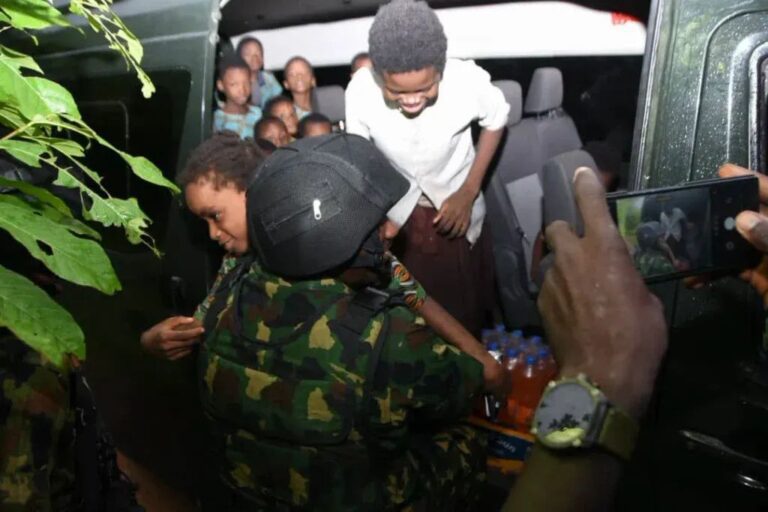
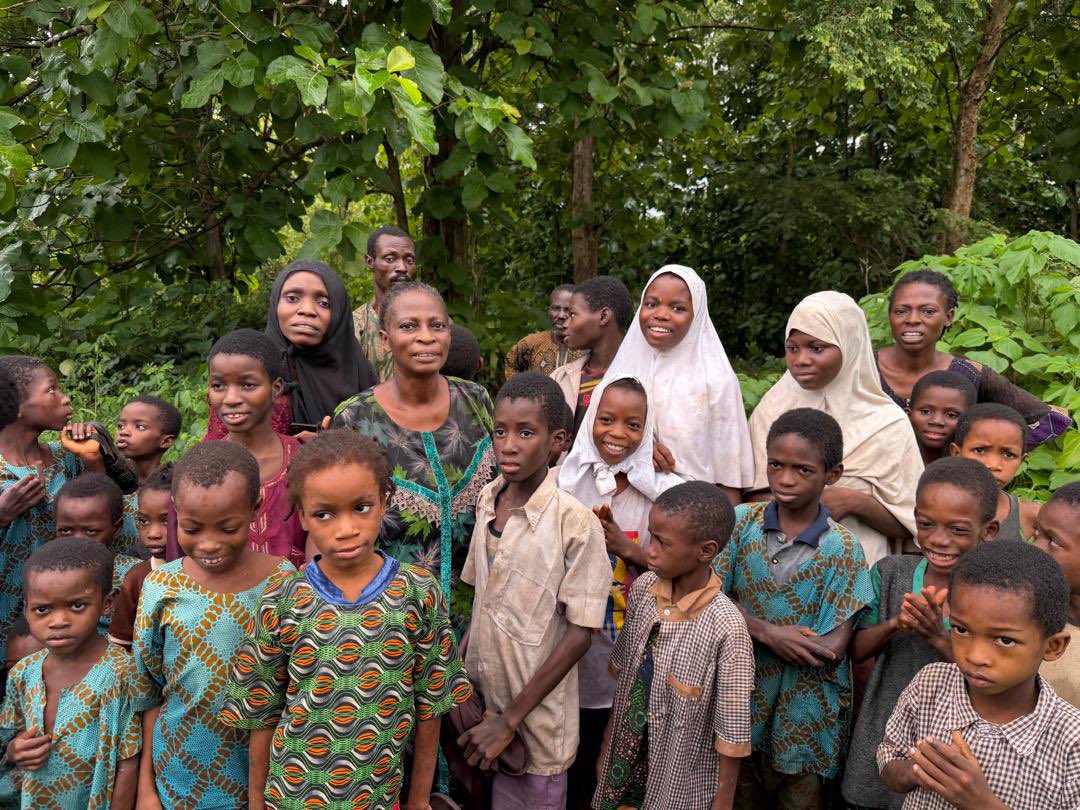
It is Monday morning. Somewhere in the forests bordering the Oyo National Park, children who should be sitting for examinations are sitting in terror. Teachers who should be standing in front of Boards teaching are kneeling before gun-wielding men (or boys). A school headmaster who dedicated his life to moulding young minds has been beheaded and a video of his killing distributed on social media as a deliberate taunt to a Nigerian state that has, once again, looked away. This is not Zamfara. This is not Katsina. This is Oyo State. The South-West region. And the wall has finally been breached.
At approximately 9:00 a.m. on Friday, May 15, 2026, armed terrorists on motorcycles descended on three schools in Oriire Local Government Area of Oyo State: Baptist Nursery and Primary School, Yawota; Community Grammar School, Ahoro-Esiele; and L.A. Primary School. According to the traditional ruler of the community, the Eleshi Ele of Esiele, Oba Tajudeen Abioye, the attackers arrived on eight motorcycles, two men to each bike. They struck in broad daylight, during morning assembly, not as shadows operating under cover of darkness, but as a force fully confident that no one would stop them. In the process, they killed the Assistant Headmaster of L.A. Primary School, Mr Joel Adesiyan. An Okada rider who resisted the seizure of his motorcycle was also shot dead. Pupils, students, and teachers were then marched at gunpoint into the surrounding forests. Among the abducted were the principal of Community High School, Ahoro-Esiele, Mrs F.R. Alamu, and a Baptist school teacher, Temitope Mary Dahunsi.
Distress videos have since gone viral. In one, Mrs. Alamu speaks from captivity, appealing to President Bola Tinubu, Governor Seyi Makinde, the Christian Association of Nigeria and all Nigerians to secure their release before lives are lost. In another, Dahunsi says the children have not stopped crying since Friday. Then came the most chilling update on Sunday: one of the abductees a headmaster, beheaded with his death recorded and released. As of this writing, there has been no full-scale emergency response commensurate with that reality.
This is the question that must be asked loudly, without diplomatic softening: WHERE WAS EVERYONE?
Eyewitness accounts confirm that police arrived approximately two hours after the attack, by which time the attackers had melted into the forests bordering the Oyo National Park. Two hours. In those two hours, the abducted school children were marched deeper into captivity. A headmaster’s life was sealed. And the terrorists demonstrated, yet again, that they own the forest and the timeline. Where was Amotekun Corps? Where was the Civil Defence Corps? Where, critically, are the federal forest guards reportedly recruited to secure Nigeria’s forest reserves; the very corridors through which these bandits now move with lethal ease? Perhaps the National Park Service (NPS) guards are still reeling from the aftermath of the January 7 incident that witnessed a deadly attack by suspected bandits on their Oloka Office, in the same Orire Local Government Area of Oyo State.
Almost a year ago, the Oyo State Government announced the purchase of two DA 42 MNG Intelligence, Surveillance and Reconnaissance aircraft at a cost of N7.7 billion, fitted with technology for aerial surveillance across vulnerable corridors linking Oyo and Kwara States. Were those aircraft airborne on Friday morning? Were they deployed? The families of the victims deserve immediate answers not conjectural postulations.
This recent attack did not arrive without warning. In January 2026, the suspected bandits that attacked the Oyo National Park at Oloka, in the same Oriire LGA, and killed five forest rangers during the attack had sent written notices in English and Yoruba to communities in Oriire LGA, announcing further attacks. Those notices were received. Apparently filed. Four months later, they came back and took the children. When communities receive credible written threats from armed groups and the State fails to deploy preventively, that is not an intelligence failure, it is a failure of political will. Even more disturbing is the revelation that the nearest police station to the affected community is reportedly two hours away, an astonishing indictment of Nigeria鈥檚 rural security architecture.
Governor Makinde has correctly noted that intensified military pressure on terrorists in the North-West is pushing them southward. He is right. This is textbook displacement where you squeeze the balloon in one theatre, it expands into softer terrain. The South-West has become that softer terrain. The UNDP posits that violent extremism costs African countries $97 billion each year; The African Development Bank (AfDB) in 2024 announced that the annual cost of insecurity at around 2.4 per cent of GDP. To make matters worse, Nigeria ranks as the 4th most impacted country by terrorism globally, according to the Global Terrorism Index 2026. And yet, as the balloon expands south, we were not ready for the expansion. Unbelievable!
Let me say plainly what polished statements will not: terrorists do not respect age. They do not recognise the innocence of a child or the vulnerability of a teacher. The pattern from the North-East; Borno鈥檚 Chibok in 2014, Yobe鈥檚 Dapchi in 2018, Kwara鈥檚 Eruku (North-Central) in November 2025 and now this one in the Southwest tells us exactly what happens in prolonged captivity. The girls face sexual violence, forced marriage, and psychological destruction; the boys face forced conscription torture and sodomy and adults face execution when they cease to serve as bargaining chips. More than 1,680 schoolchildren have been kidnapped in Nigeria since the 2014 abduction of 276 schoolgirls from Chibok in Borno State; each number was once a name, a family, a future.
The Southwest cannot simply allow Oriire to simply become another entry in that catalogue of national shame.
Time is not neutral in a kidnapping. Every hour without a credible rescue operation deepens trauma, raises mortality risk, and emboldens the abductors. The beheading of a headmaster while Nigeria’s political class is consumed by primaries and 2027 positioning is a brutal signal that these captors are not waiting. The Afenifere leader, Pa Reuben Fasoranti who marked his 100th birthday the same week these children were taken has described Yorubaland as now under siege. The Alaafin of Oyo, Oba Akeem Owoade, has called for the government to abandon reactive approaches and build intelligence that pinpoints threats before they materialism. The Senate Leader, Opeyemi Bamidele, has also called the abductions an attack on the future of Nigeria.
These words are appreciated but they are just simply what they are- words; and we would still hear more. The victims, relatives and affected families have had enough words. What they need is a clear-cut series of operations and structural reforms that makes these operations possible. Simply put; they need their children, mothers, sisters, fathers and brothers back, safe and sound.
Here is what must happen, beginning now! The rescue of the Oriire captives must be treated as a national emergency. The President should personally convene an emergency security council session, place the full weight of Nigeria鈥檚 military and intelligence architecture behind this operation, and appoint a dedicated crisis coordinator with direct reporting lines to the Presidency. Families deserve operational updates every 24 hours, not carefully worded press releases.
Three suspected kidnappers have already been killed by security operatives in Oyo State, according to Governor Seyi Makinde. That response deserves recognition. But reactive policing alone will never solve a crisis that has become deeply structural. Until Nigeria becomes proactive rather than reactive, these tragedies will continue.
Federal forest guards must be immediately deployed across every major forest buffer zone in the South-West. The Oyo National Park and the Omo Forest Reserve in Ogun State are obvious strategic priorities. These areas require trained, fully armed, technologically equipped personnel with clear operational authority, not underpowered rangers carrying whistles, dane guns, or pump-action rifles.
The Amotekun Corps must also be strengthened, not merely celebrated in political speeches. Reports of institutional friction, underfunding, and operational marginalisation of some Amotekun operatives represent a serious strategic liability at precisely the wrong moment. This Corps was created for moments like this. It should be properly funded, equipped with modern surveillance technology, and empowered to operate effectively within forest corridors, not confined primarily to highways and checkpoints.
All security intelligence relating to written threats, community warnings, and bandit communications in Oriire and neighbouring local government areas must be urgently reviewed and acted upon. The failure to convert forewarnings into preventive deployment, particularly in the period between the January Park attack and Friday鈥檚 school raid, should be formally investigated, and those responsible for institutional negligence held accountable.
State police legislation must be finalised and signed before the National Assembly proceeds on its next recess. The Senate Leader has already confirmed that the constitutional amendment process is at an advanced stage. The Oriire attack is exactly the kind of catastrophe that state policing, locally embedded, community-responsive, and geographically accountable, is designed to prevent.
Nigeria鈥檚 overcentralised policing structure cannot realistically secure 36 states and the Federal Capital Territory against violent networks that operate at village level and exploit difficult terrain. This is no longer a constitutional debate for another day. It is an urgent national security question that demands immediate resolution.
The approaching 2027 electoral cycle must not be allowed to overshadow the security of Nigerian citizens. Any government too distracted by political calculations and primary elections to mount a full-scale response to the abduction of schoolchildren has already revealed a dangerous distortion of priorities. Security is not a campaign slogan. It is the first constitutional obligation of the state.
Nigeria has already lived through Chibok. The country understands what national failure looks like when children are abandoned and communities are left to grieve in public view. Nigerians remember the trauma: parents aging overnight, communities permanently scarred, teachers losing hope, and children who never return home.
Oriire must not become another Chibok. It must become the moment Nigeria finally decides that the protection of its citizens is more important than politics, bureaucracy, or excuses. Mrs. Alamu (and the rest of the abducted victims) is still in that forest. She asked her government to remember she exists.
She is still waiting.
Bolu Daniels can be reached via [email protected]