






Representatives of the Ooni of Ife, Oba Adeyeye Enitan Ogunwusi, Ojaja II, have joined Nigeria鈥檚 delegation to Brazil in advocating global recognition and scientific validation of African traditional medicine through a strategic partnership between the two countries.
The call was made during the Brazil鈥揘igeria High-Level Bilateral Meeting on Traditional Medicine and Scientific Cooperation held at the Oswaldo Cruz Foundation (Fiocruz) in Rio de Janeiro, Brazil.
According to a statement by the Ooni鈥檚 Senior Media Officer, Sodiq Lawal, the meeting concluded with the adoption of a comprehensive implementation roadmap to guide cooperation between Nigeria and Brazil in traditional medicine, medicinal plant research, technology transfer, academic exchange and public health innovation.
The statement said the meeting reaffirmed both countries鈥� commitment to scientifically validating traditional medicine practices and integrating evidence-based indigenous healthcare into formal health systems.
Participants also reviewed the ongoing Harvard鈥揃razil鈥揘igeria metabolomics research involving 68 medicinal plants used in the treatment of diabetes and discussed expanding the study to other therapeutic products of medical value.
The summit further recognised a collection of about 500 medicinal plants already studied and scientifically validated in Brazil as a strong foundation for future collaborative research between Nigerian and Brazilian institutions.
Speaking during the opening session, the Director of Media and Public Affairs at the Ooni鈥檚 Palace, Otunba Moses Olafare, said the proposed partnership should be built on three inseparable pillars: indigenous wisdom, traditional medicinal plants and scientific research.
Olafare stressed that Africa鈥檚 traditional knowledge should not merely be preserved but scientifically validated, refined and responsibly applied for the benefit of humanity.
鈥淥ur purpose is not merely to preserve traditional knowledge, but to combine the wisdom safeguarded by our communities over generations with rigorous scientific research capable of validating, improving and responsibly applying that knowledge for the benefit of humanity.
鈥淭hrough this approach, we can transform our shared biodiversity and ancestral knowledge into safe, effective and evidence-based health innovations that contribute to public health, scientific advancement and sustainable development.
鈥淭hese principles should form the cornerstone of the Memorandum of Understanding and all future cooperative initiatives arising from this historic meeting,” he said.
Olafare added that African traditional medicine extends beyond the use of herbs, roots and medicinal plants.
He said indigenous healthcare embodies generations of ancestral wisdom, oral traditions, spirituality and sacred knowledge preserved over centuries.
According to him, within Yoruba civilisation, prayers, incantations and other intangible cultural practices remain integral to healing and should be recognised alongside scientific validation in any global framework for traditional medicine.
Leading the Nigerian delegation, the Executive Director of the National Institute for Cultural Orientation, Otunba Biodun Ajiboye, reaffirmed the Federal Government鈥檚 commitment to preserving indigenous knowledge systems through research, documentation and international collaboration.
He described the partnership as a significant step towards repositioning Africa鈥檚 cultural and scientific heritage on the global stage.
Also speaking, the vice chancellor of Afe Babalola University, Ado-Ekiti, Prof. Smaranda Olarinde, highlighted the institution鈥檚 research capacity in traditional medicine, noting that the university had moved beyond laboratory investigations, with several medicinal products already developed and manufactured.
She said the achievement demonstrates ABUAD鈥檚 ability to translate scientific research into practical healthcare solutions that benefit society.
Another major outcome of the meeting was an agreement to support the establishment of a Human Milk Bank in Nigeria by leveraging the technical expertise of the Pan American Health Organisation/World Health Organisation Collaborating Centre and Fiocruz鈥檚 experience in the field.
Participants also linked the Brazil鈥揘igeria partnership to global climate initiatives through the International Savanna Forum and COP31, scheduled for September in Goi芒nia, Brazil, identifying biodiversity conservation, health innovation and social technology as key areas for future collaboration.
The meeting also acknowledged Brazil鈥檚 efforts to secure institutional recognition for the healthcare practices of traditional terreiro communities while noting that Nigeria鈥檚 experience in preserving indigenous medicine offers valuable lessons for international policy development.
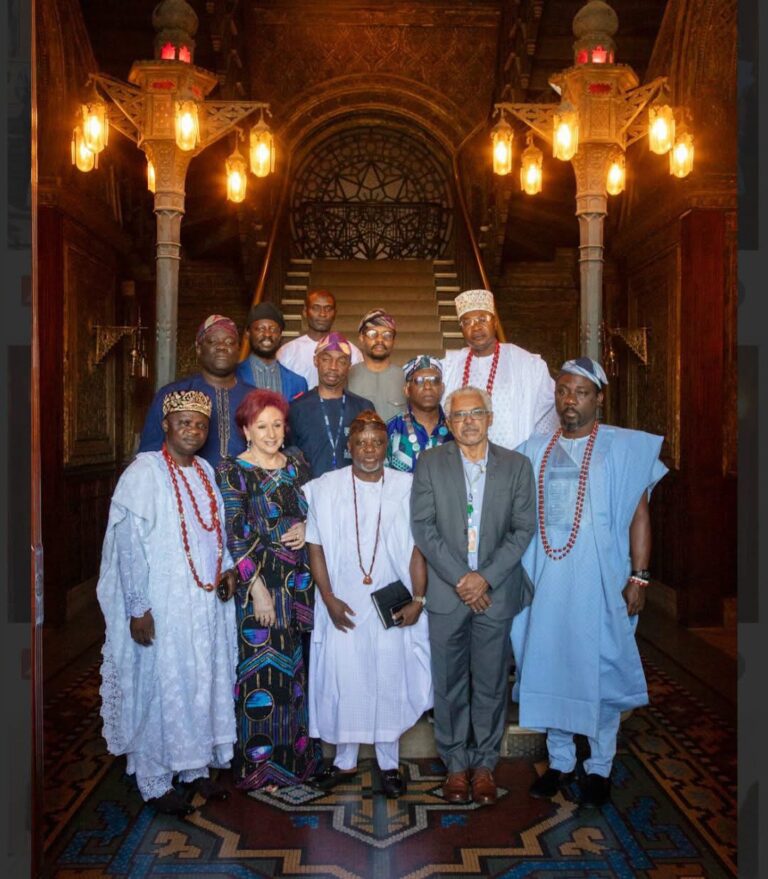
Representing the Ooni at the summit were the Director of Media and Public Affairs at the Ooni鈥檚 Palace, Otunba Moses Olafare, and the President of Oduduwa Heritage Home in Brazil and International Consultant to the World Orisa Congress, Ajoyemi Olabisi Osunleye.
The meeting brought together representatives of Fiocruz, the Federal Government of Nigeria, the Ooni鈥檚 Palace, Afe Babalola University, Harvard University, Brazil鈥檚 Ministry of Racial Equality and the African Pride delegation to strengthen South South cooperation in traditional medicine, medicinal plant research, human milk banking and academic training.
Fiocruz, the Oswaldo Cruz Foundation, is a Brazilian public health and scientific institution under the country’s Ministry of Health. Based in Rio de Janeiro, it is one of Latin America’s leading health research and technology institutions, focusing on health research, disease control, vaccine and medicine production, diagnostic tools, training and public health services. Its mission is to promote health and social development through scientific and technological innovation.