





By Efa Sunday
The management of Obafemi Awolowo University (OAU), Ile-Ife, has introduced dress codes for students, prescribing rustication for a wide range of dress code violations and acts of public intimacy deemed contrary to the institution’s code of conduct.
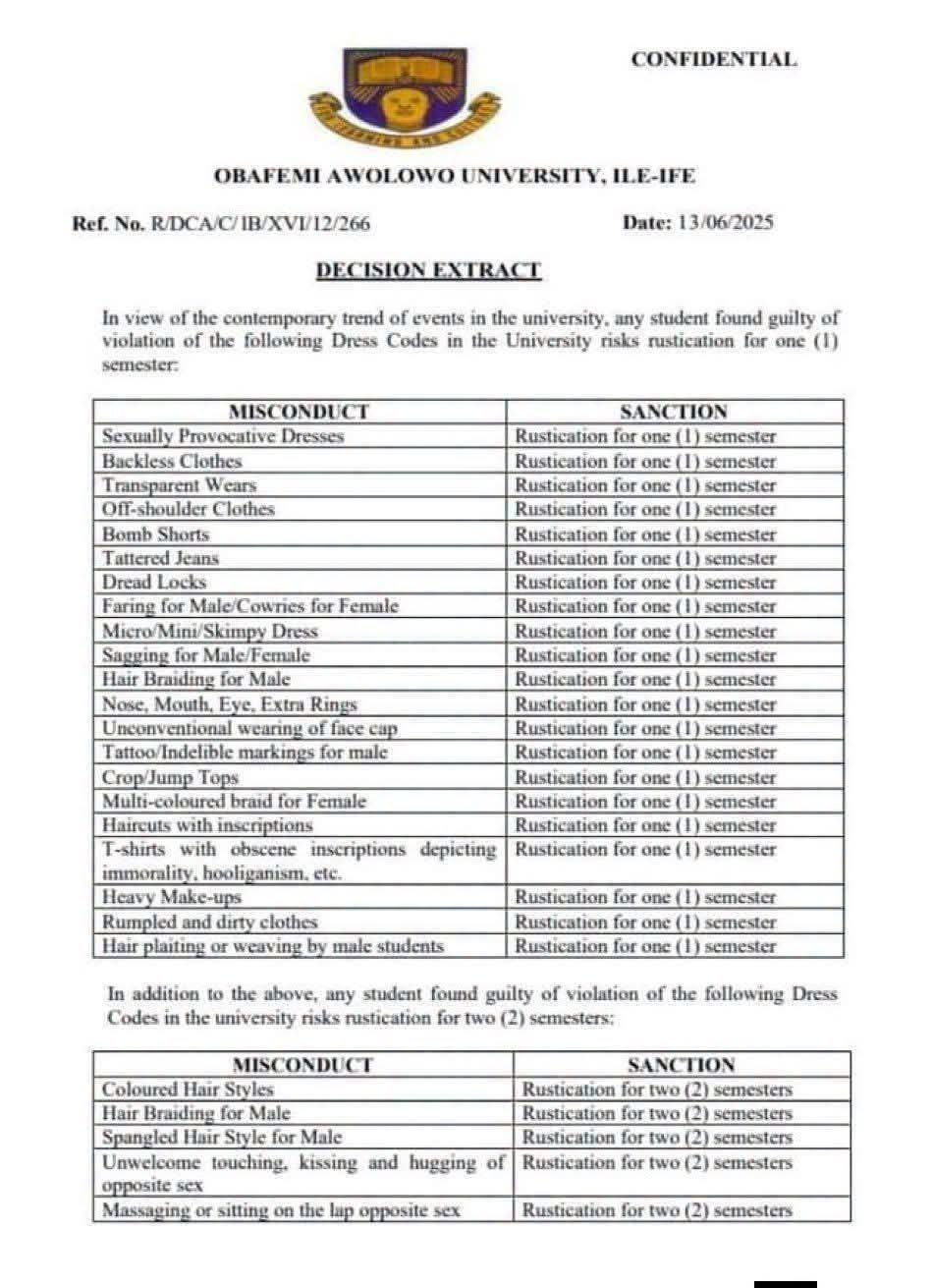
The sanctions are contained in a memo dated June 13, 2025, with Reference No. R/DCA/C/JIB/XVI/12/266, issued by the university as part of efforts to strengthen discipline on campus.
According to the document, the decision was reached “in view of the contemporary trend of events in the university,” warning that any student found guilty of violating the prescribed dress codes risks rustication for one semester or two semesters, depending on the nature of the offence.
Students will face one-semester rustication for offences including wearing sexually provocative dresses, backless clothes, transparent wears, off-shoulder clothes, bum shorts, tattered jeans, crop or jump tops, and heavy make-up.
The list also includes dreadlocks, unconventional wearing of face caps, tattoos or indelible markings for male students, nose, mouth and eye rings, haircuts with inscriptions, rumpled or dirty clothes, and T-shirts bearing obscene inscriptions depicting immorality or hooliganism.
Male students who braid or plait their hair, as well as students found guilty of “sagging” regardless of gender, also risk rustication for one semester under the new regulations.
The university further prescribed two-semester rustication for students with coloured hairstyles, hair braiding or spangled hairstyles for male students.
The institution also imposes the same punishment on students found engaging in what it described as “unwelcome touching, kissing and hugging of opposite sex.”
Massaging or sitting on the lap of opposite sex was listed among offences that would attract rustication for two semesters.
According to the university, the measures were introduced in response to prevailing developments within the institution, signalling a renewed commitment to enforcing discipline and maintaining standards of decency among students.
The decision has generated widespread reactions, with supporters arguing that universities have the authority to regulate students’ conduct in line with institutional values, while critics contend that some of the provisions are overly restrictive and raise concerns about personal freedoms.